LHC strikes down super tax on sale of inherited property
The Lahore High Court has ruled that super tax cannot be imposed on gains from the sale of inherited immovable property where the applicable capital gains tax rate is zero per cent. The court set aside an Rs114.7 million demand raised against Khairullah Khan.


RAWALPINDI: The Lahore High Court has ruled that super tax under Section 4C of the Income Tax Ordinance, 2001, cannot be charged on capital gains from the sale of inherited immovable property where the applicable tax rate on the gain itself is zero per cent.
A two-member bench comprising Justice Jawad Hassan and Justice Sardar Akbar Ali delivered the judgement in an income tax reference filed by Khairullah Khan against the Appellate Tribunal Inland Revenue and other tax authorities.
The court struck down a super tax demand of Rs114.7 million that had been raised over the sale of ancestral property held since 1980.
According to the judgement, Khan declared income of more than Rs1.14 billion in tax year 2024 from the sale of ancestral property, and his return was treated as finalised under the Income Tax Ordinance. The assessing officer later initiated proceedings under Section 4C and imposed super tax through an order dated Feb 28, 2025.
Khan challenged the demand before the tribunal, but the levy was upheld there, after which he moved the high court.
Court’s reasoning
Counsel for the applicant argued that Khan was a private individual and not engaged in the business of property dealing, and that the income arose only from the sale of inherited immovable property. The lawyer contended that under Section 37(1A), the gain attracted a zero per cent tax rate because the property had been held for more than six years.
The applicant’s side maintained that once no income tax was payable on the capital gain, the basis for super tax also fell away. It further argued that imposing super tax in such circumstances would amount to indirectly taxing income that the legislature had deliberately placed at a nil rate.
The Federal Board of Revenue defended the levy, arguing that Section 4C operated independently and applied to all high-income individuals regardless of the source of income. It said that even capital gains taxed at zero per cent remained part of taxable income and therefore could still attract super tax.
The bench disagreed with the FBR’s position and held that tax laws must be read strictly. It said Section 37(1A) established a special and overriding statutory framework for gains arising from immovable property. Where the legislature had consciously fixed the rate at zero per cent, the court said, no tax liability came into existence even if a gain had been made.
The judgement said that the charging provision and the applicable rate together formed the machinery of taxation, and once the prescribed rate was zero per cent, the charging mechanism stood exhausted at nil liability.
Reference to earlier ruling
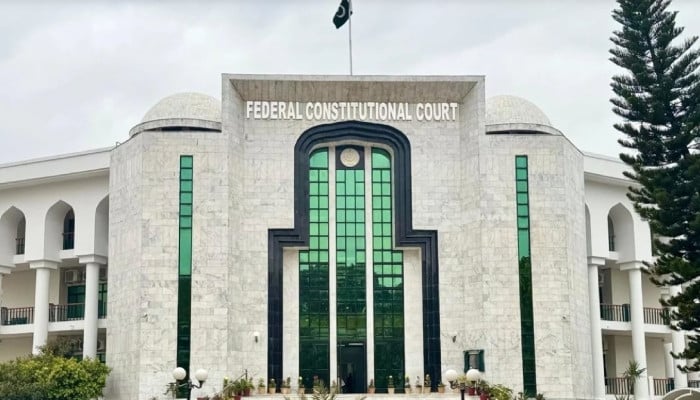
The high court also referred to the Federal Constitutional Court of Pakistan’s ruling in the DG Khan Cement case, noting that the apex court had already clarified that where no tax is payable on capital gains from immovable property because of the holding period or inheritance, no super tax is payable either.
The judgement said the economic and legal effect of a zero per cent rate was indistinguishable from an exemption. It also rejected the tax authorities’ reliance on an administrative circular, ruling that such a circular could not override statutory provisions or binding constitutional pronouncements.
Allowing the application, the court declared the super tax demand to be without lawful authority and set it aside.
Comments
No comments yet. Be the first to join the discussion!