

Pakistan’s population may reach 390m by 2050
An official population projections report says Pakistan’s population could rise from 241.9 million in 2023 to as much as 390 million by 2050. The report also projects a sharp increase in the working-age population and significant growth across all provinces.

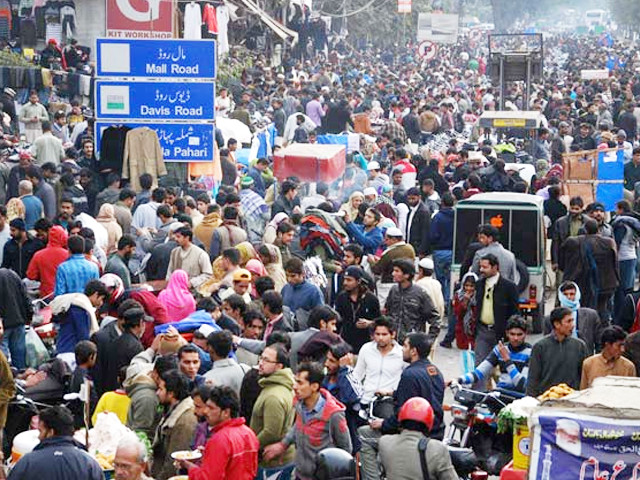
ISLAMABAD: Pakistan’s population could rise to 390 million by 2050 under one projection scenario, according to an official report launched on Tuesday by Planning Minister Ahsan Iqbal.
The Population Projections report 2023-50 was prepared in collaboration with the United Nations Population Fund (UNFPA). It uses the 2023 population census as the base year, when Pakistan’s population stood at 241.9 million, and sets out demographic trends under three scenarios covering fertility patterns, as well as changes in the number of children, working-age people and elderly citizens.
Under the report’s slow fertility decline scenario, the country’s population is projected to increase by around 148 million to 390 million by 2050, a rise of 62% over 27 years. The report says this pace of growth reflects demographic momentum shaped by fertility trends and population dynamics across provinces.
In the rapid fertility decline scenario, where the birth rate is assumed to fall sharply by half from the 2050 target, the population is projected to reach 371.9 million by 2050. That would amount to an increase of 129.3 million, or 54%, from the base year. The report says this would represent a notable slowing in growth compared with the slow fertility decline scenario, with a relatively balanced increase in male and female numbers.
In the third scenario, based on evidence-based contraceptive use across provinces and Islamabad Capital Territory, the population is projected to rise from 241.9 million in 2023 to 383.2 million by 2050, an increase of 59%.
Working-age population to expand sharply
The report says the number of children below 18 years is expected to increase from 118 million to 139.7 million by 2050, up 18%. Over the same period, the working-age population aged 15 to 64 is projected to grow from 135.2 million to 255.4 million, an increase of 89%.
It adds that the faster growth of the working-age population relative to dependents points to a favourable age-structural shift and the possibility of a demographic dividend, provided there is sufficient investment in education, healthcare and employment.
The youth population aged 15 to 29 is projected to rise from 63 million in the base year to 100 million by 2050, indicating a substantial expansion in the young labour force. Meanwhile, the elderly population aged 65 and above is expected to increase from 8.6 million to 22.6 million, which the report says signals a need for investment in elderly care and social protection.
The report also states that while 67% of the population is currently below the age of 30, the absolute number in that age group is projected to reach 212 million by 2050. However, its share in the total population is expected to decline to 54%, reflecting gradual population ageing due to falling fertility and improving survival rates.
The projections did not specify the economic growth rate required to generate jobs for most of the projected 255 million working-age people. Pakistan’s current growth model and trend are not sufficient to absorb the workforce, saying the country needs sustainable economic growth of 6-8% to create jobs for people already in the market, while the economy has been growing at an average annual pace of around 3.5%. Fiscal and monetary consolidation under the IMF programme does not allow growth above 5%.
Minister calls population growth a major challenge
Speaking at the launch ceremony, Ahsan Iqbal said the completion of the 2024-50 population projections was an important development in Pakistan’s demographic planning framework.
"This achievement is the result of a deeply collaborative and consultative effort, involving experts, institutions and partners committed to data-driven policymaking," the minister said.
He also said unchecked population growth had become a major obstacle to sustainable development, economic progress and the effective use of resources. Ahsan Iqbal said 82% of resource distribution under the NFC Award is tied to population share, and argued that reforms were needed to encourage provinces to adopt responsible population management policies.
According to the minister, there is currently no effective incentive for provinces to reduce population growth. He said provinces that show improvement in population management should receive additional incentives.
Provincial projections
The report projects that Punjab’s population will increase from 128 million in 2023 to 200 million in 2050 under the slow decline scenario, a rise of 56%.
Sindh’s population is expected to grow from 56 million to 91.2 million, up 64%, while Khyber Pakhtunkhwa is projected to increase from 41 million to 68 million, a rise of 66%.
Balochistan, starting from a smaller base, is projected to grow from 14.7 million to 25 million, marking the highest percentage increase among the provinces at 68%.
The report says Islamabad Capital Territory is expected to record the fastest growth rate overall, with its population nearly tripling from 2.3 million in 2023 to 6.5 million by 2050.
These projections underline the need for broad-based planning to ensure infrastructure, services and resources are available across urban and rural areas as Pakistan’s demographic profile changes.
Comments
No comments yet. Be the first to join the discussion!


