Pakistan to tap Chinese capital market with first Panda Bond: Aurangzeb
Finance Minister Aurangzeb says Pakistan will access Chinese capital markets via its first Panda Bond next week, aiming to bolster external financing as energy import pressures rise.

Finance minister says move aims to strengthen external financing amid energy import pressures
Says Pakistan expects foreign reserves to reach three-month import cover by end of June
Claims economy projected to grow around 4% despite regional uncertainty and external shocks
Petroleum minister pledges relief in budget, says LNG deals to ensure energy stability
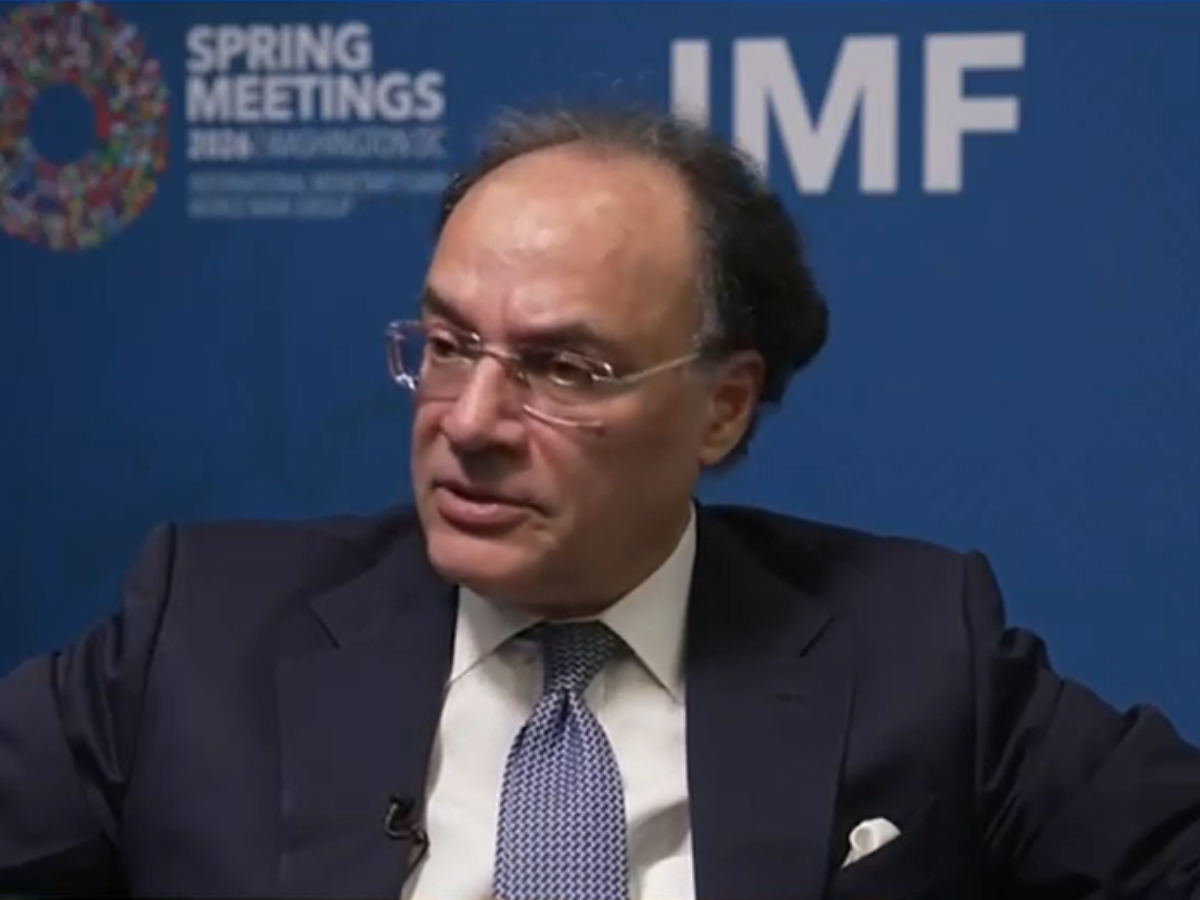
ISLAMABAD: Finance Minister Muhammad Aurangzeb on Saturday said Pakistan is set to access Chinese capital markets for the first time through a “Panda Bond issuance next week,” as the country seeks to strengthen external financing amid rising energy import pressures triggered by the Iran conflict and disruptions around the Strait of Hormuz.
“God willing, next week you will hear the good news that for the first time we will be accessing Chinese capital markets through Panda Bond,” Aurangzeb said during a televised news conference alongside Ali Pervaiz Malik.
Finance Minister Senator Muhammad Aurangzeb Highlights Economic Stability, External Sector Gains, and Energy Security Measures Amid Regional Challenges
Federal Minister for Finance and Revenue Senator Muhammad Aurangzeb, accompanied by Federal Minister for Petroleum Ali Pervaiz… pic.twitter.com/ba3FxTjxd3— Ministry of Finance, Government of Pakistan (@Financegovpk) May 9, 2026
Pakistan, which remains heavily dependent on imported fuel and liquefied natural gas (LNG), has faced mounting strain on its external account since regional tensions disrupted key energy supply routes earlier this year.
The government has been working to stabilise the economy under an International Monetary Fund (IMF) programme while managing elevated oil import costs and sustaining foreign exchange reserves.
The remarks came a day after the IMF Executive Board approved two loan disbursements worth about $1.32 billion for Pakistan under its ongoing support arrangements.
Aurangzeb said Pakistan expects its foreign exchange reserves to reach a level equivalent to three months of import cover by the end of June, while stressing that the government remains focused on maintaining macroeconomic stability despite regional uncertainty.
Despite external pressures, he said the economy is expected to grow close to 4 percent during the current fiscal year, compared with 3.1 percent last year.
He cautioned that the economic fallout of the Iran conflict would persist even if hostilities ease soon.
“Even if it ends tomorrow morning... because the energy infrastructure has been hit, it will still take months to recover and go back to the situation where we were,” he said.
The finance minister said exports had increased by 14 percent, while remittances reached $3.8 billion in March and $3.5 billion in April.
He added that Roshan Digital Accounts recorded inflows of $260 million in March, rising to $320 million in April.
Aurangzeb further noted that Pakistan’s import bill increased by more than $1 billion between March and April, reflecting ongoing external sector pressures.
He said Prime Minister Shehbaz Sharif, Deputy Prime Minister Ishaq Dar, and Asim Munir were working tirelessly for regional peace, extending his best wishes to their efforts.
Maximum relief in upcoming budget: Petroleum minister
In his remarks, Petroleum Minister Ali Pervaiz Malik reaffirmed the government’s commitment to providing maximum relief to the public in the upcoming budget.
He said Pakistan remained among the countries where fuel supplies had continued uninterrupted despite prevailing regional tensions.
The minister expressed gratitude to Saudi Arabia for ensuring crude oil supplies through the Red Sea amid disruptions in the Strait of Hormuz, and also acknowledged support from regional partners including Qatar, the United Arab Emirates and Iran in maintaining fuel availability.
He said Pakistan had managed to avoid fuel shortages despite severe turbulence in regional energy markets.
The minister added that despite fiscal constraints, the government had provided billions of rupees in subsidies to farmers, transporters and petroleum consumers.
He further said the government planned to procure low-cost LNG from friendly countries to ensure uninterrupted electricity supply during peak summer demand.
Ali Pervaiz Malik said positive developments on LNG supplies were expected within days, suggesting Pakistan may avoid expensive spot-market purchases.
“In a day or two, you will also get the good news that we did not have to go and buy RLNG for 18 to 20 dollars,” he said, referring to re-gasified liquefied natural gas.

Comments
No comments yet. Be the first to join the discussion!