Gazans stranded in West Bank say war has left them with no homes to return to
Palestinians from Gaza stranded in the West Bank say they cannot return home after the war and many have lost their houses in air strikes. Some are living in makeshift shelter while trying to support families still inside Gaza.

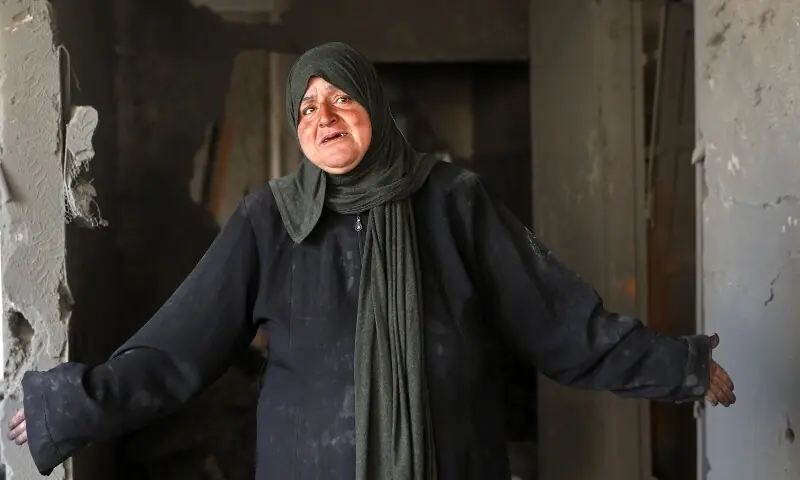
JERUSALEM: More than two-and-a-half years after the war in Gaza began, Palestinians from the enclave who were outside it when fighting erupted say they remain stranded in the occupied West Bank, unable to return and trying to rebuild their lives in temporary and uncertain conditions.
Among them is 54-year-old Sameer Abu Salah, who had been doing odd jobs in Tel Aviv, where pay was better than in his home city of Khan Yunis. He later travelled to Nablus in the northern West Bank and has been stuck there since the war began after Hamas’s October 7, 2023 attack and Israel’s subsequent military campaign in Gaza.
“I entered (Israel) only four days before the war,” he said from the small area he had arranged beneath the stands at Nablus city stadium. “I was respected and honoured. Then the war happened.”
Abu Salah is one of about a dozen men from Gaza living in a former changing room under the stadium bleachers. He now survives by collecting recyclable materials and selling them, while sending money to his family after, he said, two of his sons were killed in Israeli air strikes.
“Look at me now — I live in a tent. We used to live with dignity, while here we’ve been thrown aside like dogs,” he said.
Abu Salah, described as deeply concerned with cleanliness, had tried to improve his surroundings by making a dresser from cardboard boxes and decorating the walls with Palestinian flags and a portrait of Yasser Arafat that he found while sweeping streets.
The total number of Gazans stranded in the West Bank is unclear, but the Palestinian Authority’s labour ministry said in March that it had given cash assistance to 4,605 people from Gaza stuck there.
Although movement beyond Nablus city limits is tolerated, the men living under the stadium stands said they remain afraid to travel, saying some of their friends were stopped at Israeli army checkpoints and sent back to Gaza.
Another stranded man, Sameh, said he had come 10 days before the war to seek medical treatment for his son that was unavailable in Gaza. His son later returned, but Sameh stayed behind to support the family. He declined to give his full name for fear of retribution.
“It’s boring, but what can we do? We’re in a jail,” said Sameh.
Inside the changing room, he hung sheets on ropes to divide his space, saying he did so in a way that resembled Gaza’s tent camps so he could live like his family. According to AFP, all the men it spoke to at the stadium said their homes had been destroyed in air strikes, and they showed videos of their houses before the attacks and photographs of the rubble left behind.
Trying to survive in the West Bank
Nahed al-Hilou, 43, a businessman from Gaza, is now living in Ramallah and said he too avoids leaving the city. He had left Gaza two days before October 7 on a business permit to source goods for import into the blockaded territory, where he owned a restaurant in Gaza City’s Rimal neighbourhood that employed 30 people.
After the war began, he moved from Tel Aviv to Ramallah, where he opened a falafel restaurant in the city centre. He said the business had done well and now employs nine people, all of them Gazans. He said he cooks in the style of Gaza, with spicy food, and that his main concern remains supporting his family in Gaza.
“I turned to what I know: my work, my profession, something I love,” he said.
Hilou said his immediate family had all survived the war, but the uncertainty had been severe.
“We spent 20 days not knowing anything about them,” Hilou said.
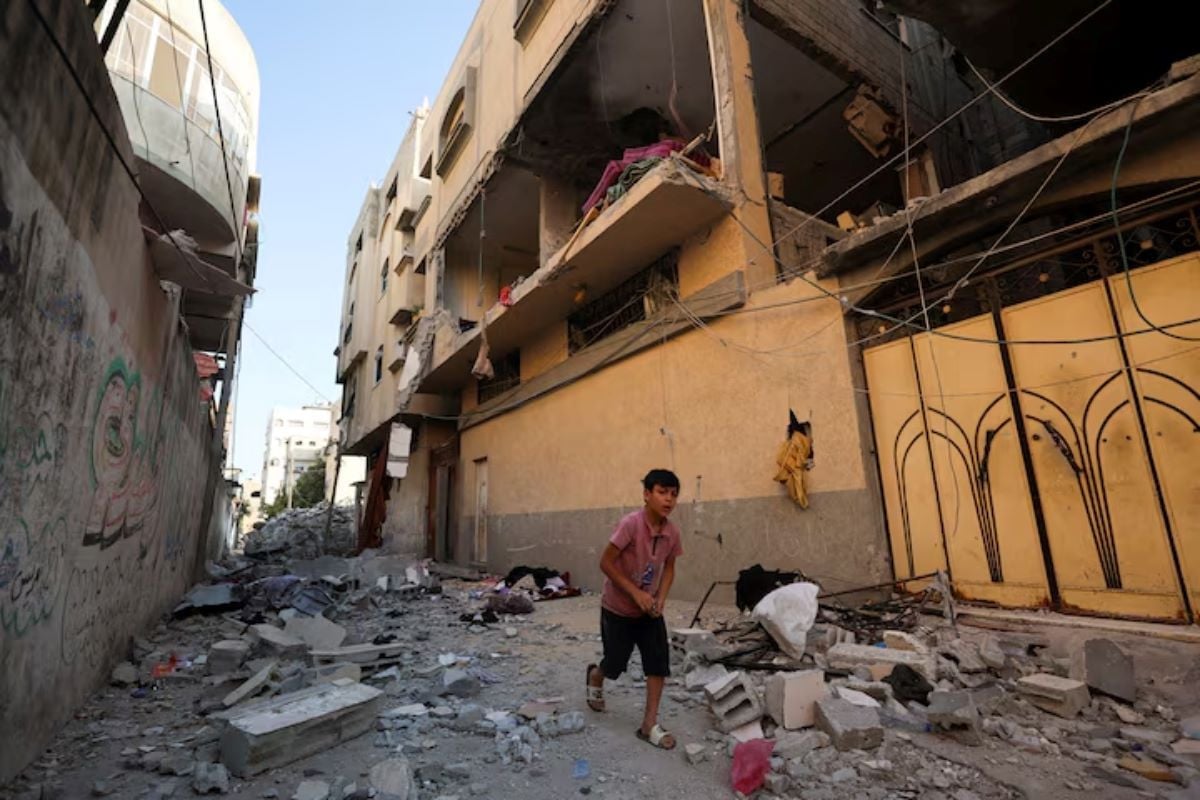
When asked about returning, he said the destruction in Gaza had left little to go back to.
“Of course, Gaza is dearer than here, but there, there is no home left, nothing.”
Destroyed homes and separated families
According to the United Nations, 81 per cent of Gaza’s structures were destroyed during the war. The UN also said unemployment in the territory rose to 80pc after the war, while prices surged partly because of Israeli restrictions on truck entries.
Israel still controls about half of Gaza, and that Israeli fire has killed at least 846 people since the start of a US-brokered ceasefire in October 2025.
Shahdeh Zaarb, 45, is in a somewhat different position because he has West Bank residency and has worked there regularly for the past 20 years. Originally from Beit Lahia in northern Gaza, once known for its strawberry fields, he has set up a farm in Qalqilya in the West Bank.
Even so, he said he has not seen his children since 2021 and remains separated from them because of crossing restrictions.
“My children are in one place, I’m in another, and I can’t bring them here because of the crossings.”
Comments
No comments yet. Be the first to join the discussion!