US lawmakers press Rubio to clarify Israel’s alleged nuclear capability
Nearly 30 Democratic lawmakers have urged US Secretary of State Marco Rubio to end official ambiguity over Israel’s alleged nuclear arsenal. They said the ongoing war on Iran has raised urgent questions about nuclear risks and congressional oversight.

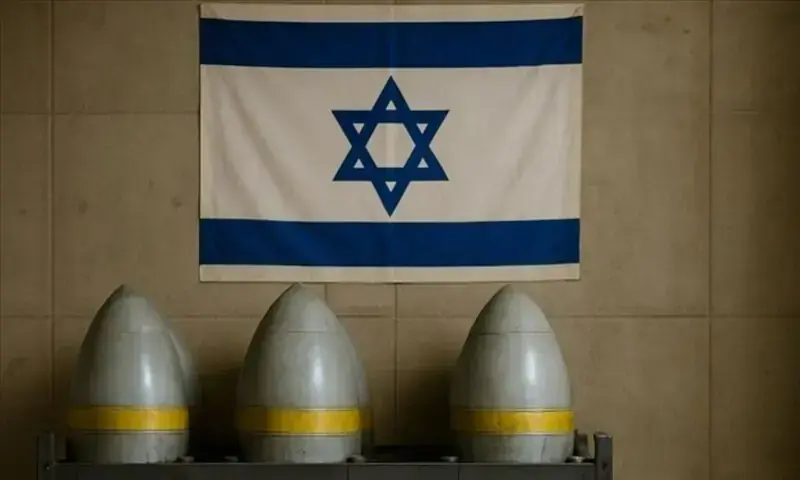
WASHINGTON: Nearly 30 Democratic lawmakers have asked US Secretary of State Marco Rubio to end Washington’s long-running policy of ambiguity over Israel’s alleged nuclear weapons programme, saying the issue has become impossible to sidestep during the ongoing war on Iran.
Israel is widely believed to possess nuclear weapons, although it has neither confirmed nor denied having such an arsenal. In a May 4 letter to Rubio, the lawmakers said the United States was “currently engaged in a war against Iran, a conflict with nuclear dimensions that the administration has not adequately addressed with Congress or the American public”.
The effort is being led by Congressman Joaquin Castro, a senior Democratic lawmaker from Texas who has served in the US House of Representatives since 2013 and is known for work on foreign policy and intelligence matters, including service on the House Foreign Affairs Committee.
In a post on X on Thursday, Castro wrote, “For nearly six decades, the US has voluntarily remained in the dark on Israel’s nuclear capabilities. The ambiguity ends now.
"There is too much at stake to accept ignorance. We are at war alongside Israel against Iran without knowing what their red lines are for using a nuclear weapon," he said.
The letter repeatedly challenged the US government’s refusal to publicly acknowledge Israel’s alleged nuclear arsenal, while noting that several nuclear-armed states are either directly involved in or affected by the conflict. The lawmakers warned that “The risks of miscalculation, escalation, and nuclear use in this environment are not theoretical,” and said Congress had a “constitutional responsibility to be fully informed about the nuclear balance in the Middle East”.
They also argued that “a policy of official ambiguity about the nuclear capabilities of one party to this conflict makes coherent nonproliferation policy in the Middle East impossible”.
Detailed questions in letter
The document is unusual in that it openly asks the State Department to respond to detailed questions about Israel’s alleged nuclear capability, including warheads, launch systems, fissile material production, nuclear doctrine and possible thresholds for nuclear use.
Among the questions posed was: “What nuclear weapons capability does Israel have?” The lawmakers also asked for information on “any nuclear weapons systems that Israel fields, including warheads and launchers”.
The letter sought clarification on whether Israel has uranium enrichment capability and whether the Negev Nuclear Research Centre at Dimona produces fissile material or plutonium. It further asked whether Israel had communicated to US officials “any nuclear doctrine, red lines, or thresholds for nuclear use in the context of the current conflict with Iran”.
Another question in the letter asked: “Has the administration received any assurances from Israel that nuclear weapons will not be used?” The lawmakers also asked whether there had been “any indications of Israel planning to use or deploy nuclear weapons during the recent Iran conflict or during other conflicts.”
Concerns tied to current war
The lawmakers directly linked their concerns to the present conflict, stating in the letter that “The United States and Israel launched this war against Iran together on February 28, 2026.” The letter added that “American and Israeli aircraft have conducted joint operations over Iran”, while decisions on ending the conflict were being taken jointly.
The lawmakers also referred to Iranian missile strikes targeting Dimona, saying the administration should evaluate the risk of “radioactive harm to US citizens and personnel in the region” if Israeli nuclear facilities come under further attack.
They asked whether the administration had examined “what circumstances, including further Iranian strikes on Dimona or potential Israeli military setbacks, could lead Israel to consider nuclear use”.
Past statements cited
To support their case, the lawmakers pointed to public remarks and declassified US intelligence assessments that they said showed Israel’s nuclear capability was already widely understood in official circles. They cited a 1974 Special National Intelligence Estimate that concluded Israel “already has produced nuclear weapons”.
The letter also referred to testimony by former US defence secretary Robert Gates, who told Congress in 2006 that Iran was “surrounded by powers with nuclear weapons — Pakistan to their east, the Russians to the north, the Israelis to the west and us in the Persian Gulf”.
The lawmakers further cited remarks by former Israeli prime minister Ehud Olmert, who in a 2006 interview listed Israel among nuclear powers, saying “America, France, Israel, Russia”.
The document also mentioned Pakistan among the nuclear-armed states linked to the crisis. It said Pakistan signed a mutual defence agreement with Saudi Arabia in September 2025, while Riyadh had itself faced Iranian missile and drone attacks during the conflict.
According to the lawmakers, the involvement or proximity of multiple nuclear-capable states — including the United States, Britain, Russia, China, Pakistan, India, France and North Korea — has made the conflict exceptionally dangerous.
The letter ended by questioning why senior State Department officials still could not publicly discuss Israel’s alleged nuclear capability. It cited testimony by Undersecretary of State Thomas DiNanno, who declined to answer questions on Israel’s nuclear status during a congressional hearing on March 25. The lawmakers asked: “What is the Department’s guidance to its employees on the discussion of any Israeli nuclear weapons capability?”
Comments
No comments yet. Be the first to join the discussion!