Federal govt dealt blow in high-stakes tax case
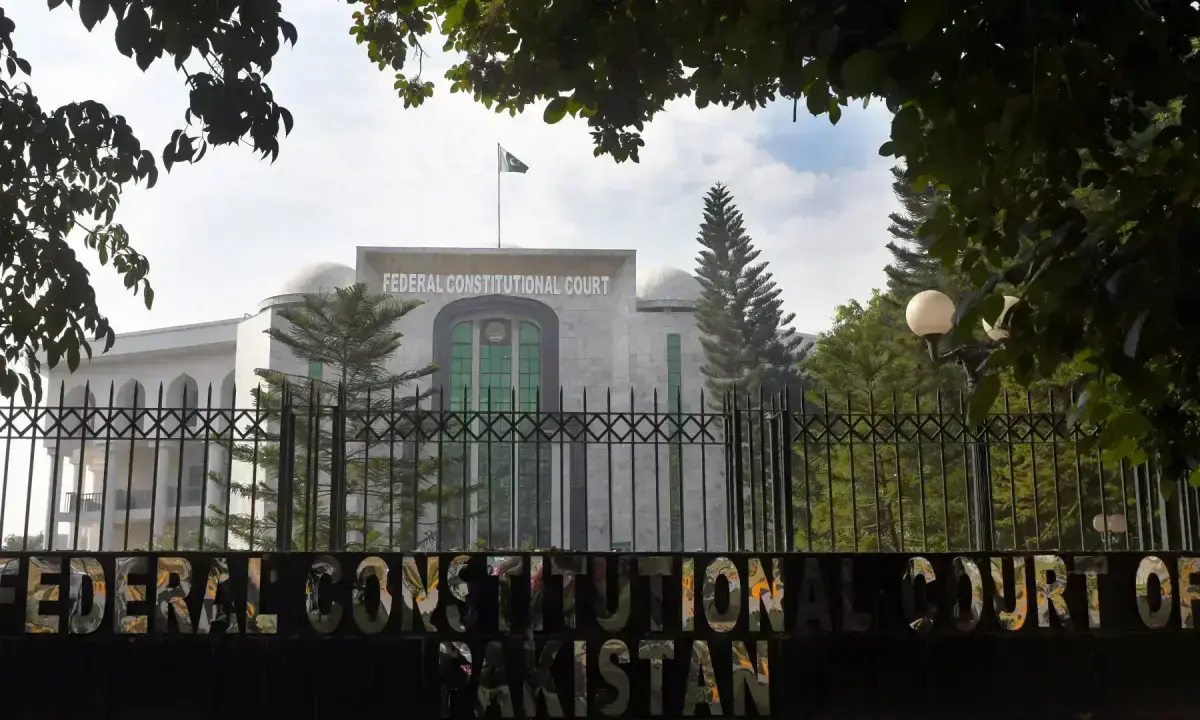
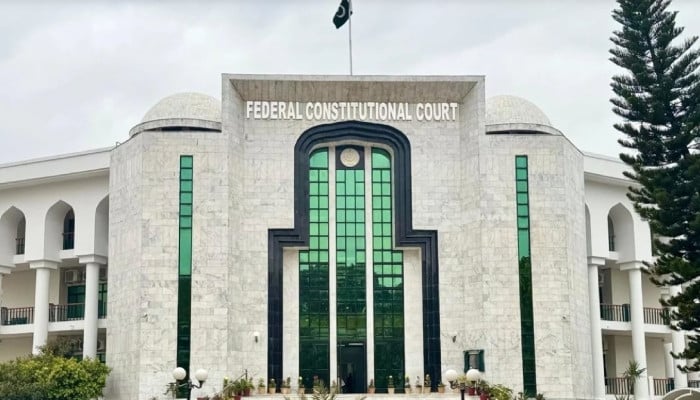
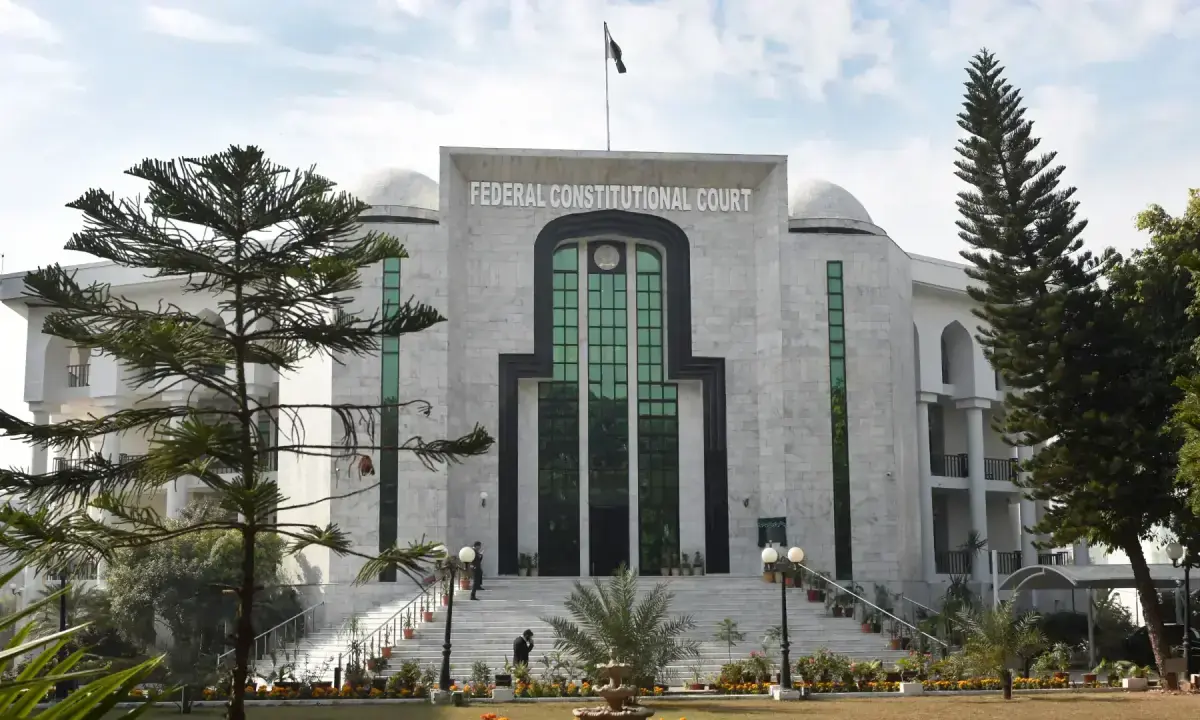
The Federal Constitutional Court has struck down Section 7E of the Income Tax Ordinance, declaring it unconstitutional and void from the outset. The ruling also sets aside all notices and proceedings initiated under the provision.


ISLAMABAD: The Federal Constitutional Court has declared Section 7E of the Income Tax Ordinance, 2001, unconstitutional, striking down the provision and setting aside all proceedings launched under it by tax authorities.
"We are persuaded to hold that Section 7E of the Income Tax Ordinance, 2001, is ultra vires the Constitution, and is accordingly struck down, being void ab initio," the court ruled in a short order issued by a two-member bench headed by Chief Justice Aminuddin Khan.
The order said that, for reasons to be recorded separately, civil petitions filed by taxpayers against judgments of the Sindh High Court and the Lahore High Court were converted into appeals and allowed. Civil petitions filed by the Federal Board of Revenue against judgments of the Peshawar High Court and the Balochistan High Court were dismissed.
"The transferred cases are disposed of accordingly. Consequently, all actions, proceedings, and notices initiated or taken by the FBR/C.I.R under Section 7E are declared to be without lawful authority and are hereby set aside," the court further stated.
Provision introduced in 2022
Section 7E had been inserted through the Finance Act, 2022, for tax year 2023. It provided for taxation on deemed or notional income arising from ownership of certain immovable properties, with specified exemptions including personal residences, agricultural land and other categories recognised under the law.
The provision was challenged before all provincial high courts, including the Islamabad High Court, on constitutional grounds. According to the order, the Peshawar High Court and the Balochistan High Court had already declared the section unconstitutional and struck it down.
"The Islamabad High Court, while not invalidating the provision in its entirety, read it down and declared subsection (2) thereof to be ultra vires the Constitution," the order noted.
Intra-court appeals against the Islamabad High Court ruling were pending before a division bench of the IHC, while two writ petitions had also remained pending and were later requisitioned under Article 175E(5) of the Constitution before being transferred to the FCC.
The court also recounted that a single judge of the Lahore High Court had allowed writ petitions challenging the provision, but that ruling was later overturned by a division bench in intra-court appeals. The Sindh High Court, meanwhile, had dismissed constitutional petitions filed against the law.
"Consequently, the taxpayers assailed the judgments of the Lahore High Court and the High Court of Sindh, whereas the federal government/Federal Board of Revenue/Commissioner Inland Revenue challenged the judgments rendered by the Peshawar, Balochistan, and Islamabad High Courts," the order said summarising the litigation history.
Arguments before the court
The petitions argued that the provision imposed tax on deemed income regardless of whether any income had actually accrued or been received. Counsel for the petitioners maintained that the measure effectively amounted to a property tax framed as income tax, and therefore went beyond parliament's legislative competence under Article 77 read with Entry 47 of the Federal Legislative List.
It was also argued that the section created artificial income without realisation and violated Article 25 of the Constitution by introducing arbitrary classifications among taxpayers.
The federal government, however, defended Section 7E as a lawful fiscal measure intended to widen the tax base and address untaxed economic capacity. The respondents argued that deemed income was a recognised legal fiction in taxation jurisprudence and fell within parliament's constitutional power to levy taxes on income.
Appearing for the Secretary Revenue Division, senior counsel Hafiz Ahsaan Ahmad Khokhar made submissions on constitutional jurisdiction, legislative competence and fiscal jurisprudence. He argued that under Article 191 of the Constitution, read with the Supreme Court Rules, 2025, the two-member bench was fully competent to decide the matter.
A substantial part of his arguments dealt with Article 189 and the doctrine of precedent. He contended that after the constitutional restructuring establishing the FCC, earlier Supreme Court judgments were persuasive rather than strictly binding in matters falling within the FCC's exclusive constitutional jurisdiction.
On the merits, he argued that Section 7E was a valid exercise of parliament's fiscal powers under Article 77 read with Entry 47 of the Fourth Schedule, and that the doctrine of legal fiction allowed taxation of deemed or notional income. He further submitted that the provision taxed presumed economic benefit arising from ownership of certain high-value immovable assets rather than the property itself.
He also argued that taxation laws enjoyed broad latitude in classification under Article 25 and invoked judicial restraint in fiscal matters, saying courts should be cautious before interfering in economic and taxation policy decisions made by parliament. The bench, however, did not accept the federal government's arguments and ruled against it.
Commenting on the verdict, advocate Zainab Janjua said Section 7E reflected an attempt by the federal legislature to extend its authority beyond constitutional limits. "The constitution very clearly ousts taxation on immovable properties from the purview of federal legislature."
She added that the provision, by creating a legal fiction of deemed income, indirectly sought to do what the Constitution did not permit directly.
Zainab Janjua also said the provision was discriminatory in its application. "Often times we see that in order to meet its tax targets, the government's tax initiatives are targeted towards those classes who are already within the tax net as opposed to bringing those within the tax net who have been evading paying tax. 7E was no different. While citizens who purchase properties through their hard earned money were squeezed more, the government officials who are allotted plots for peanuts remained excluded," she stated.
Several lawyers also believed that some influential real estate groups had sought reversal of the tax imposed on immovable property, particularly plots.
Comments
No comments yet. Be the first to join the discussion!