

David Attenborough says he is 'completely overwhelmed' as he turns 100
David Attenborough said he was 'completely overwhelmed' by birthday messages as he turned 100 on Friday. Britain is marking the milestone with BBC broadcasts, public events and tributes to his decades-long work in nature filmmaking.

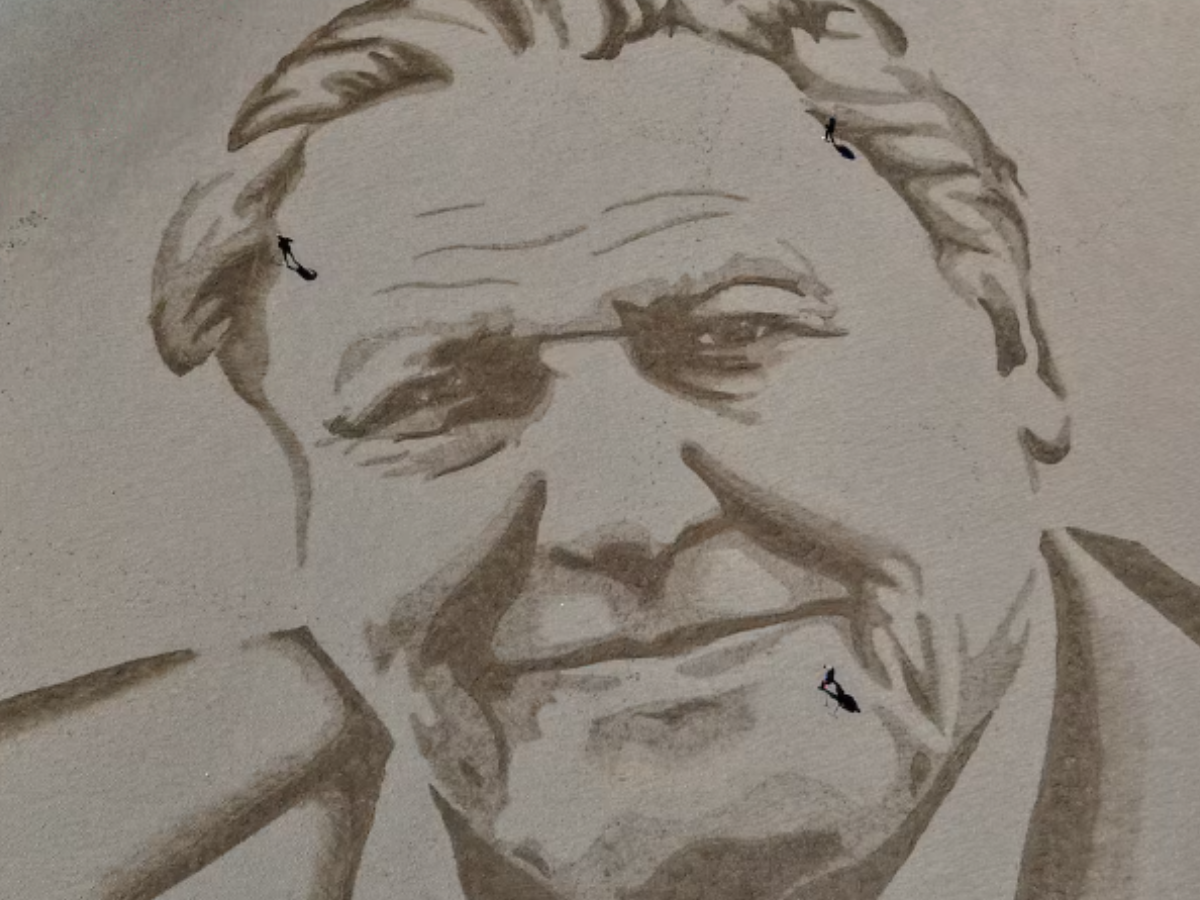
LONDON: British wildlife broadcaster David Attenborough said he had been 'completely overwhelmed' by the messages he received as he turned 100 on Friday, amid widespread tributes to a figure whose voice and work have become closely associated with nature filmmaking.
Attenborough, whose career in broadcasting and filmmaking has spanned more than 70 years, marked the milestone as Britain prepared a week of events in his honour. According to the BBC, the centenary is being observed with special broadcasts, a live concert at the Royal Albert Hall, museum events, nature walks and tree planting.
In an audio message released by the BBC, Attenborough said: 'I had rather thought that I would celebrate my 100th birthday quietly, but it seems that many of you have had other ideas.'
'I’ve been completely overwhelmed by birthday greetings from preschool groups to care home residents and countless individuals and families of all ages.'
He also thanked those who had sent messages and wished anyone planning an event to mark the occasion 'a very happy day'.
Attenborough’s standing in Britain and beyond has been reflected in admiration from figures including the royal family, former US president Barack Obama and singer Billie Eilish. In 2019, the late Queen Elizabeth described his contribution by saying: 'Your ability to communicate the beauty and vulnerability of our natural environment remains unequalled.'
Career and landmark moments
His documentaries have introduced global audiences to both the wonder and the loss found in the natural world. Among the most memorable scenes in his work was his encounter with two young mountain gorillas during the 1979 series Life on Earth. His programmes also showed orcas working together to create waves that broke up ice while hunting a seal, and in 2012 he told the story of 'Lonesome George', the last surviving Pinta Island tortoise.
At the time, Attenborough said of the tortoise: 'He’s about 80 years old, and getting a bit creaky in his joints — as indeed am I.' George died two weeks after he was filmed, marking the extinction of his species. Attenborough said then: 'He’s focused the attention of the world on the fragility of our environment.'
Mike Gunton, a television producer who has worked with Attenborough many times, told Reuters that Attenborough does not embrace being called a 'national treasure'. Gunton said: 'What he feels is that he’s a public servant. He feels that he had the unique opportunity to be the voice for nature, to tell everybody about the wonders of nature.'
Environmental advocacy and BBC tributes
As climate change intensified and environmental risks became more urgent, Attenborough spent much of his 90s drawing attention to those issues. United Nations climate chief Simon Stiell said: 'Sir David Attenborough is a colossus of science and storytelling in defence of the natural world, which humanity depends on for its own survival and prosperity.'
His 2017 series Blue Planet 2, which drew attention to plastic pollution in the oceans, became one of the most watched programmes on British television before being sold internationally. Images of albatrosses feeding plastic collected from the sea to their chicks helped shift public opinion and were followed by measures announced by the British government and major retailers to cut plastic use.
Doug Gurr, director of London’s Natural History Museum, said: 'I think every single person who’s seen anything that Sir David has done has been inspired to care about nature.'
Among the broadcasts marking his 100th birthday is a new BBC series, Secret Garden, focused on wildlife in Britain’s back gardens. BBC colleagues said he remains deeply involved in programme-making. Producer Mike Salisbury said: 'That’s typical David. He makes everything really enjoyable.'
From Zoo Quest to Life on Earth
Born on May 8, 1926, Attenborough spent part of his childhood collecting fossils, insects and dried seahorses. His BBC career began to gather momentum in 1954 with Zoo Quest, a programme that took him to distant parts of the world and involved bringing animals back to London Zoo.
By the 1970s, he had become a programme controller at the BBC, but later chose to return to making wildlife films. Life on Earth, broadcast in 1979 when he was 52, made him a household name. He wrote the full 13-hour script and spent three years travelling around the world to tell the story of evolution from simple organisms to humans.
Many more documentaries followed, including Blue Planet, Frozen Planet and Dynasties. Reflecting his growing concern over environmental decline, Attenborough said: 'How could I look my grandchildren in the eye and say I knew what was happening to the world and did nothing?'
Comments
No comments yet. Be the first to join the discussion!


