Israel strikes Beirut for first time since Hezbollah ceasefire
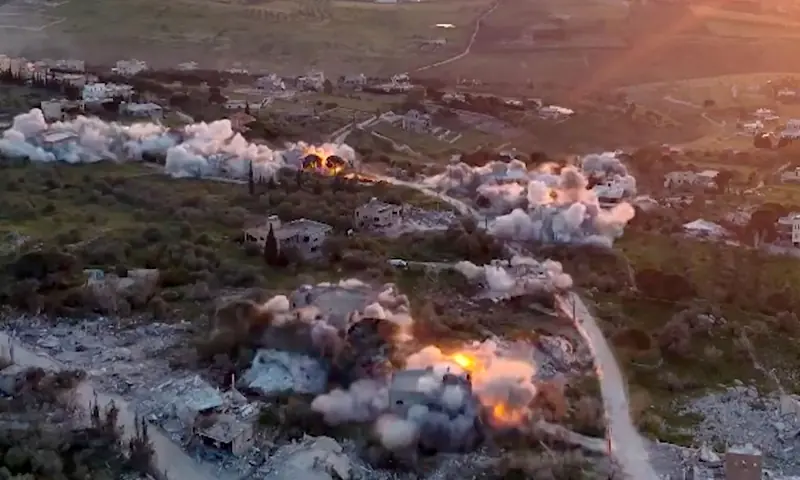
Israel struck Beirut for the first time since last month’s ceasefire with Hezbollah, saying it targeted a Radwan force commander. The attack came as diplomatic contacts continued and clashes persisted in southern Lebanon.

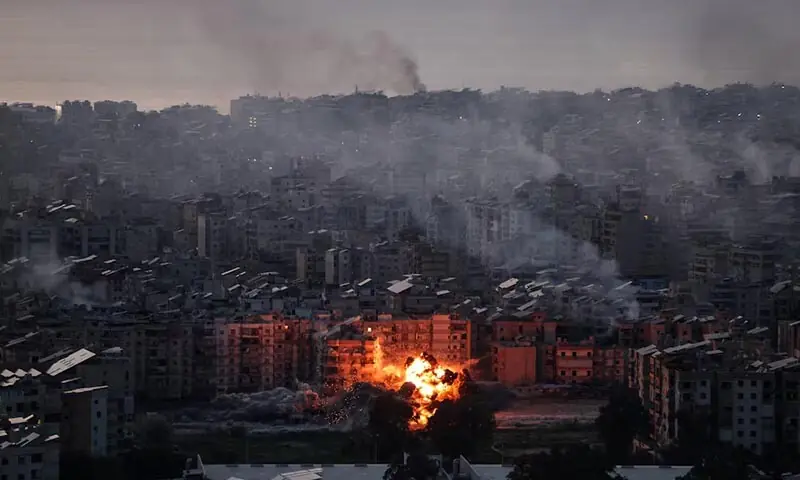
BEIRUT: Israel carried out an air strike on Beirut on Wednesday, marking its first attack on the Lebanese capital since last month’s ceasefire with Hezbollah, as tensions mounted despite ongoing diplomatic contacts between Lebanon and Israel.
Israeli Prime Minister Benjamin Netanyahu and Defence Minister Israel Katz said in a joint statement that the strike targeted a commander from Hezbollah’s elite Radwan force in the southern suburbs of Beirut. Israeli media said the commander was killed, but there was no immediate confirmation from either the Israeli military or Hezbollah.
The ceasefire in Lebanon has been linked to a wider US-Iran truce, with an end to Israeli attacks in Lebanon described as a central Iranian demand. With Tehran and Washington saying they are moving closer to an agreement to stop their conflict, the latest strike has raised fresh questions over the durability of the arrangement that had halted Israeli attacks on Beirut.
Israeli forces have remained in areas south of the Litani River, while strikes have continued in southern Lebanon. Hezbollah, in turn, has fired projectiles and launched armed drones at Israeli troops.
Earlier on Wednesday, Israel told residents to leave several villages north of the Litani River, a move that could signal a widening of the area in which it is operating.
Talks and political positions
Contacts between Israel and Lebanon have continued, though they have mostly taken place at ambassador level. Lebanese Prime Minister Nawaf Salam said on Wednesday it was too early to discuss any high-level meeting between the two countries.
According to comments carried by Lebanon’s National News Agency, Salam said strengthening the ceasefire would be the foundation for any future negotiations involving Lebanese and Israeli envoys in Washington. Last month, Washington hosted two meetings between the Israeli and Lebanese ambassadors to the United States. Hezbollah has strongly opposed those contacts.
Since March 2, when the fighting began, the Lebanese government led by Salam and President Joseph Aoun has undertaken Beirut’s highest-level contacts with Israel in decades, reflecting sharp internal divisions between Hezbollah and its domestic opponents.
When announcing a three-week extension of the ceasefire on April 23, US President Donald Trump said he looked forward to hosting Netanyahu and Aoun in the near future and saw
a great chancethat the two countries would reach a peace deal this year.
Salam said Lebanon was not pursuing normalisation with Israel, but peace.
Our minimum demand is a timetable for Israel’s withdrawal.he said. He added that the government would prepare its plan to place weapons under state control, in a move aimed at Hezbollah’s disarmament.
Aoun said this week that the timing was not right for a meeting with Netanyahu.
must first reach a security agreement and a halt to the Israeli attacks before we raise the issue of a meeting between us.he said of Lebanon’s position.
Continuing hostilities
Israel has established what it describes as a security zone reaching as far as 10 kilometres into southern Lebanon, saying the objective is to shield northern Israel from Hezbollah fighters operating in civilian areas.
Lebanon’s Health Ministry said an Israeli strike on Wednesday killed four people in the southern town of Zelaya, including two women and an elderly man.
The Israeli military said Hezbollah had launched explosive drones and rockets at Israeli soldiers in southern Lebanon, wounding two troops. It also said the air force intercepted a hostile aircraft before it entered Israeli airspace and announced strikes on Hezbollah infrastructure in several parts of Lebanon.
Lebanon’s Health Ministry says more than 2,700 people have been killed in the war in Lebanon since March 2. The Israeli military says Hezbollah has fired hundreds of rockets and drones at Israel over the same period. Israel has said 17 soldiers have been killed in southern Lebanon, along with two civilians in northern Israel.
Comments
No comments yet. Be the first to join the discussion!