FCC casts doubt on Nadra records presented in custody proceedings
The Federal Constitutional Court ordered an ossification test to determine the age of Ayesha Tariq in a custody case involving her conversion to Islam. The court also directed that she be kept at Darul Aman, Lahore, until the test results are received.

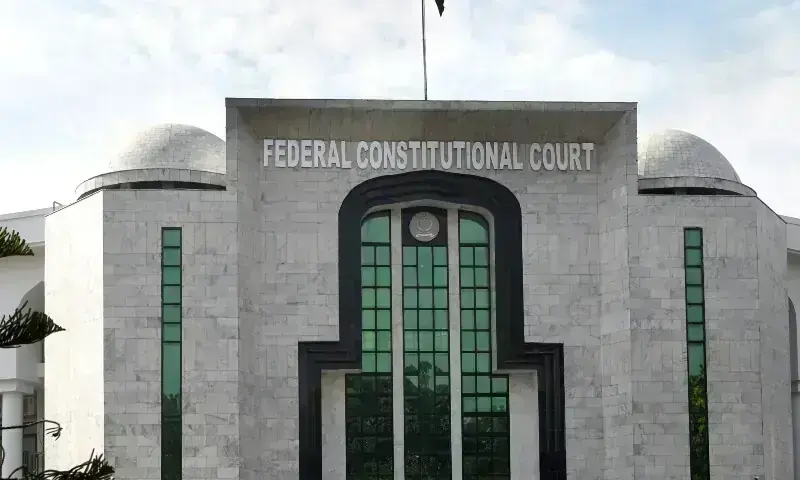
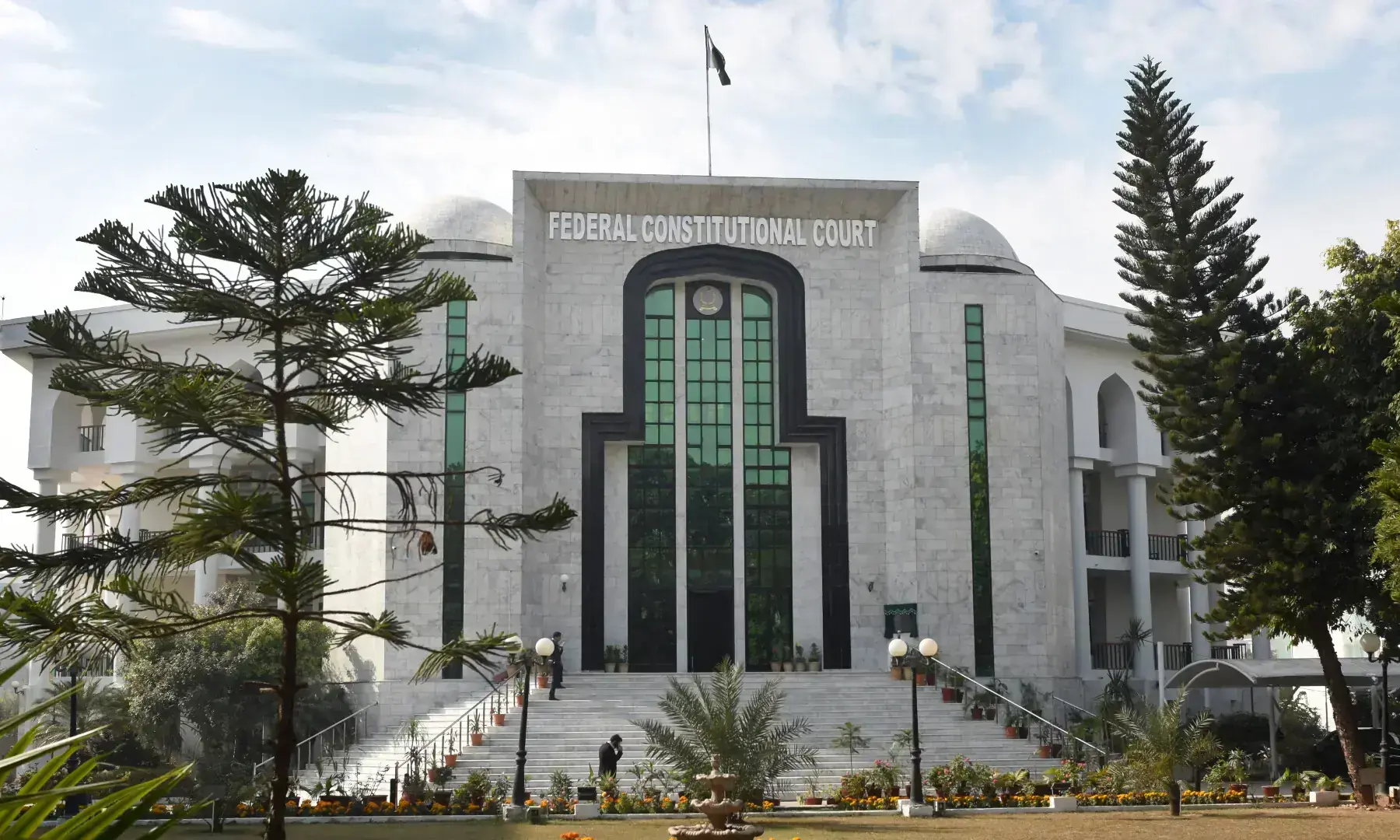
ISLAMABAD: The Federal Constitutional Court (FCC) on Wednesday raised questions about the reliability of National Database and Registration Authority (Nadra) records while hearing a habeas corpus petition concerning the custody of a minor girl, Ayesha Tariq, who had converted from Christianity to Islam.
A two-member bench comprising Justice Aamer Farooq and Justice K.K. Agha heard the matter. During the proceedings, senior counsel Muhammad Saqib Jillani, appearing for the girl’s parents, argued that Ayesha was underage and said a Nadra certificate reflecting this had been placed before the court. He also voiced concern that the girl might have married.
Additional Advocate General Punjab Waseem Mumtaz Malik told the court that if the girl was below 18 years of age, she should be handed over to her parents, but if she was not, she should be sent to Darul Aman in Lahore.
Justice Farooq questioned the assumption that Nadra records could not be altered. "Who says Nadra records cannot be tampered with?" he remarked.
"Go to Nadra and get whatever you want done — anything can happen in this country," the judge further observed, adding that such practices were unfortunately common.
"We cannot accept that tampering with Nadra records is not possible," he also said, while noting that such documents could not be treated as conclusive proof of age because parents often understated their children’s ages in official records.
After hearing the arguments, the FCC directed that an ossification test be carried out to determine the girl’s actual age. Until the result is received, the court ordered that she be moved to Darul Aman, Lahore, instead of the beauty parlour where she is currently staying. The bench, however, allowed her parents to meet her there. The court directed that the test be conducted within one week.
Girl disputes age recorded in documents
During the hearing, the girl told the court that she was 20 years old. Police officials informed the bench that in the kidnapping case registered by her father, her age had been recorded as 18.
The girl said two years had passed since her conversion to Islam and maintained that if she had wanted to marry, she would already have done so. She also claimed that her actual year of birth was 2007 and not 2011, as stated in the documents placed before the court.
"Conversion to Islam is a separate matter, but why did the girl leave home?" Justice K.K. Agha asked. In response, the girl said she had left because her parents were pressuring her to return to Christianity. Justice Agha observed that the central issue appeared to be intimidation and coercion.
When Justice Farooq asked where she was living and how she was supporting herself, the girl said she worked at a beauty parlour and also lived there. Justice Farooq warned that making false statements before the court could result in imprisonment.
The court also expressed concern after the girl stated that the owner of the parlour was providing shelter to other girls as well.
The hearing was then adjourned until May 20.
Comments
No comments yet. Be the first to join the discussion!