

Singapore says school caning for bullying will be a last resort
Singapore has said students involved in serious bullying cases can face caning under new school rules, but the education minister told parliament the punishment would be used only as a last resort and under strict safeguards.

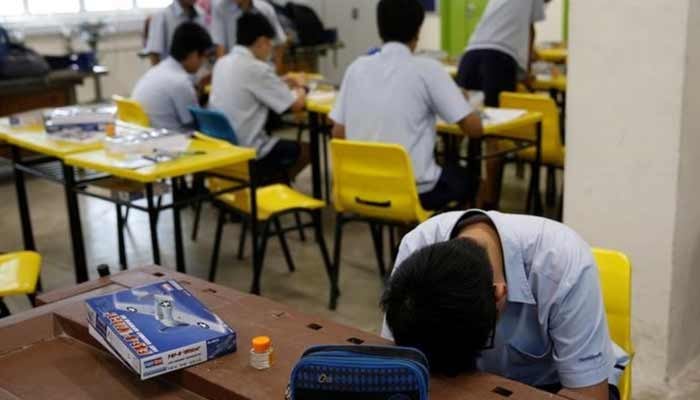
SINGAPORE: Students in Singapore who are involved in serious bullying cases can face caning under updated school discipline guidelines, though Education Minister Desmond Lee said on Tuesday that the punishment would be used only as a final measure and under strict controls.
The issue came up in parliament after lawmakers asked how caning would be applied in cases of bullying in schools. The discussion followed tougher rules announced by the education ministry last month to deal with serious student misconduct, including bullying.
Under the revised guidelines, students found responsible for such misconduct may receive between one and three strokes of the cane.
Lee told parliament that schools do not use caning as a first response.
Our schools use caning as a disciplinary measure if all the other measures are inadequate, given the gravity of the misconduct.
He said schools are required to follow strict procedures when imposing the punishment.
They follow strict protocols to ensure safety for the student. For instance, caning must be approved by the principal and administered only by authorised teachers.
Lee also said schools would weigh several considerations before deciding on caning.
Schools will consider factors such as the maturity of the student and if caning will help the student learn from his mistake and understand the gravity of what he has done.
Only boys can be caned
The minister said the punishment is imposed only on boys, citing the law.
the Criminal Procedure Code, which states that women shall not be punished with caning
He added that after the punishment is carried out, schools will continue to track the student’s condition and development, including through counselling.
monitor the student’s wellbeing and progress
Singapore continues to retain corporal punishment in both its school system and criminal justice framework. Human rights organisations have frequently criticised the practice, while the authorities have defended it as a deterrent against crime and serious misconduct.
Caning in Singapore dates back to British colonial rule, although Britain has since ended corporal punishment.
The debate also comes against the backdrop of international criticism of corporal punishment. According to a World Health Organisation report issued last year, there is now overwhelming scientific evidence that corporal punishment of children carries multiple risks of harm and has no benefits.
The latest parliamentary discussion focused specifically on how the new school rules would be enforced in bullying cases, with the government maintaining that caning would remain available only in serious cases and after other disciplinary steps are found to be insufficient.
Comments
No comments yet. Be the first to join the discussion!


