Exports rise in April but trade gap remains high
Pakistan’s exports rose 14.03pc in April to $2.48 billion, according to PBS data, but the trade deficit remained high as imports also increased. In the first 10 months of FY26, the trade gap expanded to $31.98bn.

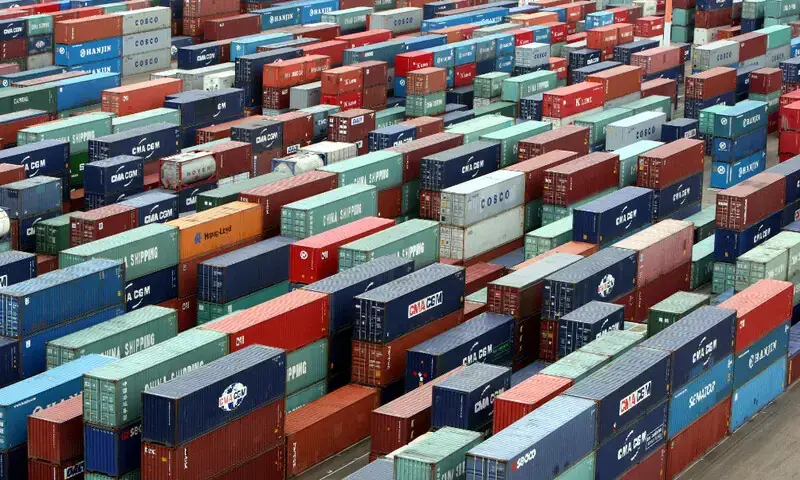
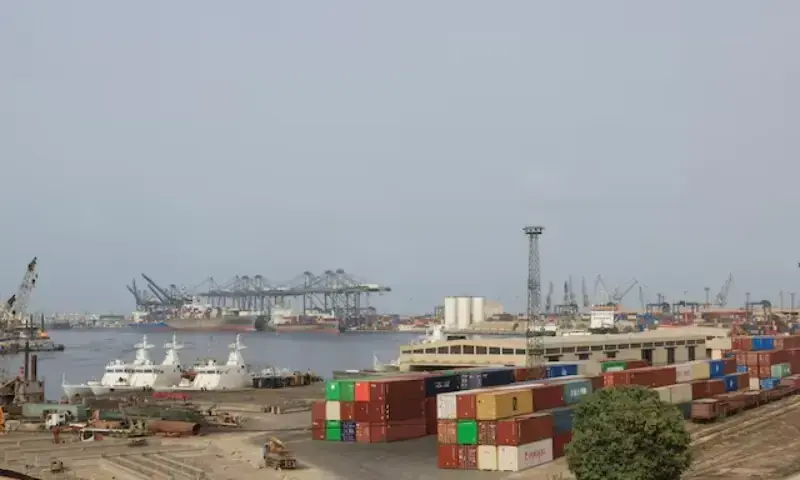
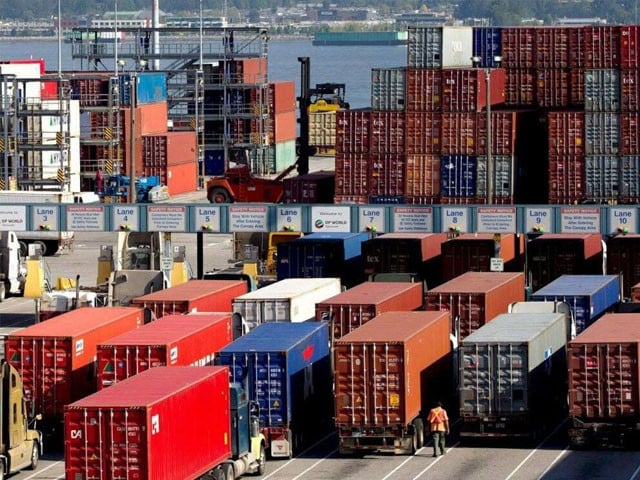
ISLAMABAD: Pakistan’s merchandise exports recovered in April after falling for two straight months, but the country’s trade deficit stayed elevated as imports increased at a faster pace, according to data released by the Pakistan Bureau of Statistics (PBS) on Monday.
The PBS figures showed exports at $2.48 billion in April, up 14.03pc from $2.17bn in the same month last year. On a month-on-month basis, export receipts were higher by 9.5pc.
Despite that improvement, the increase in exports was not enough to narrow the external trade gap because import payments also rose sharply. The PBS data showed imports climbed 7.46pc year-on-year to $6.55bn in April, while on a month-on-month basis they jumped 28.41pc.
As a result, the trade deficit widened 3.82pc in April to $4.07bn, compared with $3.92bn in the corresponding month last year.
Ten-month performance
For the first 10 months of FY26, covering July to April, export proceeds fell 6.25pc to $25.21bn from $26.89bn in the same period a year earlier, the PBS said.
Over the same period, the import bill rose 6.94pc to $57.19bn, compared with $53.48bn in the corresponding period last year. This pushed the trade deficit for July-April 2025-26 up by 20.28pc to $31.98bn from $26.59bn a year ago.
The data indicates that export performance has remained under pressure for much of the current fiscal year. Exports posted negative growth from August onward, with the exception of July, when they increased 16.43pc year-on-year.
Export earnings declined 12.49pc in August, 3.88pc in September, 4.46pc in October, 14.54pc in November and 20.41pc in December. They then rose 3.3pc in January before contracting again by 8.76pc in February and 14.4pc in March.
Pressure on external trade
The government had announced several steps three months ago, including lower energy rates, to reduce pressure on trade performance.
The export sector had been facing pressure since February because of the conflict. Disruptions in the Strait of Hormuz increased shipping costs for exporters and affected supply chains.
Trade analysts said the continued rise in imports, driven by demand for energy and industrial inputs, has kept import growth ahead of export earnings, maintaining pressure on the external account. Analysts also warned that the ongoing war in the Middle East could hurt exports by disturbing trade routes, weakening demand in important regional markets and increasing uncertainty in global supply chains.
In the previous fiscal year, FY25, export proceeds rose 4.67pc to $32.106bn from $30.675bn a year earlier. The trade deficit in FY25 widened 9pc to $26.27bn, compared with $24.11bn in the preceding year.
Comments
No comments yet. Be the first to join the discussion!