

Shrinkflation leaves Singapore shoppers paying more for less
Singapore consumers are facing shrinkflation in grocery items such as coffee, tea, cereal and juices, according to the Department of Statistics. Economists say the practice is used to disguise price increases by reducing quantity or quality.

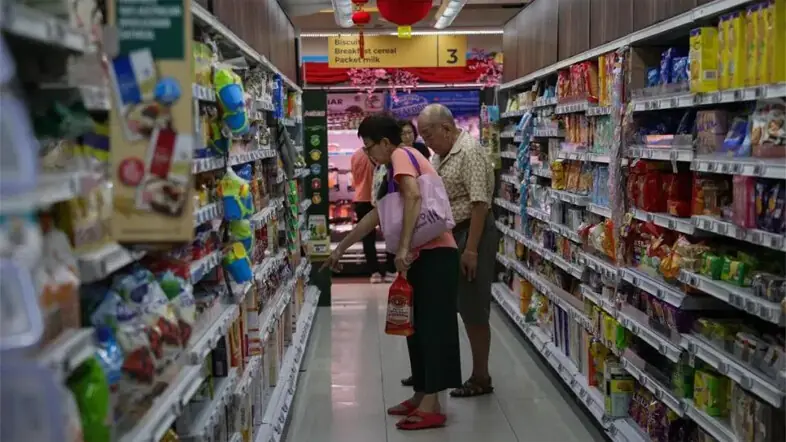
SINGAPORE: Consumers in Singapore are increasingly finding that they are paying the same price — or in some cases more — for smaller quantities of everyday grocery items, according to the Department of Statistics, which described the trend as shrinkflation.
The practice affects products such as instant coffee, tea, cereal and juices. Shrinkflation happens when the size or quantity of a product is reduced while its price either stays unchanged or rises, meaning buyers end up paying more per unit. The department said this leads to hidden price changes for consumers.
One common example is when the shelf price remains unchanged but the amount in the package is cut. The department illustrated this with a 1-litre bottle of shampoo priced at $8. If the manufacturer reduces the bottle to 0.8 litre and keeps the price at $8, the cost works out to $10 per litre instead of the original $8 per litre. That amounts to a 25 per cent increase in the unit price, even though the listed price has not changed.
Another form of shrinkflation occurs when the quantity is reduced and the price is increased at the same time. Using the same shampoo example, if the bottle size is lowered from 1 litre to 0.8 litre and the price is raised from $8 to $10, the product would cost $12.50 per litre. Compared with the original $8 per litre, that would represent a 56pc increase.
Singapore University of Social Sciences economist Walter Theseira said shrinkflation is more likely to appear in products that do not have a widely accepted standard size or quantity. He said manufacturers can reduce the size of items such as a packet of biscuits or a tub of ice cream because there is less consumer expectation around a fixed unit. “There is no common agreement on what unit it needs to be sold in, 500g versus 450g”
He added that the same approach would be harder to apply to products such as rice, where buyers generally expect standard pack sizes such as 1kg or 5kg. “The fundamental purpose is to disguise price increases,” Associate Professor Theseira also said, further adding that manufacturers may use other methods to conceal rising costs, including lowering product quality. Referring to chocolate products, he said some have seen a reduction in cocoa content because cocoa is the more expensive ingredient.
“For many chocolate products, there has been a reduction in the cocoa content, cocoa is the expensive ingredient. The idea is to substitute the expensive component with cheaper ingredients,” he informed.
SingStat’s analysis also pointed to another packaging-related strategy in which manufacturers offer a larger quantity of a product while increasing the price at the same time.
Comments
No comments yet. Be the first to join the discussion!

