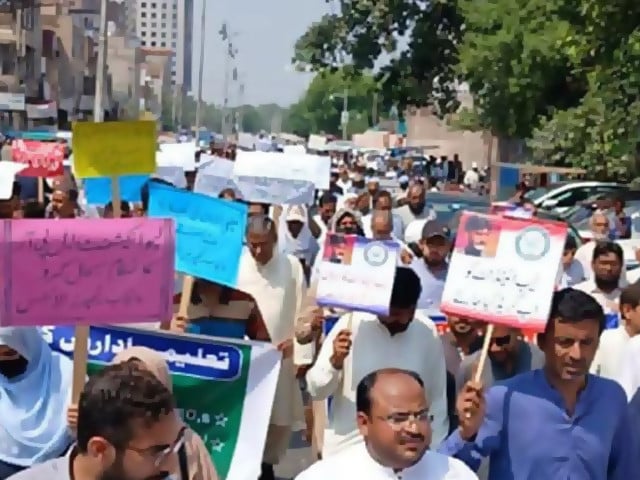
Punjab’s changing education system
Punjab’s education system is shifting as Maryam Nawaz Sharif’s vision builds on PSRP and PEF—expanding access, tightening oversight, and balancing test-based accountability with broader classroom needs.

Punjab’s education landscape has long stood at the intersection of ambition and constraint. Successive governments have promised reform, yet the gap between policy and classroom reality has often remained wide. In this evolving context, the educational vision of Maryam Nawaz Sharif, particularly in relation to the Public Schools Reorganisation Programme (PSRP) and the Punjab Education Foundation (PEF), is being closely watched by educators, parents, and policy observers alike.
Her approach appears to build upon an existing framework rather than discarding it altogether. The PSRP, which places underperforming public schools under the management of private partners, has been both praised and criticised over the years. Supporters argue that it injects efficiency and accountability into a system weighed down by bureaucratic inertia. Critics, however, caution that it risks diluting the public character of education and may prioritise numbers over substance. Within this debate, Maryam Nawaz Sharif’s stated emphasis on improving access and standards suggests a pragmatic rather than ideological stance. Her public addresses have repeatedly highlighted the need to ensure that no child is left out of school due to poverty or geography. In a province where millions of children remain out of school, such a focus resonates with ground realities.
The role of PEF in this vision is central. Established as a vehicle to promote public-private partnerships in education, the foundation has expanded its reach over the years, particularly in low-income communities. Through programmes that subsidise tuition for students in private schools, it has sought to bridge the affordability gap. Under the current administration, there are indications that this model may be further strengthened, with an emphasis on expanding coverage and tightening oversight. Observers note that one of the more significant aspects of this approach is its reliance on measurable outcomes. Schools operating under PEF-supported schemes are required to meet certain performance benchmarks, often assessed through standardised testing. This has introduced a culture of evaluation that is not always present in traditional public schools. For policymakers, such data offers a way to track progress and identify gaps. For teachers and students, however, it can sometimes translate into pressure to perform within narrow parameters.
Maryam Nawaz Sharif’s challenge lies in balancing these competing considerations. On one hand, there is a clear need to raise standards and ensure accountability. On the other, education cannot be reduced to test scores alone. Issues such as teacher training, curriculum relevance, and student well-being require equal attention. In her recent statements, there has been some recognition of this broader picture, with references to improving school infrastructure, investing in teacher capacity, and incorporating modern teaching methods. Another dimension of her educational vision is its social context. In many parts of Punjab, particularly in rural and underserved urban areas, schools are not just centres of learning but also spaces of social mobility. For families struggling with economic hardship, the availability of a functional school nearby can make a tangible difference. By expanding programmes under PEF and refining initiatives like PSRP, the government appears to be aiming for a model that combines reach with a degree of flexibility.
Yet, questions remain about sustainability. Public-private partnerships can deliver results in the short to medium term, but they also require consistent funding and effective regulation. Ensuring that partner schools adhere to agreed standards, while also maintaining affordability for families, is no small task. Past experiences have shown that without robust monitoring, disparities can emerge between different regions and providers. There is also the issue of perception. For many, public education carries an expectation of state responsibility. The increasing role of private actors, even within a regulated framework, can raise concerns about equity and long-term direction. Maryam Nawaz Sharif’s government will need to address these concerns not only through policy but also through communication, making it clear how these initiatives serve the broader public interest.
At the same time, it would be unfair to overlook the potential benefits of the current approach. In areas where government schools have struggled with absenteeism, poor infrastructure, or low enrolment, alternative management models have sometimes produced visible improvements. Classrooms that were once empty have seen students return, and basic facilities have been restored.
While such gains may not be uniform, they offer a glimpse of what targeted intervention can achieve. The emphasis on girls’ education is another noteworthy element. Punjab has made progress in narrowing the gender gap in schooling, but challenges persist, particularly at higher levels of education. Any strategy that seeks to expand access must take into account the specific barriers faced by girls, including cultural norms and safety concerns. Programmes under PEF have, in some instances, contributed to increasing female enrolment, and there are expectations that this focus will continue.
In assessing Maryam Nawaz Sharif’s educational vision, it is also important to consider the broader governance context. Education reform does not operate in isolation. It intersects with issues such as fiscal management, administrative capacity, and political continuity. The success of initiatives like PSRP and PEF will depend not only on design but also on execution across multiple layers of government. For now, the direction appears to be one of cautious expansion combined with incremental reform. Rather than sweeping changes, there is an effort to refine existing mechanisms and extend their reach. Whether this approach will yield the desired results remains to be seen. Much will depend on how effectively challenges are addressed and how responsive the system remains to feedback from the ground.
Education policy is judged not by announcements but by outcomes in classrooms by whether children can read, write, and think with confidence. It is here, far from policy documents and press briefings, that the true impact of any vision becomes visible. Maryam Nawaz Sharif’s tenure offers an opportunity to build on past efforts while addressing their shortcomings. If managed carefully, the combination of PSRP and the Punjab Education Foundation could contribute to a more inclusive and responsive education system. If not, it risks becoming another chapter in a long history of partial reforms. For the people of Punjab, the stakes are clear. Education remains one of the most powerful tools for social and economic advancement. The hope is that current efforts will move beyond rhetoric and deliver lasting change where it matters most—in the lives of students and the future of the province.
The writer has a PhD in Political Science and can be reached at [email protected]
View all articles →Comments
No comments yet. Be the first to join the discussion!