

Islamabad police chief flags gaps in security at places of worship
Islamabad’s police chief found security arrangements at several mosques and imambargahs unsatisfactory during Friday prayer inspections, according to police officials. Show-cause notices were later issued to SHOs over failure to implement the security plan.

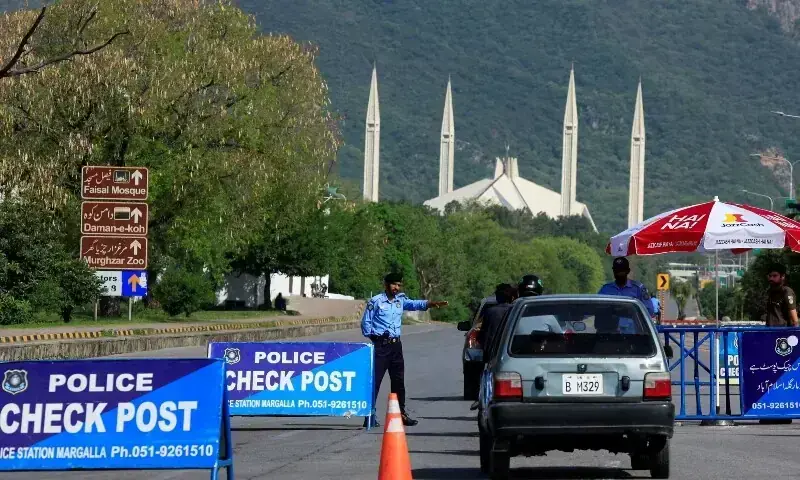
ISLAMABAD: Security arrangements at places of worship in the federal capital, particularly during Friday prayers, were found lacking after Islamabad Inspector General of Police Syed Ali Nasir Rizvi visited a number of mosques and imambargahs to review the measures in place, according to police officials.
Officials said the police chief inspected several worship sites, including Jamia Masjid Bibil in Sector G-6/3, and found the arrangements there inadequate because no police official was present on duty. They said similarly weak and unsatisfactory arrangements were also observed at a number of other places of worship in the capital, including some situated within the high-security zone.
According to the officials, some worship places had no security deployment at all. In other cases, only a single unarmed policeman was seen outside, while seminary students were sitting at the main entrance to provide security.
The officials said the inspector general noted that negligence in security matters could put public safety at risk. Show-cause notices were subsequently issued to station house officers from the office of the AIG Establishment, stating that the negligence in connection with security could compromise public safety.
Police officials said supervisory officers and SHOs were questioned over the failure to enforce the security plan. They added that it was the primary responsibility of supervisory officers to ensure complete security arrangements at places of worship in line with the approved plan and to have it implemented through SHOs.
According to the officials, those responsible did not perform their duties professionally and efficiently. They also said no supervisory officers were present in the field to inspect deployments or question SHOs over the non-implementation of the security plan during Friday prayers.
Security categorisation
The capital has 990 mosques and 33 imambargahs. These worship places have been divided into three categories.
Officials said 43 mosques and 21 imambargahs fall in Category A, while 351 mosques and seven imambargahs have been placed in Category B. Another 596 mosques and five imambargahs are listed in Category C.
Most places of worship in Category A belong to the Deobandi sect and face threats linked to terrorism and sectarianism, officials said. Most sites in Category B belong to the Barelvi school of thought and face terrorism and sectarian threats as well as disputes related to land ownership and possession.
Places of worship placed in Category C are those where no serious threats have been identified. Officials said there are no major sectarian issues or disputes at these locations.
They said the categorisation was carried out after a security audit conducted by the Special Branch of the capital police, the Counter Terrorism Force and other police wings, with assistance from intelligence agencies.
Inspector General of Police Syed Ali Nasir Rizvi was approached for comment, but did not respond.
Comments
No comments yet. Be the first to join the discussion!


