FCC upholds ruling against lifetime perks for former Balochistan chief secretaries
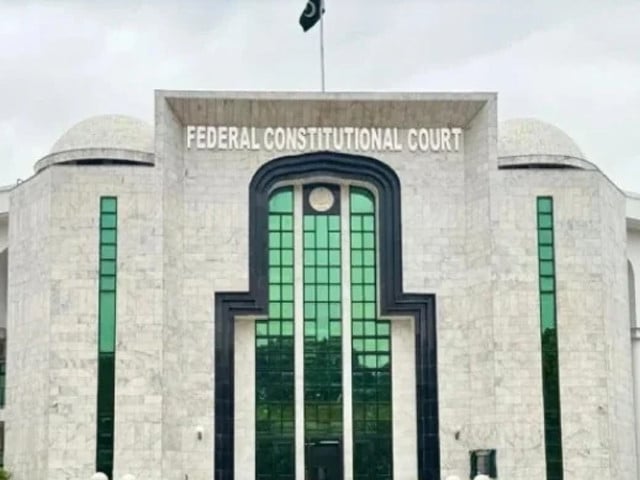
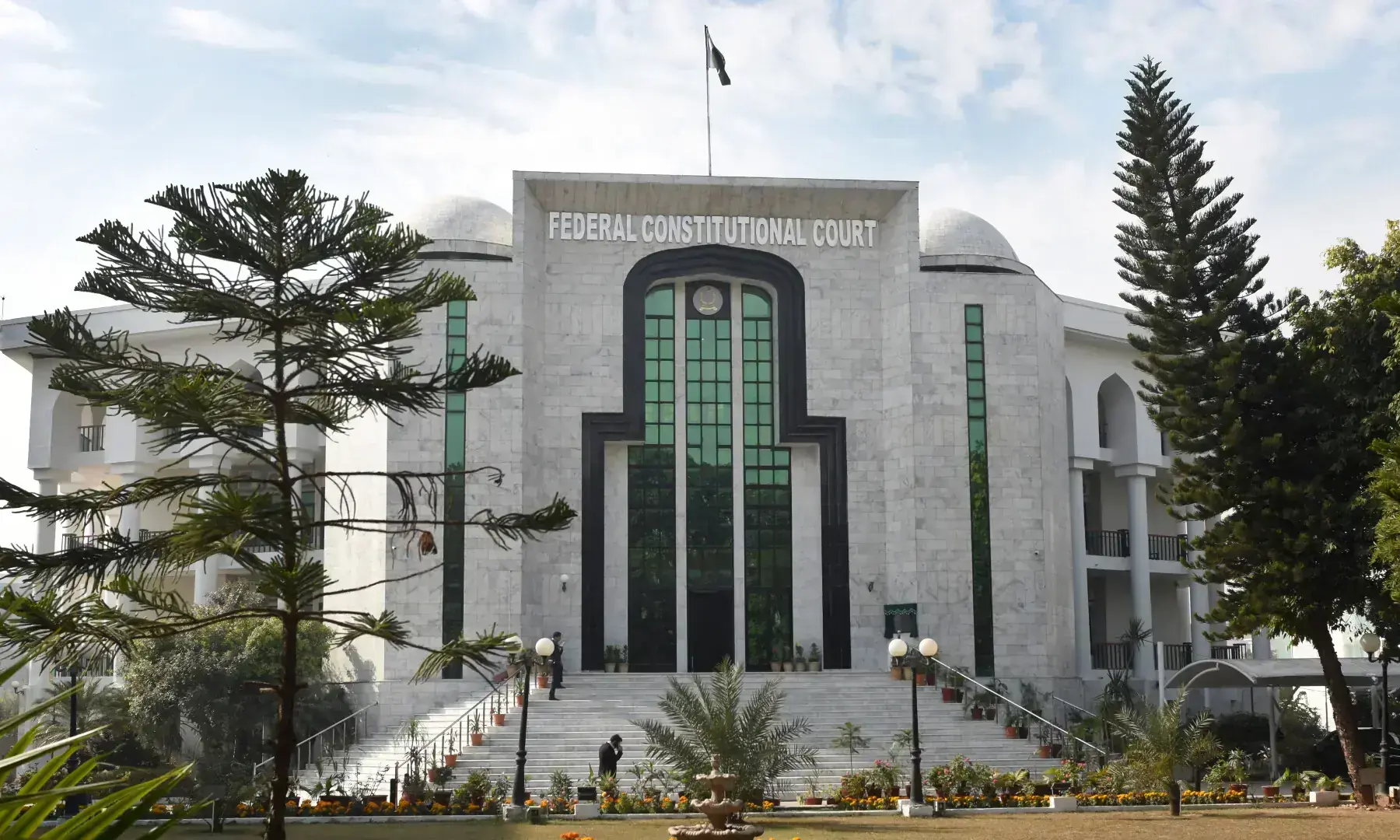
The Federal Constitutional Court has dismissed the Balochistan government’s appeal and upheld a ruling striking down lifetime perks for former chief secretaries and their widows. The court said such benefits had no legal basis.


ISLAMABAD: The Federal Constitutional Court (FCC) has dismissed an appeal by the Balochistan government and upheld a Balochistan High Court ruling that struck down a notification granting lifetime additional benefits to former chief secretaries of the province and their widows.
According to a four-page judgment authored by Justice Amir Farooq, the court declared the notification null and void and held that any government action taken in violation of the law is unjustified.
The case arose after the Government of Balochistan issued a notification extending lifetime benefits to former top bureaucrats and their families. The notification was challenged before the Balochistan High Court by Bayazid Khan Kharooti, and the high court accepted the petition, ruling that such benefits could not be granted without legal backing in law, rules or regulations.
The provincial government later filed an appeal, which has now been rejected by the FCC.
Court’s findings
The judgment said there is no legal provision that allows retired chief secretaries or their families to receive lifetime additional benefits. Post-retirement pensions and privileges can only be granted in accordance with existing laws.
Justice Farooq observed that the authority to frame rules relating to salaries, pensions and benefits rests exclusively with the finance department. The judgment said neither the finance minister nor the chief secretary has the power to grant such benefits independently.
It further noted that the additional perks in the case had been approved by the chief minister of Balochistan, which the court found to be contrary to the Constitution and the law.
Any action, of whatever nature, must be firmly rooted in law and must be traceable to a legal source from which it derives its authority.
The judgment described this principle as fundamental to the constitutional framework of governance.
The court also said a review of the Balochistan Rules of Business, 2012, did not support the extension of additional perks and privileges to the chief secretary. Referring to Rule 3(4), the judgment said the structure of the provincial government distributes functions among departments as specified in Schedule I (Section B), making clear that each department may exercise only those powers expressly assigned to it.
In this context, the court highlighted that the finance department is specifically empowered to frame civil service rules relating to pensions, leave, pay revisions, and their interpretation for all government servants. Pensionary matters, including those concerning the chief secretary, fall within the exclusive domain of the finance department rather than the chief secretary or the chief minister.
The judgment also observed that the impugned notification had been issued by the Services and General Administration Department with the approval of the chief minister, an arrangement the court said was neither contemplated nor supported by the Rules of Business.
Consequently, the notification, having been issued without the requisite competence, was appropriately struck down by the high court.
Referring to the Balochistan Civil Servants Act, 1974, the court noted that civil servants, upon retirement, are entitled only to pensions or gratuities as prescribed by law, and said this provision applies to all officials, including the chief secretary. It stressed that pension structures are governed by law and cannot exceed prescribed limits.
The judgment further pointed out that the Balochistan Civil Servants Pension Rules, 1989, govern retirement benefits, and that the additional perks granted under the notification are not mentioned in those rules and therefore have no legal basis.
While dismissing the appeal, Justice Farooq said the high court’s reasoning did not suffer from any legal or jurisdictional defect warranting FCC interference, and leave to appeal was refused.
Comments
No comments yet. Be the first to join the discussion!