

May 1, 2026
Study highlights lack of inclusivity in Punjab primary textbooks, calls for reforms
A new study has found discriminatory and exclusionary content in Punjab’s primary-level textbooks and called for urgent curriculum reforms. It says minority faiths are underrepresented and urges greater emphasis on tolerance, empathy and interfaith harmony.

May 1, 2026
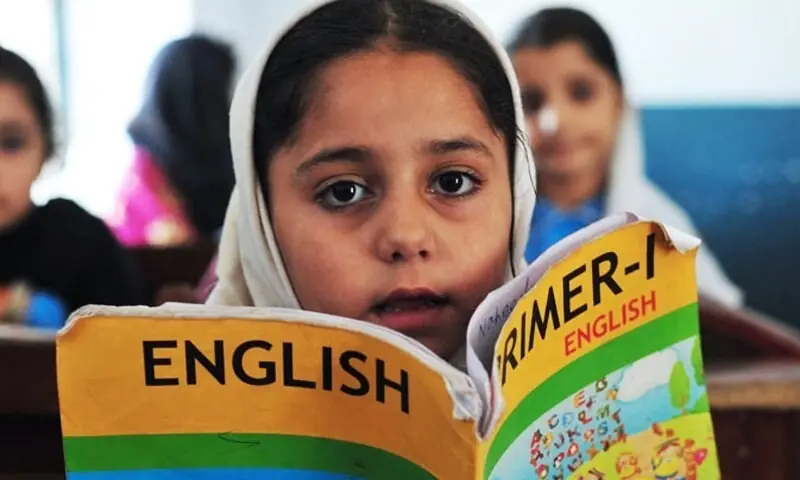
ISLAMABAD: A new study has pointed to major shortcomings in inclusivity in primary-level textbooks taught in Punjab and urged immediate curriculum changes to encourage tolerance and interfaith harmony.
The study, titled Inclusive Education for a United and Harmonious Pakistan, was launched by Action for Impact (AFI) in collaboration with the Weaving People to Grow Foundation (WPTGF). According to a press release, the research was carried out during 2024–2025 and examined discriminatory and exclusionary material in textbooks used across Punjab.
As per details, the study was based on consultations with education experts, teachers, young people and development professionals. It identified systemic problems that, according to the findings, contribute to intolerance, the marginalisation of faith-based communities and weak development of critical thinking among students.
The study said Pakistan’s education system remains deeply divided, with public, private, missionary and seminary institutions operating under different curricula and standards. Although the Single National Curriculum (SNC) was introduced to create uniformity, its implementation has remained uneven and it has not adequately addressed issues related to religious representation, critical thinking and inclusion.
The study said the need for reform became more apparent after the Jaranwala incident, in which over 85 Christian homes and more than 20 churches were attacked and vandalised. The episode exposed the vulnerability of religious minorities in Pakistan and underscored the need to address the social attitudes that fuel intolerance. Subsequent incidents involving Ahmadi, Hindu and other minority communities showed the systemic nature of religious discrimination.
According to the study, Pakistan has a population of more than 207 million, of which 96 per cent are Muslims and 4pc belong to religious minorities, including Christians, Hindus, Sikhs, Parsis, Baha’is, Ahmadis, Buddhists, Kalash and other scheduled castes. Non-Muslims accounted for 23pc of the population at the time of independence in 1947, but that figure has declined to 4pc.
The findings said existing curricula largely reflect the majority religion while giving limited space to minority faiths. The press release said this imbalance narrows students’ exposure to diversity and raises concerns about whether the content aligns with constitutional guarantees of equality.
Launch event and recommendations
The formal launch was attended by representatives from civil society, media, academia and government. The panel included WPTGF Executive Director Kiran Peter, IDRAC Executive Director Amjad Nazeer, Rawalpindi Press Club In-Charge Shakila Jalil, Poda Pakistan Executive Director Sameena Nazir, Punjab Minister for Minorities Affairs Sardar Ramesh Singh Arora and civil society activist Tariq Mehmood Ghouri.
Speaking at the event, AFI Chief Executive Officer Zartasha Niazi said curriculum reform aimed at inclusion was an urgent requirement and had repeatedly been highlighted by different faith-based communities across the country. She said a child’s development begins at home and continues in educational institutions, and both spaces should foster tolerance, empathy and respect for diversity. She also said that more than 30 contributors, including students, teachers and development sector professionals, took part in the research.
Presenting the findings, Kiran Peter pointed to several concerns identified through the curriculum review, including the presence of discriminatory content and gaps in interfaith representation, and the need for age-appropriate material. She also stressed the importance of sensitising teachers to reduce discriminatory behaviour in classrooms.
Amjad Nazeer welcomed the research and underlined the need for teacher training and more inclusive school environments. He said religious content should mainly remain within relevant subjects, while other subjects should focus on broader human values and social development.
Shakila Jalil drew attention to structural divisions in Pakistan’s education system, citing differences among public, private and religious institutions. Sameena Nazir stressed the urgency of tackling discriminatory practices in schools and shared an example from a primary-level institution.
In his concluding remarks, Sardar Ramesh Singh Arora referred to recent Punjab government efforts to promote interfaith harmony, including initiatives recognising diverse religious communities. He appreciated the study and said gaps still existed in curriculum content, especially in the representation of non-Muslim figures such as Bhagat Singh, Ranjit Singh and Guru Nanak, along with other contributors to Pakistan’s history.
He said bias needed to be addressed not only in the curriculum but also at the household and societal levels. He further stated that the research was an important first step and expressed the government’s willingness to support its recommendations. He added that the study would be forwarded to the Punjab Education Ministry for consideration and possible implementation.
The study also called for greater emphasis on universal values including humanity, empathy, environmental responsibility and responsible citizenship, while reducing the overemphasis on conflict-driven narratives.
0 Comments
No comments yet. Be the first to join the discussion!


