Report flags governance failures in Pakistan’s climate disaster response
A Jinnah Institute report says governance failures and weak community-level systems are undermining Pakistan’s climate disaster response. It calls for urgent reforms to strengthen resilience, improve early warning systems and revive local governance.

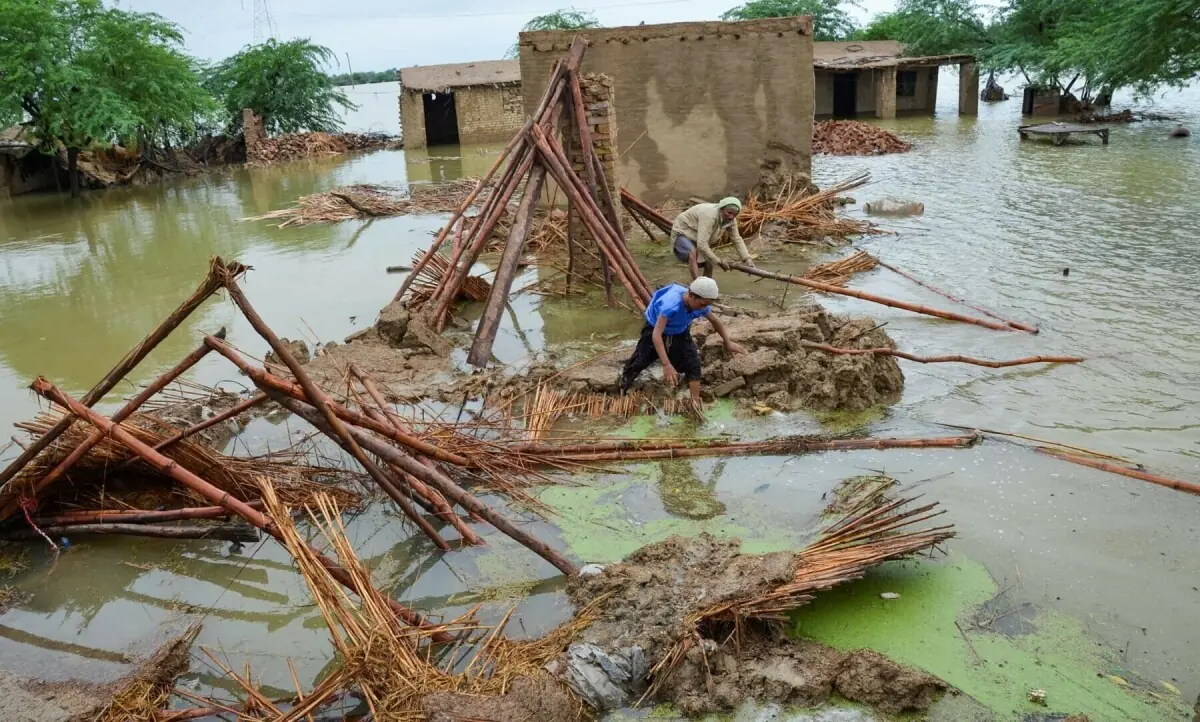
ISLAMABAD: A new report by the Jinnah Institute has warned that continuing governance shortcomings and weak systems at the community level are hampering Pakistan’s capacity to prepare for and respond to climate-related disasters, and has called for urgent reforms to strengthen resilience in vulnerable districts.
The report was released after the 2025 floods, which it said inundated entire districts, displaced millions of people and destroyed livelihoods. According to the study, the scale of the disaster exposed major weaknesses in preparedness despite years of policy frameworks, institutional changes and international commitments.
A continued dependence on reactive disaster management is no longer adequate as climate pressures intensify. Drawing on input from more than 330 participants, including 36 focus group discussions and 24 key informant interviews conducted across the country, the study examined how communities experienced climate shocks, managed their immediate impacts and recovered afterward.
The study moves beyond conventional vulnerability assessments and instead looks at resilience through lived experiences. One of its central components is described as Pakistan’s first district-level Resilience Index, which ranks 130 districts across five areas: human capital, economic well-being, standard of living, urbanisation and digital access.
According to the index, there are sharp differences between districts. Lahore received a score of 0.72, while Lehri in Balochistan scored 0.14. These results highlight deep regional disparities and offer a baseline for policymakers and development partners to track progress over time.
Drivers of resilience
The report identified seven major factors that communities linked with resilience. These included access to education and vocational training, women’s ownership of assets, digital literacy, strong community networks, social protection programmes such as the Benazir Income Support Programme (BISP), the availability of public services and closeness to urban centres.
Respondents described resilience in practical terms, presenting it as a gradual process of moving away from conditions that sustain vulnerability.
The study also examined how vulnerability is shaped by social conditions. Women who own assets and have decision-making power show stronger adaptive capacity, but still face obstacles in obtaining documentation, accessing financial services and moving freely. Persons with disabilities pointed to both physical and social barriers, while transgender individuals said they often depend on urban anonymity for safety and have limited access to healthcare, education and family support.
Young people in remote areas face restricted opportunities and are often left choosing between costly education and limited employment options near home.
Governance and exclusion concerns
Informal support networks and community-based organisations are helping fill gaps in service delivery, but it cautioned that such arrangements cannot substitute for formal state systems.
It identified governance problems as a major issue, saying early warning systems often do not reach populations at risk in time and coordination among institutions remains fragmented. It also pointed to environmental mismanagement, including deforestation, illegal construction in floodplains and neglect of wetlands and drainage systems, as factors that worsen the effects of disasters.
The lack of effective local governments further deepens these problems by leaving communities without grievance redressal mechanisms or meaningful ways to communicate their needs.
It also said marginalised groups, including refugees, religious minorities and persons with disabilities, face heightened risks because of documentation barriers and exclusion from social protection programmes.
Policy recommendations
The report set out a policy roadmap urging federal and provincial authorities to revive local governance structures, reform welfare systems and improve early warning and accountability mechanisms. It also called on development partners to back community-led adaptation efforts and invest in district-level data.
In addition, the study urged the private sector to move beyond short-term corporate social responsibility efforts and make longer-term investments in climate resilience.
The report stressed that resilience-building must be rooted in community participation, warning that without inclusive and coordinated action, the country’s most vulnerable populations will remain exposed to repeated climate shocks.
Comments
No comments yet. Be the first to join the discussion!