

Out-of-pocket payments: the hidden tax on the sick
In Pakistan, illness brings a bill families can’t afford. In 2023, 52.9% of health spending came from household pockets, fueling hardship, impoverishment, and poverty.

Not enough is spent on health either
In Pakistan, illness does not arrive alone. It often comes with a bill the family cannot afford. That is the real meaning of out-of-pocket health spending. It is not just an economic indicator buried in a database. It is the mother delaying treatment because medicines are too expensive. It is the father borrowing money for a hospital visit. It is the household cutting food, schooling, or transport to pay for tests, injections, and surgery. In a country like Pakistan, sickness has become a private financial crisis. That is why out-of-pocket payments deserve to be called what they are: a hidden tax on the sick.
The numbers are blunt. In 2023, 52.9 percent of out-of-pocket expenditure (percentage of current health expenditure) in Pakistan came directly from household pockets. That means families financed more than half of healthcare themselves, at the point of illness, when they were least able to plan for it. This is not financial protection. It is financial exposure.
Pakistan’s position in the region should worry policymakers. Pakistan still performed worse than South Asian countries such as India (43.9 percent), China (32.2 percent), Bhutan (25.5 percent), and Maldives (18.0 percent). Even Sri Lanka, at 54.8 percent, stood only slightly above Pakistan. This is not where a country of more than 240 million people should stand.
What makes the picture worse is that Pakistan is not only asking families to pay too much; it is also spending too little overall. In 2023, current health expenditure in Pakistan was only 2.52 percent of GDP. That was below India (3.34 percent), Sri Lanka (3.68 percent), Bhutan (4.42 percent), China (5.94 percent), Nepal (6.16 percent), and Maldives (9.25 percent). Only Bangladesh, at 2.17 percent, spent a smaller share among the countries compared here. In short, Pakistan combines low collective spending with high private burden. It is a bad bargain for the public.
A decent society does not force its citizens to choose between treatment and survival. It does not wait for sickness and then hand over the bill to frightened families. Until Pakistan reduces its dependence on out-of-pocket payments, illness will remain more than a health problem. It will remain a pathway to poverty. That is not just bad economics. It is a moral failure.
The state’s own role remains weak. In 2023, domestic general government health expenditure in Pakistan was just 0.90 percent of GDP and 35.7 percent of current health expenditure. Compare that with China, where government health spending was 3.39 percent of GDP and 57.1 percent of total health expenditure, or Maldives, where it reached 7.30 percent of GDP and 78.9 percent of total health expenditure. These differences matter because when the state does not carry enough of the burden, households are forced to do so.
And households are paying dearly. The available data shows that in Pakistan, 33.9 percent of the population faced financial hardship due to out-of-pocket health spending, while 28.5 percent faced impoverishing health expenditure. Even more troubling, 3.0 percent were pushed into poverty because of medical payments, and 25.4 percent were further impoverished. These are not minor side effects. They are signs of a system that turns illness into economic punishment.
Worse, families are paying heavily without receiving outcomes that match their sacrifice. In 2023, life expectancy in Pakistan was 67.6 years, below Bangladesh (74.7), India (72.0), Sri Lanka (77.5), China (78.0), and Maldives (81.0). Pakistan’s under-five mortality rate was 58.5 per 1,000 live births, compared with 27.7 in India, 30.6 in Bangladesh, 26.5 in Nepal, and just 6.1 in Sri Lanka. So the country is not only underinvesting in health; it is also failing to shield families from ruin while producing weaker outcomes.
This is the heart of the matter: Pakistan’s health system is underfinanced at the national level and overburdened at the household level. It spends too little collectively and asks too much individually.
The answer is not complicated, even if it is politically inconvenient. Public spending on health must rise. Primary care must be strengthened so people are treated earlier and more cheaply. Essential medicines must become more affordable. And financial protection must become a serious policy goal, not a slogan.
A decent society does not force its citizens to choose between treatment and survival. It does not wait for sickness and then hand over the bill to frightened families. Until Pakistan reduces its dependence on out-of-pocket payments, illness will remain more than a health problem. It will remain a pathway to poverty. That is not just bad economics. It is a moral failure.
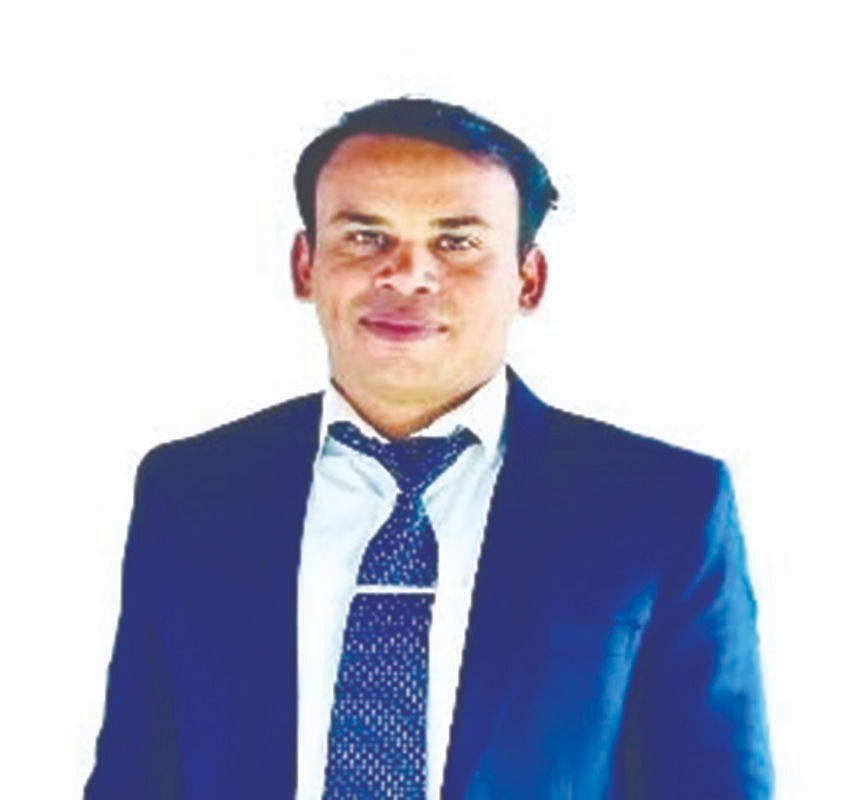
The writer is a researcher and writer with 32 published articles and two book chapters in reputable academic journals. He is currently associated with Northwest A&F University (NWAFU), Yangling, Shaanxi, China. His PhD research focuses on Artemisia argyi, a medicinal plant known for its therapeutic potential against more than 50 diseases. He can be reached at [email protected].
View all articles →Comments
No comments yet. Be the first to join the discussion!


