Punjab women’s cases pile up as ombudsperson office remains vacant
Thousands of workplace harassment and inheritance cases in Punjab are pending as the provincial ombudsperson’s office has remained vacant since May 2025. Official figures show more than 1,000 recent harassment cases and over 4,000 inheritance claims are awaiting resolution.


LAHORE: Thousands of workplace harassment and women’s inheritance cases in Punjab have been delayed as the office of the provincial ombudsperson for women has remained vacant for the past nine months, creating a growing backlog of complaints.
The post has been unfilled since May 2025, after the end of the last appointment made during former chief minister Usman Buzdar’s tenure. The Provincial Ombudsperson for Women’s office was set up in 2013. Since its establishment, Dr Mira Phailbus served from 2013 to 2015, Farukhanda Wasim Afzal from 2015 to 2017, Rukhsana Gilani from 2018 to 2021, and Nabila Hakim Ali Khan from 2021 until May 2025.
According to official figures cited in the report, 6,654 cases were registered between 2021 and 2024. In 2021, 1,358 cases were registered and all were resolved. In 2022, 604 cases were disposed of. In 2023, 1,812 cases were resolved. In 2024, 1,880 cases were received, of which 1,860 were decided and 20 remained pending.
From 2025 to March 2026, more than 3,000 cases were filed. Of these, 1,910 were decided, while more than 1,000 are still pending, mainly because there is no serving female ombudsperson.
Cited by The Express Tribune, workplace harassment complaints have risen over the past six years, but many remain undecided because the office is not functioning fully. Most complaints have come from the education, health, police, population welfare, information, minorities, transport and social welfare departments, where large numbers of women are employed.
A female officer from the Education Department said she had been facing repeated harassment at her workplace and was being pressured to meet officials privately. She said that despite filing a complaint, her case has remained pending for more than a year, with repeated hearings but no decision.
Inheritance claims also delayed
The Punjab Enforcement of Women Property Rights Act 2021 was enacted to protect women’s inheritance rights under Islamic law. Under the law, property rights cells were established in 10 divisional headquarters, where women can file inheritance claims. These claims are then verified by the administration and families are summoned to ensure lawful distribution of shares.
Between 2021 and March 2026, more than 10,000 inheritance cases were filed. Around 6,000 women received their share, while more than 4,000 cases remain pending. Lahore recorded the highest number of cases, followed by Multan, Sahiwal and Dera Ghazi Khan. The property involved in these disputes is worth billions of rupees.
Several women described prolonged delays in their cases. Shazia Bibi said her inheritance matter has been pending for three years, with repeated hearings because family members do not appear. Samina Nadeem also said her case remains unresolved despite being given dates every one to two months.
“My case has been ongoing for two years, with repeated reports and valuations causing delays”, Ayesha said, adding that she was facing threats from her brothers through police pressure but would not withdraw her claim.
Officials and legal experts respond
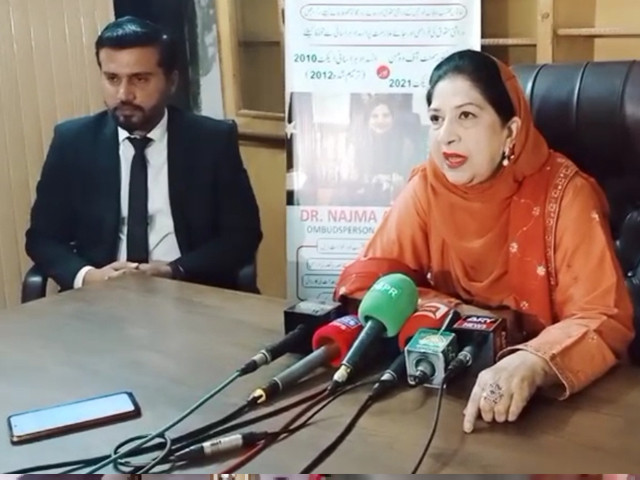
Legal expert Abdullah Malik said the absence of an ombudsperson has left thousands of cases pending. He also said the recent appointment of Dr Najma Afzal Khan was politically influenced and allegedly not in line with legal procedure.
“Flaws in the Women Property Rights Act, lack of coordination with district administration, and parallel court cases are causing delays and slowing justice delivery”, Malik said.
Secretary Women Development and spokesperson for the ombudsperson, Uzma Rubab, said a helpline, 1043, has been established under the Punjab Commission on the Status of Women.
“Complaints are forwarded to departments, which are legally bound to form inquiry committees under harassment laws”, Rubab said.
Former ombudsperson Nabila Hakim Ali Khan said complaints were dealt with according to the law during her tenure and that most cases were resolved quickly.
“Public awareness has increased reporting, but there was no backlog during my tenure as many cases were settled through mutual agreement”, she said.
Comments
No comments yet. Be the first to join the discussion!