North Korea steps up missile activity amid Middle East conflict, analysts say
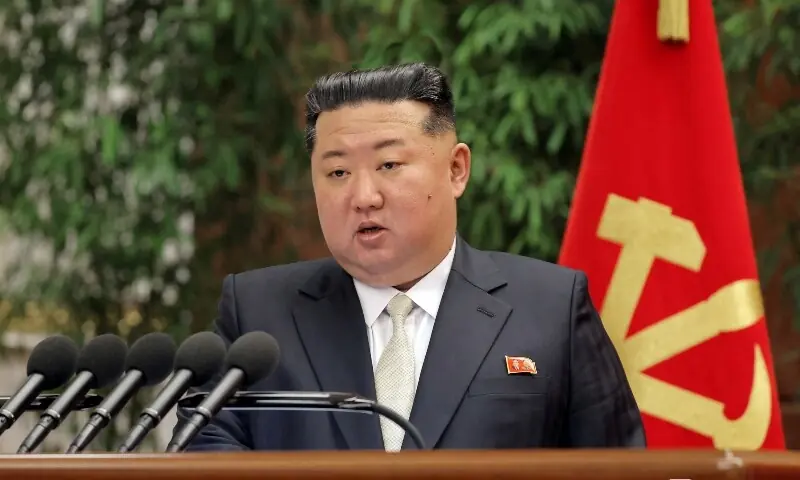
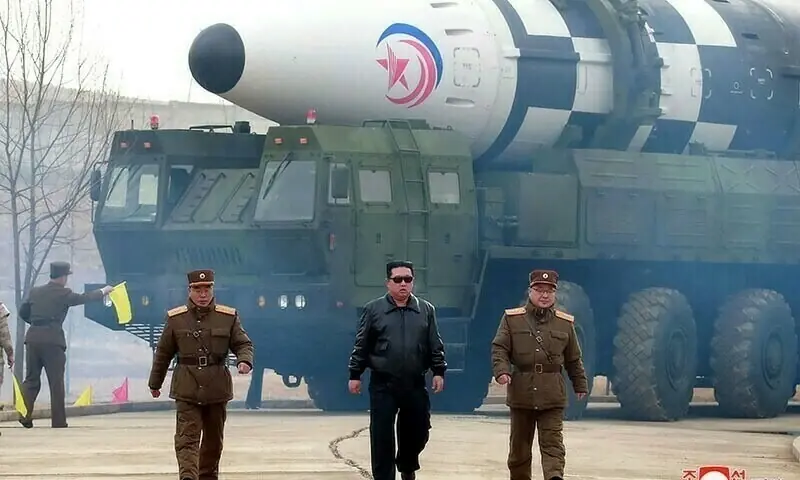
North Korea has carried out five missile launches since late February, including four in April, as analysts say Pyongyang is using the Middle East conflict to advance weapons development and reinforce its nuclear status.

PYONGYANG: North Korea has accelerated weapons activity during the Middle East war, with analysts saying Pyongyang is using the moment to advance military development and reinforce its claim to permanent nuclear status as international norms weaken.
North Korea has carried out five missile launches since US-Israeli strikes on Iran began in late February, including four in April so far. This is the highest number in a single month since January 2024.
The launches came after leader Kim Jong Un vowed to strengthen the country’s nuclear forces. They have also coincided with closer ties between Pyongyang and Moscow and increasingly harsh rhetoric directed at US ally South Korea.
Lim Eul-chul, a North Korea specialist at South Korea’s Kyungnam University, said the launches appear to fit into a broader strategy shaped by changing relations among the United States, Russia and China.
“The current global security landscape has transformed into a ‘lawless zone’ where existing international norms no longer function”, he said.
Pyongyang has denounced US attacks on Iran as gangster-like, but it is not believed to have supplied weapons to Tehran. North Korea has avoided directly attacking President Donald Trump in its statements. Trump is expected to travel to China next month for a summit, and there has been speculation he could meet Kim around that time.
Hong Min, a senior research fellow at the Korea Institute for National Unification, told AFP that Pyongyang may be trying to underline its position ahead of that summit.
“With the summit likely to draw attention to the North Korea agenda, Pyongyang may have seized the moment to reinforce its message that it is an irreversible nuclear state”, he said.
Hong added that North Korea also wants to send a continuous signal that it possesses a fundamentally different deterrent posture from Iran’s.
Weapons development and nuclear posture
The recent burst of launches began shortly after the Workers’ Party congress in February, a major event held once every five years to set state priorities. Hong said the timing indicates North Korea may be seeking to front-load visible progress in weapons capability.
At the congress, Kim said North Korea’s position as a nuclear weapons state has been consolidated to be irreversible and permanent.
The launches have included ballistic missiles banned under sanctions, anti-warship cruise missiles and cluster munitions. Analysts cited by AFP said the tests pointed to technical progress and increasing skill with dual-use systems that can serve both nuclear and conventional purposes.
Lim said the launches showed signs that North Korea can fit miniaturised nuclear warheads onto missiles and carry out saturation attacks designed to overwhelm interception systems through volume.
He said Pyongyang is likely to continue ballistic missile testing as it shifts from basic weapons development toward what he described as the normalisation of nuclear operations.
The regime judges that while the US is tied down in the Middle East, it is the optimal time to accelerate offensive deterrence and the parallel development of nuclear and conventional forces.
Russia ties and broader support
The launches also reflect North Korea’s readiness to display support from Russia, which has provided economic and technical help in exchange for thousands of North Korean troops sent to assist Moscow’s invasion of Ukraine.
“This is an attempt to demonstrate that they have a powerful ally in Russia despite pressure from the US and China, effectively rendering sanctions obsolete”, Lim said.
Recent exchanges between Pyongyang and Moscow have included celebrations marking the linking of their first road bridge, the start of construction on a friendship hospital, and the opening of a North Korean military memorial complex.
Russia’s defence, interior, natural resources and health ministers have visited North Korea, along with the speaker of parliament, the head of the country’s trade union federation and the chief of the TASS news agency.
North Korea’s ambassador to Moscow also reportedly discussed agricultural cooperation with the Russian-installed leader of Kherson in occupied Ukraine.
Fyodor Tertitskiy, a Russian-born scholar at Korea University in Seoul, said North Korea is among the few states willing to operate in occupied Ukrainian territory.
“North Korea is one of the few countries that would not be afraid to operate in occupied Ukraine, and both sides are making use of this”, he said.
Cultural links have also expanded, with Russia hosting an exhibition of North Korean art praising the Ukraine war and a North Korean restaurant operating in Moscow.
Olga, an administrator at a Moscow travel agency offering tours to North Korea for around $1,500, said interest remains steady.
“There is no ‘boom’ or sharp increase, but there are always clients interested in this country”, she said.
Tertitskiy, however, said he was doubtful the relationship would remain strong after the war in Ukraine, describing it as driven almost exclusively by the ongoing invasion.
Comments
No comments yet. Be the first to join the discussion!