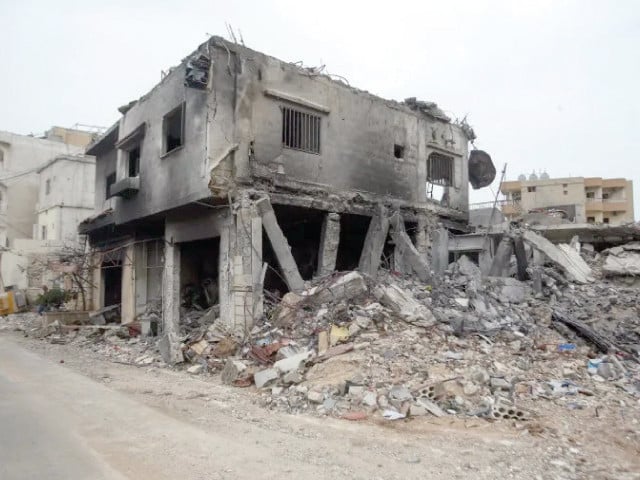
Hezbollah says it fired rockets and drones at northern Israel
Hezbollah said it fired rockets and drones at northern Israel, accusing Israeli forces of violating a ceasefire. Israel said the attack was a blatant breach of the truce as US-mediated talks are set to continue this week.

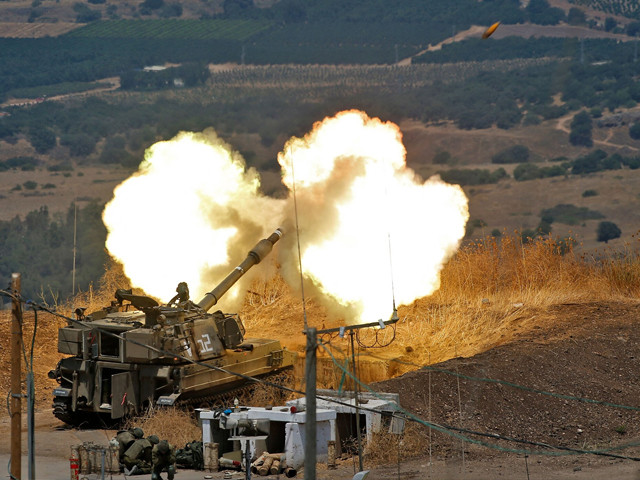
BEIRUT: Hezbollah said on Tuesday it launched rockets and drones toward northern Israel, accusing the Israeli military of breaching a ceasefire ahead of US-mediated talks between the Israeli and Lebanese governments later this week.
Earlier, the Israeli military said the Iran-aligned group had fired several rockets toward its troops operating in southern Lebanon, calling it a blatant violation of the ceasefire agreement. It was not immediately clear whether the incident described by Hezbollah was the same one referred to by the Israeli military.
A 10-day ceasefire between Israel and Hezbollah, mediated by Washington, took effect last Thursday. Despite that, Israeli forces remain deployed in a strip of Lebanese territory stretching 5 to 10 kilometres deep along the border.
Israel has said it wants to establish a buffer zone to protect northern Israel from attacks by Hezbollah, a Shi'ite Muslim group. In its statement on Tuesday, Hezbollah accused Israel of targeting civilians and demolishing homes in violation of the truce. It said it had struck a position in northern Israel from which attacks on southern Lebanon had been carried out.
The Israeli military said it hit the launcher used to fire the rockets. It also said sirens in northern Israel were likely triggered after a drone launched from Lebanon was intercepted. The military did not answer a question on whether Hezbollah's announced attack was the same as the one it had reported earlier.
Talks and warnings
On Thursday, the United States is due to host a second round of ambassador-level talks between Israel and Lebanon. Lebanon was drawn into the war on March 2, when Hezbollah opened fire in support of Tehran in the wider regional conflict.
Parliament Speaker Nabih Berri, Lebanon's most senior Shia statesman and an ally of Hezbollah, told Lebanese newspaper al-Joumhouria earlier that Israeli forces holding positions in the south would face resistance.
"If Israel maintains its occupation, whether of areas, positions, or by drawing yellow lines, it will smell the scent of resistance every day, said Berri, who also leads the Shi'ite Amal Movement," he said.
Last week, both the Israeli military and Prime Minister Benjamin Netanyahu referred to Israel's deployment line in Lebanon as the Yellow Line, the same expression Israel has used for its deployment line in Gaza. Israeli officials have since stopped using that wording and now describe it as a forward defense line. A military map published on Sunday marked the line in red and also showed a naval forward defense area extending from Lebanon's coast into the sea.
Developments on the ground
Since the ceasefire took effect, the Israeli military has continued demolitions in southern villages, saying it is targeting Hezbollah infrastructure located in civilian areas. Lebanese state media reported on Tuesday that Israeli detonations had taken place in at least eight villages and that Israeli artillery had shelled several areas.
Israel withdrew from southern Lebanon in 2000 after a 22-year occupation, during which Hezbollah, Amal and other groups carried out attacks on Israeli forces. Lebanese authorities say Israeli strikes on Lebanon have killed nearly 2,300 people since March 2.
In his remarks to al-Joumhouria, Berri repeated his position that direct talks with Israel were unnecessary, saying he had taken part in several rounds of indirect negotiations with Israel over the years.
The report also said Aoun has listed Israeli withdrawal among Lebanon's objectives in face-to-face talks with Israel. His administration has sought Hezbollah's peaceful disarmament for a year.
Lebanese Prime Minister Nawaf Salam said on Tuesday that his government did not want a confrontation with Hezbollah but would not be intimidated by it.
Israeli Defense Minister Israel Katz said on Tuesday that the ultimate objective of the campaign against Hezbollah was to have the group disarmed through military and diplomatic means.
"If the Lebanese government continues not to keep its commitment (to disarm Hezbollah), the IDF (Israel Defense Forces) will do so by continuing its military activity, Katz said in Tel Aviv," he added.
Netanyahu struck a softer tone last Friday, saying that disarming Hezbollah will not be achieved tomorrow. It requires sustained effort, patience, and endurance, and it requires wise navigation of the diplomatic field.
Comments
No comments yet. Be the first to join the discussion!