

April 21, 2026
IMF adds 11 more conditions to Pakistan’s $7 billion bailout programme
The IMF has added 11 new conditions to Pakistan’s $7 billion bailout programme, taking the total to 75 in less than two years. The new requirements cover budget approval, energy pricing, tax administration, procurement rules and changes to special economic zones.

April 21, 2026
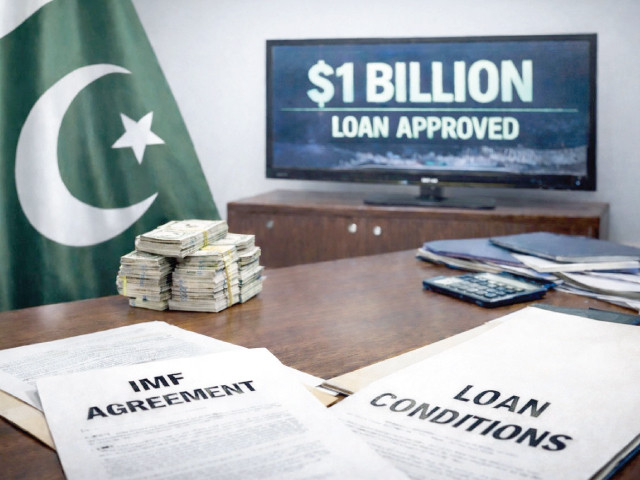
ISLAMABAD: The International Monetary Fund (IMF) has attached 11 additional conditions to Pakistan’s $7 billion bailout programme, including parliamentary approval of the next federal budget in line with the lender’s staff-level agreement and legal changes affecting special economic and technology zones.
The government has committed that the National Assembly will pass the fiscal year 2026-27 budget in accordance with the IMF staff agreement. It is the second time under the current programme that such a condition has been accepted, after the previous budget was also approved under IMF-linked requirements.
Government sources said the staff-level agreement reached last month became possible after the inclusion of the 11 new conditions. With these additions, the total number of conditions imposed in less than two years has risen to 75, covering economic decision-making, governance and private sector development.
Pakistan has also assured the IMF that it will present a fiscally consolidated budget and will not pursue higher economic growth targets in the next fiscal year. Finance Minister Muhammad Aurangzeb gave this assurance to the IMF’s deputy managing director during his visit to Washington last week.
Changes to zone incentives and domestic sales restrictions
Sources said Pakistan will, by June 2027, amend the Special Economic Zones (SEZ) Act and the Special Technology Zones Authority (STZA) Act to gradually end existing fiscal incentives and move from profit-based incentives to cost-based incentives. The country will also revise these laws to remove the powers of the Board of Approvals, the Board of Investment and SEZ authorities to grant tax incentives.
The legal amendments are to be made to the satisfaction of the IMF and are aimed at fully phasing out all existing fiscal incentives for special technology zones by 2035. The government has also agreed to stop export processing zones from selling goods in the domestic market, with the restriction to take effect by September this year.
This condition was accepted while the National Assembly Standing Committee on Finance was considering amendments to the SEZ law last week without detailed discussion. After the meeting, Investment Minister Qaiser Sheikh said the government would lease 6,000 acres of land in Karachi to developers for SEZs without charging any money. He said any developer could obtain up to 1,000 acres on lease, although the terms had not yet been finalised.
The law also bars courts from taking cognisance of commercial legal disputes related to these zones. Pakistan has further assured the IMF that it remains committed to not introducing new zones until negotiations conclude on possible exceptions for notifying new STZs in priority sectors and on phasing out all current incentives by 2035, with the stated aim of creating a level playing field for investment and strengthening the business environment nationally.
Disbursement, regulatory reforms and foreign exchange roadmap
Out of the $7 billion programme, the IMF has so far disbursed $3 billion. The fourth tranche of $1 billion is expected in the first week of May.
Under another new condition, the government will establish the Pakistan Regulatory Registry by June next year to improve the business climate. The registry is to serve as a comprehensive and legally authoritative source on business regulations, beginning with federal government and Islamabad Capital Territory rules before later being extended to provincial regulations.
The IMF is also pressing Pakistan to relax foreign exchange restrictions. In response, the State Bank has committed to preparing a roadmap for the gradual removal of those restrictions.
Energy pricing, tax administration and social protection
The government has accepted at least three additional conditions related to regular adjustments in electricity and gas prices. While similar requirements were already part of the programme, the lender added three more conditions to ensure the government remains committed to raising power and gas tariffs.
These conditions state that the Pakistani authorities remain committed to timely notifications of quarterly tariff adjustments (QTAs) and automatic monthly fuel charges adjustments (FCAs). In January 2027, Pakistan will fully implement the annual electricity price adjustment, reflecting the impact of recent volatility in global energy markets.
The government will also notify semi-annual gas tariff adjustments in line with cost recovery, as determined by the Oil and Gas Regulatory Authority (OGRA), first on July 1, 2026 and then on February 15, 2027.
Another condition requires the Federal Board of Revenue (FBR), by June this year, to centralise the audit case selection process and adopt a standardised audit manual, a published audit policy and a comprehensive audit and integrity risk register. The audit policy will require mandatory follow-up of all high-risk cases identified through the risk management system.
By September this year, the government is also to amend Public Procurement Regulatory Authority rules to remove preferences for state-owned enterprises in the award of public procurement contracts without competition, subject to federal cabinet approval.
To cushion the impact of higher energy prices and taxes, the government has accepted an IMF condition to raise compensation for Benazir Income Support Programme beneficiaries from Rs14,500 to Rs19,500 starting in January 2027. The increase is intended to cover projected inflation for 2026 and provide an additional rise in support, bringing quarterly benefits closer to 15% of the consumption basket of the lowest family income quintile.
0 Comments
No comments yet. Be the first to join the discussion!


