

UK plans closer EU alignment as Iran war strains ties with Trump’s US
Britain is preparing legislation to align more closely with the EU as the Iran war and tensions with Donald Trump’s administration reshape London’s foreign and economic priorities. The proposed bill is expected to be announced on May 13.

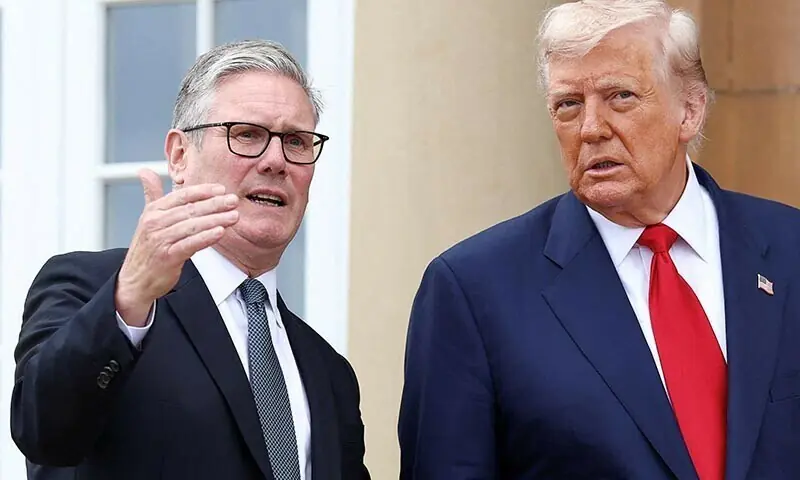
LONDON: Britain is preparing legislation aimed at drawing the country closer to the European Union as the war involving Iran adds strain to the United Kingdom’s relationship with the United States under President Donald Trump.
The proposed measure, described as an EU reset bill, is expected to be announced next month. A government official who spoke to AFP on condition of anonymity said King Charles III will unveil the legislation on May 13 when he sets out Prime Minister Keir Starmer’s legislative agenda for the coming months.
The bill would give ministers authority to bring British standards into line with EU single market rules as those rules change, in a process known as dynamic alignment. Starmer’s government is expected to introduce the legislation in the coming months, potentially around the 10th anniversary of the June 2016 Brexit referendum.
Iran war adds urgency to EU reset
Analysts and officials cited said recent developments have increased the urgency of the government’s push. Evie Aspinall, director of the British Foreign Policy Group think-tank, told AFP, “We have a government that is already eager to move closer towards the EU, and the events in Iran provide an opportunity to speed up that process.”
A UK official also told AFP, “Certainly Iran has made it (the reset) more prescient.” The official added, “We need to build economic resilience across the continent.”
Starmer has repeatedly argued for stronger economic and security ties with Europe since Labour won the 2024 general election and removed the Conservatives from power after their implementation of the 2016 Brexit vote. In recent days, he renewed that message, telling Dutch leader Rob Jetten on Tuesday that “he believed the partnership between the UK and the bloc needed to be fit for the challenges we were facing today”.
The EU remains Britain’s largest trading partner. The International Monetary Fund warned this week that the UK would be the advanced economy most affected by the Iran conflict.
Trump tensions and domestic politics
Trump’s unpredictability and repeated criticism of Britain have added momentum to Starmer’s effort to improve relations with the 27-member bloc. Starmer declined to involve Britain in the initial US and Israeli strikes on February 28, a decision that angered Trump, though he later permitted US forces to use British bases for what was described as a limited defensive purpose.
Days earlier, Trump had threatened in a phone interview with Sky News to abandon a US-UK trade deal that had softened the impact on Britain of his tariff measures.
David Henig, an expert on Britain’s post-Brexit trade policy, told AFP, “There’s no doubt that there is now momentum in the UK-EU relationship partly as a result of Trump’s unreliable behaviour.” He added, “Independent UK trade policy looks much harder, the prospects of working with the EU much brighter.”
Starmer has also come under pressure domestically over his appointment of former Jeffrey Epstein associate Peter Mandelson as ambassador to Washington, but has won praise for resisting Trump despite repeated taunts from the US president.
What the legislation would cover
Members of parliament would be asked to approve a mechanism allowing the government to adopt EU rules, in some cases without a full parliamentary vote, in areas where Britain has already reached agreements with the bloc.
Those areas include a trade arrangement intended to reduce red tape on food and plant exports, as well as plans for an electricity agreement that would connect the UK with the EU’s internal electricity market.
Britain and the EU are also seeking to complete talks on a youth mobility scheme in time for a joint summit in Brussels expected in late June or early July.
Starmer has ruled out rejoining the single market and has also rejected a return to free movement. The Liberal Democrats, however, want him to go further and seek a customs union with the EU. Their foreign affairs spokesman Calum Miller told AFP, “We need to be doubling down on relations with reliable partners who share our interests and values.”
Brexit remains politically sensitive
Brexit continues to be a divisive issue in British politics. Reform UK, the hard-right party led by Nigel Farage and currently leading opinion polls, has described the planned legislation as “a betrayal” of the referendum’s narrow outcome.
At the same time, surveys regularly indicate that a majority of Britons now regret leaving the EU, something Starmer hopes to use to his advantage. Rising cost-of-living pressures on households could also shape public opinion. Finance Minister Rachel Reeves has blamed Trump for starting the war “without a clear exit plan”.
Aspinall told AFP, “When the relationship with the United States is fracturing, it means there’s reduced opposition to a closer relationship with the EU among the public.”
Comments
No comments yet. Be the first to join the discussion!


