

SHC moves Dr Shahnawaz Kumbhar case out of ATC
The Sindh High Court has ruled that the alleged custodial killing case of Dr Shahnawaz Kumbhar cannot be tried by an anti-terrorism court. The case has been transferred to the District and Sessions Court in Mirpurkhas.

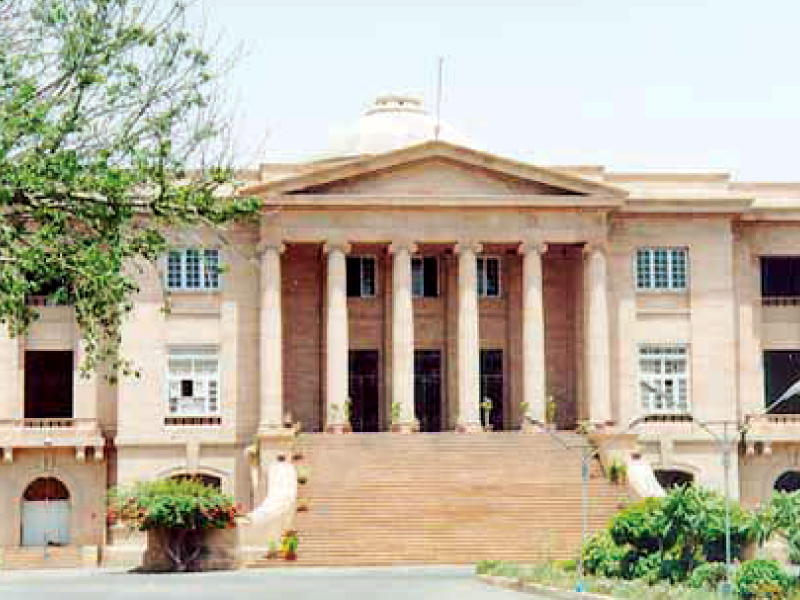
MIRPURKHAS: The Sindh High Court has ruled that the murder case of Dr Shahnawaz Kumbhar, who was allegedly killed in a staged police encounter after his arrest in a blasphemy-related matter, does not fall within the jurisdiction of an anti-terrorism court.
A two-member bench at the Mirpurkhas circuit bench, comprising Justice Miran Muhammad Shah and Justice Muhammad Hassan, directed the Anti-Terrorism Court in Mirpurkhas to send the case, along with the complete record, to the District and Sessions Court.
According to the court order, FIR No 21/2024 does not satisfy the combined legal requirements laid down in Section 6 of the Anti-Terrorism Act, 1997. The bench therefore held that Section 7 of the law could not be applied in the case.
Court’s observations
The judgment said the record showed that Dr Kumbhar was allegedly killed by Mirpurkhas police in a fake encounter after being arrested in Karachi. He had been in hiding there after being nominated in a blasphemy case registered in Umerkot, where he served as a medical officer.
The court was also told that when his body was being transported for burial, an enraged mob stopped the ambulance, took the body and set it ablaze, depriving the family of what the order described as a lawful and dignified burial.
The bench noted that FIR 21/2024 names 23 accused, including former DIG Mirpurkhas Javed Jiskani and two SSPs. The allegations in the case include unlawful detention, torture and killing, as well as claims of a staged encounter and concealment of facts.
The judges said these allegations, on a prima facie basis, fall under provisions of the Pakistan Penal Code dealing with custodial torture and custodial killing rather than terrorism.
The order further noted that seven FIRs had been registered in relation to the matter in Umerkot, Mirpurkhas and the FIA Mirpurkhas circle. It said Dr Kumbhar had been booked in several cases, including blasphemy and illegal weapons charges, while police officials and a religious figure were nominated in counter-cases.
Charge-sheet and legal reasoning
The judgment also referred to the FIA charge-sheet filed before the anti-terrorism court, saying it supported the view that the case concerns custodial abuse and an alleged cover-up, not terrorism.
Citing Supreme Court precedents, the bench said that even severe killings arising from personal or local motives do not amount to terrorism unless the legal conditions set out in the Anti-Terrorism Act are fulfilled.
The order also warned that classifying custodial killing cases as terrorism matters would erase the legal distinction between ordinary criminal offences and terrorism prosecutions.
Complainant to challenge ruling
Dr Kumbhar’s cousin and the complainant in the case, Ibrahim Kumbhar, said the family would challenge the Sindh High Court’s ruling before the Supreme Court. He maintained that the trial should continue before the anti-terrorism court.
The high court’s decision means the proceedings will now move to the District and Sessions Court unless the order is set aside by the Supreme Court.
Comments
No comments yet. Be the first to join the discussion!


