

Public servants in the line of public anger
Pakistan’s public anger often targets officials at the point of delivery. But governance involves dispersed authority, audits, and policy decisions—so blame and tax narratives are incomplete.

Every time a file moves slowly, a service falters, or a decision proves unpopular, the public conversation in Pakistan finds a familiar culprit: the public official. In drawing rooms, across television panels, and throughout social media feeds, a familiar refrain gathers force that ‘this is our tax money, and they’re living off it’. The narrative is emotionally satisfying, easily understood, and politically convenient but it is also severely incomplete.
In Pakistan, public ire falls on all who represent the state at the point of delivery, federal and provincial officers, clerks, inspectors, hospital doctors and nurses, teachers, revenue staff, and countless other government employees funded by taxpayers. The term public officials broadly encompasses this entire group, anyone serving in government, regardless of rank, designation, or recruitment procedure.
Decades ago, the British scholar Christopher Hood described this phenomenon as ‘blame avoidance’. In modern governance, authority is dispersed across political leaders, regulatory frameworks, financial controllers, audit bodies, and procedural safeguards. Yet visibility remains sharply concentrated at the point of delivery where the citizen meets the state. That point is rarely a minister or lawmaker. It is almost always a public official. When something goes wrong, blame settles where the public can see it.
Policies are conceived by political leadership. Budgets are authorized through parliamentary processes. Financial releases are controlled by treasury systems. Procurement is bound by regulatory authorities. Oversight is exercised by audit institutions and courts. A public official operates within this web of rules and approvals, an executor, not the originator, of most decisions. Yet to the citizen standing in a queue, the distinction between policymaker and implementer is invisible. The face behind the desk becomes the face of the state.
This is not unique to Pakistan. The difference lies in how systems elsewhere have responded. In the United Kingdom, a long-standing convention draws a visible line between policy responsibility and administrative execution. Ministers publicly own policy outcomes, while the administrative apparatus is protected by norms of neutrality and continuity. Scrutiny remains, but systemic failures are not routinely personalized. Singapore chose a different route. It invested heavily in competence, trust, and shared ownership between political leadership and public officials. Successes and failures are treated as collective outcomes.
Governance is understood as a chain, and a chain cannot be judged by examining only one link. Pakistan, however, has drifted into a space where responsibility is blurred but blame is personalized. The irony sharpens when the accusation revolves around taxpayers’ money. The popular perception assumes a one-way flow: citizens pay taxes, and public officials consume them. The reality is more nuanced. The salaried class is Pakistan’s largest documented taxpaying segment, with tax collected through withholding at source.
In the first quarter of FY2025-26 alone, they contributed Rs 130 billion in income tax, more than the combined collections from property transfers (Rs 60 billion), exporters (Rs 45 billion), and retailers (Rs 14.6 billion). Withholding from salaries has also shown strong growth, rising by 17.3% in a single year. Public officials make up a notable portion of this group. Many of those often accused of ‘living on taxpayers’ money’ are, in fact, among the country’s most consistent and well-documented taxpayers.
Citizens deserve efficient services. Public officials deserve fair assessment. Both goals can coexist but only if the conversation matures beyond slogans. Because when blame becomes personal, governance becomes timid. And when governance becomes timid, it is the public that ultimately pays the price.
Another perception concerns the facilities available to senior officers is official vehicles, fuel, residences, and support staff that often portrayed as privileges extracted from public funds. In reality, they form part of structured compensation attached to certain grades and responsibilities. Internationally, senior public administrators in countries like the United Kingdom and Singapore, and similarly in Canada, Australia, and France receive role-based institutional support such as residences, transport, and staff. These are not personal luxuries but office-linked facilities withdrawn when the role ends. Yet perception persists because it is shaped by lived experience. When a citizen faces delay in land records, licensing, pensions, or utilities, institutional complexity is irrelevant. What matters is the delay and the delay has a face.
Here lies the deeper cost. When blame becomes routine and personal, the system adapts in unhealthy ways. Decision-making slows. Files move defensively. Officials prefer procedural safety over administrative initiative. Risk-taking, essential for reform, becomes professionally dangerous. Over time, this produces a culture of defensive administration. The system does not collapse but calcifies.
Ironically, the very citizens who demand speed and responsiveness are then confronted with a bureaucracy that has learned that caution is the only protection against public and political backlash. None of this suggests that public officials are beyond criticism. Like any institution, the public sector has inefficiencies, outdated practices, and individuals who fall short of expected standards. Accountability is necessary, and reform is overdue in many areas. But criticism that ignores structural realities weakens the machinery that delivers public services.
Pakistan’s governance challenges are not the product of one institution. They arise from the interaction of political volatility, regulatory complexity, fiscal constraints, judicial oversight, and administrative capacity. Focusing frustration exclusively on public officials may provide a convenient outlet, but it does little to solve underlying problems. Political leadership must publicly own policy outcomes, especially when policies create administrative burdens or unrealistic expectations. Administrative systems must be simplified to reduce procedural bottlenecks. Internal performance evaluation must be strengthened so that inefficiency is addressed institutionally rather than through public vilification. Most importantly, a narrative of shared responsibility must replace the culture of selective blame.
Citizens deserve efficient services. Public officials deserve fair assessment. Both goals can coexist but only if the conversation matures beyond slogans. Because when blame becomes personal, governance becomes timid. And when governance becomes timid, it is the public that ultimately pays the price.
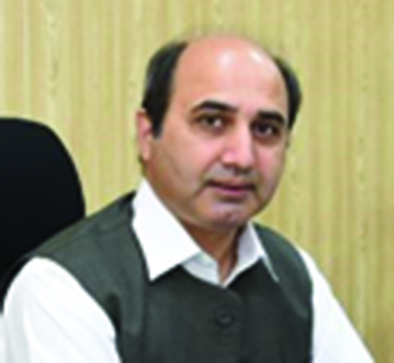
The writer has a PhD in Political Science, and is a visiting faculty member at QAU Islamabad. He can be reached at [email protected] and tweets @zafarkhansafdar
View all articles →1 Comment
No comments yet. Be the first to join the discussion!


