Nepal’s youth succeeded where Bangladesh’s failed
Nepal’s Gen Z converted September 2025 protests into electoral gains in March 2026, reshaping politics. Bangladesh’s Gen Z toppled a government in 2024 but failed to secure dominance in 2026—showing key lessons on strategy.

In the past two years, South Asia has witnessed an extraordinary surge of youth-driven political movements. From the crowded streets of Kathmandu to the restless campuses of Dhaka, Generation Z has emerged as a powerful force challenging entrenched elites. Both Nepal and Bangladesh saw mass protests led largely by young citizens frustrated by corruption, unemployment, and political stagnation. Yet the political outcomes of these movements could hardly be more different.
Nepal’s Gen Z managed to convert protest momentum into electoral success, dramatically reshaping the country’s political landscape in the March 2026 elections. Bangladesh’s Gen Z, despite toppling a long-standing government through mass mobilization in 2024, failed to achieve similar electoral dominance in the subsequent 2026 polls. The contrast between these two movements reveals important lessons about leadership, organization, timing, and political strategy.
The first difference lies in how each movement transformed street anger into political organization.
In Nepal, the youth uprising of September 2025 quickly evolved from spontaneous protests into a structured political force. The immediate trigger was the government’s decision to ban 26 social media platforms, including TikTok, Facebook, Instagram, and YouTube, under new regulatory rules. For a digitally connected generation, the move felt less like regulation and more like censorship. The ban ignited widespread protests in Kathmandu, where thousands of young demonstrators gathered to challenge what they saw as an increasingly corrupt and unresponsive political elite.
The protests escalated rapidly. Violent clashes with security forces left dozens dead and thousands injured. Public anger intensified as social media campaigns exposed alleged nepotism among political leaders and their families. Within days, the pressure forced Prime Minister KP Sharma Oli to resign.
But what happened after the protests is what distinguishes Nepal’s movement from Bangladesh’s.
Nepal’s youth did not allow their uprising to dissolve into fragmentation. Instead, they quickly rallied behind a political vehicle capable of translating public anger into electoral gains: the Rastriya Swatantra Party (RSP). Led by Balendra “Balen” Shah, a popular rapper turned mayor of Kathmandu, the party became the political embodiment of the anti-corruption movement.
Shah was not merely a protest figure; he was already a proven electoral winner. His mayoral victory had demonstrated that an outsider candidate could defeat entrenched party machines.
That credibility mattered enormously when the country moved toward snap elections in March 2026. Bangladesh’s experience followed a different trajectory.
Karki’s government focused almost exclusively on preparing fair elections. She lifted the controversial social media ban, recognized protest victims as national martyrs, introduced compensation for affected families, and lowered the voting age to sixteen to increase youth participation. After the election process was completed, she stepped aside without attempting to remain in power. This clear and limited mandate helped preserve public trust in the political transition.
The youth uprising of 2024 succeeded in forcing the resignation of Prime Minister Sheikh Hasina, ending one of the longest political eras in the country’s history. The protests were driven by many of the same frustrations seen in Nepal: corruption, economic stagnation, youth unemployment, and political repression.
Young activists played a central role in mobilizing mass demonstrations through social media platforms and student networks. Their ability to organize large-scale protests showed the remarkable mobilization capacity of the digital generation.
However, the Bangladeshi movement struggled when it came to the next stage: building a political alternative.
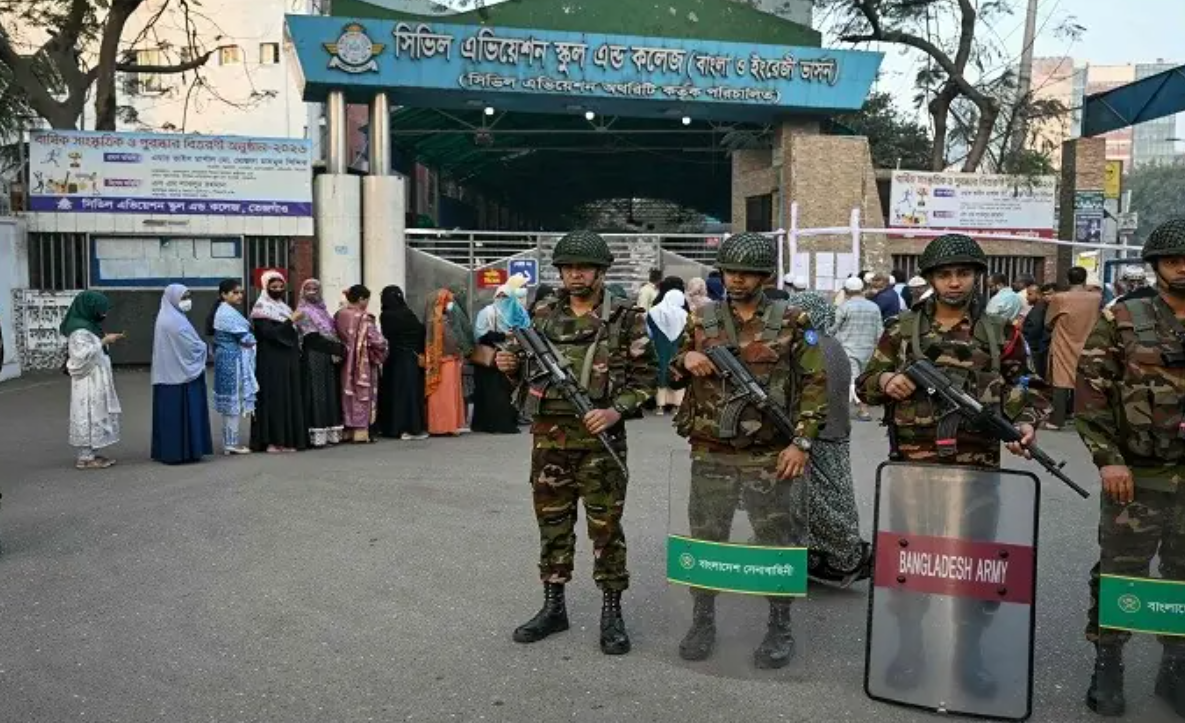
Unlike Nepal, where the RSP quickly emerged as a unifying political platform, Bangladesh’s Gen Z activists failed to consolidate around a single political organization. Several protest leaders attempted to create the National Citizen Party (NCP), but the effort came late and lacked the leadership structure necessary to challenge established political forces. As a result, the youth vote fragmented across multiple alliances during the February 2026 elections. Traditional parties such as the Bangladesh Nationalist Party (BNP) and Islamist political groups managed to capture much of the anti-government sentiment that the youth movement had originally generated. In effect, the old political machinery absorbed the energy of the uprising.
Leadership also played a decisive role in shaping these different outcomes. Nepal’s Gen Z found a charismatic and credible leader in Balendra Shah. His cultural appeal as a musician, combined with his track record as a reform-minded mayor, allowed him to connect with young voters while also reassuring older citizens that the movement had serious governing ambitions.
Bangladesh’s youth movement lacked a comparable national figure. The uprising was largely decentralized, driven by student organizers rather than a recognizable political leader capable of uniting the movement under a single banner.
While decentralization helped sustain the protests, it created a vacuum when the time came to compete in formal electoral politics. Voters who desired stability and governance experience often gravitated toward established parties rather than untested activists.
Another crucial factor was timing. Nepal moved from protest to election with remarkable speed.
The resignation of the prime minister in September 2025 was followed by snap elections in March 2026—only six months later. The short timeline preserved the emotional intensity of the uprising and ensured that public anger toward traditional parties remained fresh in voters’ minds.
Bangladesh’s transition unfolded over a much longer period. Nearly eighteen months separated the 2024 uprising from the February 2026 elections. During that time, political momentum gradually faded as economic concerns such as inflation, employment, and stability returned to the forefront of public debate.
In such an environment, voters often prefer experienced political actors over new movements that appear uncertain or fragmented. The role of interim leadership further amplified the contrast between the two countries. In Nepal, former Chief Justice Sushila Karki was chosen as interim prime minister with broad support from the protest movement. Her reputation for judicial independence and anti-corruption credibility helped stabilize the country during a sensitive political transition. Most importantly, she pledged from the beginning that her role would be temporary.
Karki’s government focused almost exclusively on preparing fair elections. She lifted the controversial social media ban, recognized protest victims as national martyrs, introduced compensation for affected families, and lowered the voting age to sixteen to increase youth participation. After the election process was completed, she stepped aside without attempting to remain in power. This clear and limited mandate helped preserve public trust in the political transition.
Bangladesh’s transitional leadership followed a more complicated path. The interim government led by Muhammad Yunus faced political pressures from multiple parties, which complicated the reform process and created uncertainty about the timing and direction of elections. For many young activists, the transition appeared less like a clean break from the old political system and more like a negotiation among established elites. Such perceptions weakened the unity of the youth movement.
Ultimately, the divergence between Nepal and Bangladesh illustrates a broader truth about modern political revolutions. Protest movements can destabilize governments, but they rarely succeed unless they develop the organizational capacity to replace the systems they challenge. Nepal’s Gen Z recognized this reality quickly. They built a political party, selected credible leadership, and carried the energy of their protests directly into the ballot box.
Bangladesh’s Gen Z, despite demonstrating extraordinary courage and mobilization power, failed to construct the political infrastructure necessary to transform rebellion into governance. The result is now visible in the electoral outcomes. Nepal’s youth movement has reshaped its national politics. Bangladesh’s uprising changed the government but left the political order largely intact. The lesson is clear: in modern democracies, the real revolution does not end in the streets. It is won—or lost—at the ballot box.

Comments
No comments yet. Be the first to join the discussion!