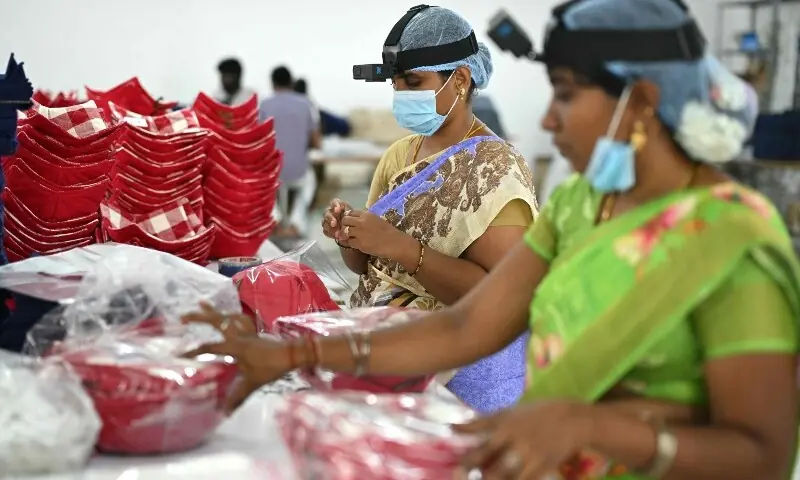
Factory workers filmed with head cameras spark fears of training their own replacements
Viral videos show garment workers wearing head-mounted cameras, prompting debate over whether footage could train AI to automate jobs. Critics demand consent, transparency, and labor protections.


Viral videos showing garment factory workers wearing head-mounted cameras have triggered intense online debate, with many questioning whether the footage is being used to train artificial intelligence systems that could eventually automate their jobs.
In the circulating clips, rows of workers can be seen carefully stitching and handling fabric inside large factories, each wearing a small camera positioned on their head. The unusual setup quickly caught attention online, with users wondering why such devices are being used for what appears to be routine manual work.
As the videos gained traction, speculation began to spread that the cameras may be capturing first-person or “egocentric” footage of skilled labor. According to this theory, the recordings could be used to train AI models and robots to learn complex hand movements such as fabric handling through imitation learning, potentially reducing the need for traditional motion-capture systems.
The possibility has sparked concern over the future of jobs in labor-intensive industries. Some users fear that workers may unknowingly be contributing to systems that could one day replace them, while others argue that adapting to new technology may be necessary for long-term survival in an evolving job market.
At the same time, ethical questions around consent, transparency, and labor rights have come under the spotlight. Critics are calling for clearer regulations, asking whether workers are fully informed about how the data is being used and whether they are fairly compensated for it.
The conversation has also turned emotional, with some describing the situation as exploitative, suggesting that workers are being used to “train their own replacements.” Others, however, view it as part of a broader global shift where automation and human labor are increasingly intertwined, raising difficult questions about the future of work.
Comments
No comments yet. Be the first to join the discussion!