A war at the crossroads of power
A Bahrain perspective shows how the US-Israel-Iran confrontation is more than regional violence—potentially reshaping Middle East strategy and the global power balance.

A view from Bahrain
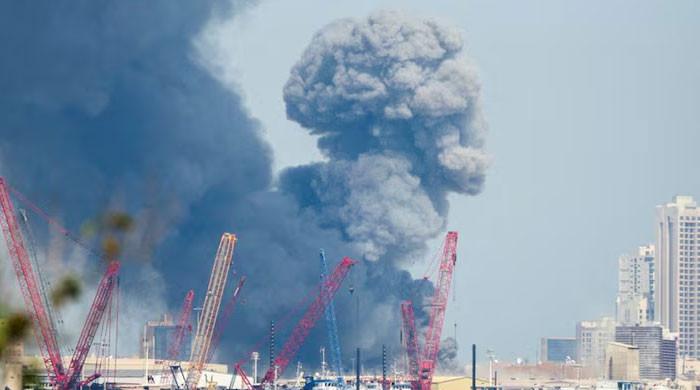
Living in Bahrain has offered a sobering front row view of how fragile the modern world can be. Night after night, missiles and drones have streaked across the skies of the Gulf as the confrontation involving the USA, Israel and Iran intensifies. What appears on television as distant geopolitical drama becomes something far more visceral when air defences light up the horizon and regional airspace falls silent. Moments like these force an uncomfortable realization, regional wars are rarely just regional.
History often disguises turning points as local crises. At first glance, the confrontation between the USA, Israel and Iran may seem like another familiar Middle Eastern conflict, violent, destabilizing and tragic, yet geographically contained. But beneath the battlefield lies a deeper question: could this war reshape not only the Middle East but also the broader balance of global power?
The answer lies in understanding that the conflict operates at two levels simultaneously. At the regional level, it could significantly alter the strategic balance of the Middle East. At the global level, it intersects with a much larger historical shift, the redistribution of power in the international system.
Wars frequently produce unexpected winners and losers.
For Israel, the objective is clear. Israeli leaders have long viewed Iran as their most dangerous strategic adversary. Tehran’s expanding missile capabilities, seemingly nuclear ambitions and extensive proxy network across Lebanon, Syria, Iraq and Yemen have created what Israeli strategists describe as a ring of pressure surrounding the country.
If the current conflict significantly degrades Iran’s military infrastructure or halts its nuclear trajectory and missile capabilities, not to mention cause regime change, Israel could emerge with a stronger security environment, one that Israeli leaders have sought for decades.
For the USA, the stakes extend beyond Israel’s security. Washington’s interests include protecting freedom of navigation through the Strait of Hormuz, safeguarding global energy markets and preserving US strategic influence in a region that has historically shaped global politics.
A limited conflict that weakens Iran without dragging the USA into a prolonged war could reinforce US credibility in the region. But history suggests caution. From Iraq to Afghanistan, conflicts that began with limited objectives often expanded into far longer and more costly engagements.
Iran, unsurprisingly, faces the greatest immediate risk. Years of sanctions have already strained its economy. War threatens further damage to infrastructure, disruptions to energy exports and increased domestic pressure on the regime depending how long the war lasts. Yet Iran is not defenseless as demonstrated over the last weeks. Over decades it has deliberately built asymmetric capabilities designed to offset conventional military disadvantages. Its ballistic missile arsenal, cyber warfare capabilities and network of allied militias allow Tehran to exert influence across the region even when under severe pressure. Even a weakened Iran could retain the capacity to destabilize the Middle East.
Beyond the immediate participants, however, the conflict could produce unexpected beneficiaries.
Russia may gain economically. Instability in the Middle East tends to push global oil prices higher, increasing revenues for one of the world’s largest energy exporters. At a time when Moscow remains locked in confrontation with the West over the war in Ukraine, higher energy prices provide a significant economic cushion.
The war involving the USA, Israel and Iran may reshape the Middle East’s strategic landscape. But the future of the international order will likely be decided less in the deserts of the Gulf than in the broader dynamics of great power competition. Regional wars sometimes ignite global transformations. More often, they reveal the deeper historical forces already reshaping the world. This war may not create a new international order. But it is unfolding at a moment when the old one is steadily fading.
China could benefit in a different way. Beijing’s long term strategy centres on expanding its economic and geopolitical reach across Eurasia. Through initiatives such as the Belt and Road, China has deepened ties across the Middle East, including with Iran. A USA increasingly absorbed by crises in the region may find its attention diverted from the Indo-Pacific, where the most consequential strategic competition of the 21st century is unfolding.
This broader rivalry is often described through the concept of the Thucydides Trap, the structural tension that arises when a rising power challenges an established one. The term originates with the ancient Greek historian Thucydides, who argued that the rise of Athens and the fear it instilled in Sparta made the Peloponnesian War nearly inevitable. Many analysts see echoes of that dynamic today in the relationship between the USA and China. As China’s economic and technological power expands, the USA faces the challenge of maintaining leadership without triggering direct confrontation with its principal rival.
The current Middle East conflict is not that confrontation. But it forms part of the geopolitical environment in which that rivalry unfolds. In that sense, the war involving the USA, Israel and Iran sits at the intersection of regional conflict and global power transition.
The economic implications alone could be profound. Nearly one-fifth of the world’s oil passes through the Strait of Hormuz, the narrow maritime corridor separating Iran from the Arabian Peninsula. Any disruption to this chokepoint would ripple through the global economy and we were already seeing its implications in the first ten days of war. Energy prices would surge, inflationary pressures would intensify and fragile economic recoveries across Europe and the developing world could stall. Historically, even the perception of risk in the Strait of Hormuz has been enough to rattle financial markets. Yet even such shocks would not necessarily produce a fundamental reset of the global order.
Historically, true transformations in international power structures have followed systemic wars. World War I dismantled long standing empires. World War II created a bipolar world dominated by the USA and the USSR. The end of the Cold War ushered in three decades of US unipolar dominance. That era is already fading.
China’s rise, Russia’s renewed assertiveness and the growing independence of regional powers such as India, Turkey and Saudi Arabia are gradually reshaping the global landscape. In this emerging multipolar world, the Middle East is less the central arena of global rivalry than one of several interconnected theaters where regional and global dynamics intersect.
If Iran emerges significantly weakened, the strategic balance of the Middle East could shift in profound ways. Gulf Arab states may deepen security cooperation with Israel, accelerating the gradual normalization of relations already underway. Iran’s network of regional proxies could weaken, potentially easing tensions in fragile states such as Lebanon, Iraq and Yemen. But there is also a darker possibility. If the Iranian regime were to collapse entirely, the consequences could prove far more destabilizing than many anticipate. Iran is a large and complex country with diverse ethnic, political and regional identities. A sudden power vacuum could trigger fragmentation, internal conflict and refugee flows across an already volatile region. In that scenario, the war would indeed reset the Middle East but the outcome might be chaos rather than stability.
Standing in Bahrain and watching the skies filled with drones and missiles, one is reminded how quickly distant geopolitical theories become immediate human realities.
Ultimately, this conflict reflects a world already in transition. Power is diffusing, alliances are shifting and the structures that defined global politics for decades are evolving.
The war involving the USA, Israel and Iran may reshape the Middle East’s strategic landscape. But the future of the international order will likely be decided less in the deserts of the Gulf than in the broader dynamics of great power competition. Regional wars sometimes ignite global transformations. More often, they reveal the deeper historical forces already reshaping the world.
This war may not create a new international order. But it is unfolding at a moment when the old one is steadily fading.

The author is a senior international banker, with degrees in economics and political science from University of Pennsylvania and Brown University
View all articles →Comments
No comments yet. Be the first to join the discussion!