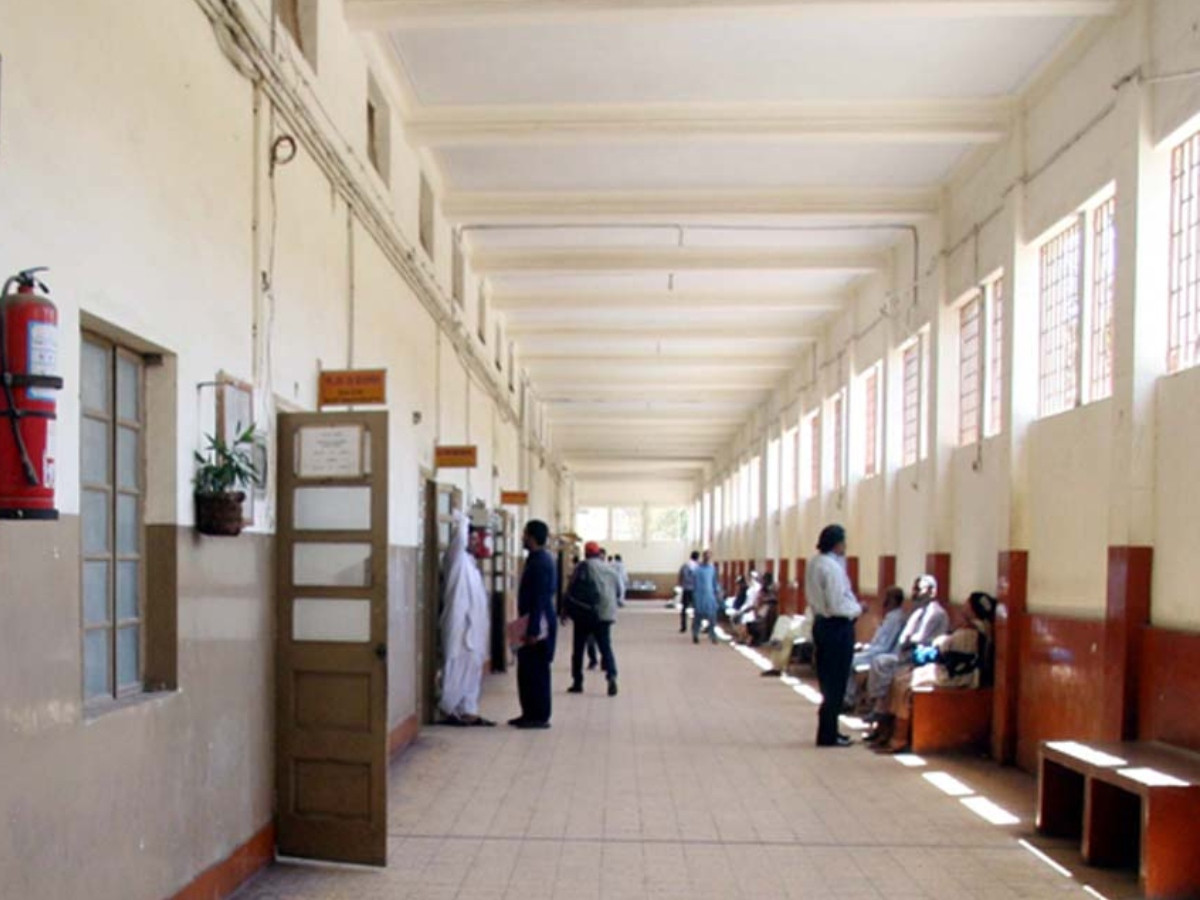
Judicial body plans prison reforms conference in June 2026
The National Judicial Policy Making Committee has decided to hold a national conference on prison reforms in June 2026 after reviewing progress on its Prison Reform Action Plan. The body also discussed overcrowding, prisoners’ rights, frivolous litigation and child visitation facilities at district


ISLAMABAD: The National Judicial Policy Making Committee (NJPMC) has decided to hold a national conference on the Prison Reforms Action Plan in June 2026 as part of efforts to broaden consultation and policy discussion on changes to the prison system.
The decision was taken during the 59th meeting of the NJPMC, chaired last week by Chief Justice of Pakistan Yahya Afridi. The meeting was attended by the chief justice of the Federal Shariat Court, the chief justices of all high courts, the attorney general for Pakistan, and the secretary of the Law and Justice Commission of Pakistan (LJCP).
According to the details shared from the meeting, the committee reviewed progress on the Prison Reform Action Plan, which is aimed at bringing Pakistan’s prison system in line with the United Nations Standard Minimum Rules for the Treatment of Prisoners, also known as the Nelson Mandela Rules.
The committee was informed that provincial justice committees are continuing deliberations on measures intended to ensure reforms that are effective, rights-based and sustainable. The NJPMC stressed that implementation of the reform plan should follow a coordinated and harmonised approach, with emphasis on protection of prisoners’ rights, better detention conditions and stronger institutional accountability.
It also called on provincial justice committees to take proactive steps to secure ownership from provincial governments. The LJCP Secretariat was directed to arrange the national conference in June 2026 to support stakeholder engagement and policy dialogue as part of what the committee described as an inclusive reform process. The secretariat was further asked to prepare a concept note for the conference, including its objectives, format and proposed delegates, and circulate it to the high courts for input before finalisation.
Concerns over prison conditions
The move comes at a time when Pakistan Tehreek-e-Insaf has been protesting what it describes as denial of legitimate rights to its detained leaders. Former prime minister Imran Khan, through his counsel, has alleged that he and his wife are being kept in torturous solitary confinement for almost 24 hours, without access to books, television, family members or lawyers.
Barrister Taimur Malik, counsel for several jailed political figures including Shah Mahmood Qureshi, Ejaz Chaudhry and Dr Yasmin Rashid, said that consideration of a prison reform plan was a positive step, but argued that it would remain incomplete if it did not also address the timely fixing of bail, suspension and appeal applications of prisoners.
He said prisons across the country were overcrowded and maintained that many of the issues the reform plan seeks to tackle arise from that situation. Malik said the prison population should be reduced, adding that many under-trial prisoners, as well as those entitled to bail in bailable offences, could be released pending trial. He also said inmates eligible for suspension of sentence on grounds such as age or health could be released to ease pressure on prisons.
Referring to individual cases, Malik said Ejaz Chaudhry had been diagnosed with stage-three kidney disease and that his health was not compatible with prison conditions, yet his suspension applications and appeals had not been fixed for hearing. He also said Shah Mahmood Qureshi had been acquitted in all cases over the past three years but remained in jail because of a couple of pending bail matters.
Other decisions of the committee
On the issue of discouraging false and frivolous litigation, the chief justice of the Balochistan High Court, who heads the relevant committee, informed the NJPMC that work had started on proposals for a legislative and policy framework in line with the Cost of Litigation Act, 2017 (ICT), and that initial consultations had already taken place.
It was proposed that draft recommendations be shared with the Ministry of Law and Justice, provincial law departments and bar councils to obtain feedback and make the process more inclusive. The possibility of institutionalising adjournment costs was also suggested for examination.
The NJPMC appreciated the progress made by the committee and reaffirmed its position that misuse of judicial processes should be checked through strict compliance with existing statutory and procedural provisions.
The attorney general for Pakistan, in his role as chairman of the Pakistan Bar Council, assured the committee that the bar council would be consulted on mechanisms to deal with frequent lawyers’ strikes. The NJPMC was told it would be updated on progress at its next meeting.
The committee also approved child visitation facilities at district courts on closed holidays, subject to local requirements and administrative arrangements to be determined by the respective high courts. The measure, according to the committee, is intended to give families greater flexibility in planning visits, improve parent-child interaction, reduce congestion at visitation facilities and promote a more child-centred environment within the judicial system.
Comments
No comments yet. Be the first to join the discussion!