KP outsources 500 low-performing primary schools to private partners
The KP education department has outsourced 500 low-performing government primary schools to private partners and begun paperwork to hand over another 1,500. Officials said the move aims to improve enrolment, quality and access, especially in underserved areas.

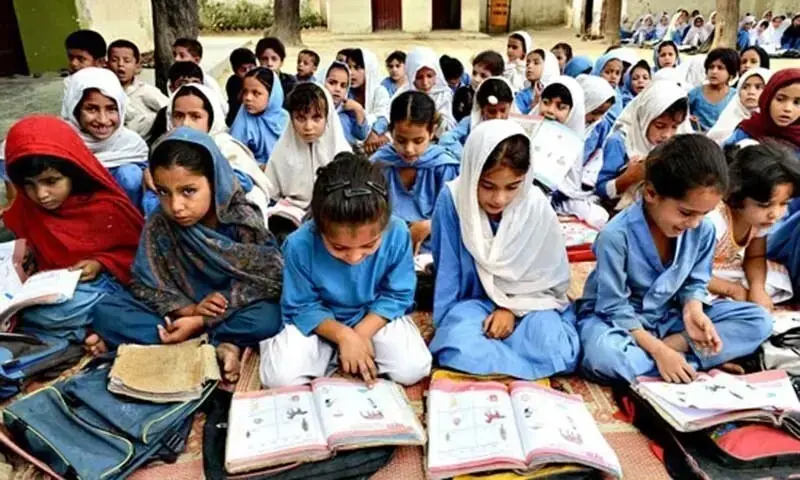
PESHAWAR: The Khyber Pakhtunkhwa Elementary and Secondary Education Department has outsourced 500 low-performing government primary schools across the province to private partners, according to officials in the department.
Officials said work for a second phase has also begun, under which another 1,500 such schools are to be handed over to the private sector. They told Dawn on condition of anonymity that documentation for the next phase is already under way.
Of the 500 schools included in the first phase, 273 have already been transferred to private partners in the winter zone, where academic activities have started, the officials said. They added that the remaining 227 schools in the summer zone would be handed over in September.
The schools have been assigned to a number of private organisations, including Beaconhouse School System, Sarhad Rural Support Programme, Dopasi Foundation and Hands Foundation, among others.
District-wise distribution
Official data shows that the first batch of outsourced schools includes 46 in Mansehra, 45 each in Abbottabad and Haripur, 30 in Bajaur, 28 in Bannu, 25 in Kohat, 22 in Swat, 21 in Karak, 19 in Mardan, 18 in Nowshera, 16 in Buner, 13 in Tank, 12 each in Shangla and Lower Kohistan, 11 in Lakki Marwat, and 10 each in Lower Chitral, Kurram and Dera Ismail Khan.
The education department has classified government primary schools with fewer than 40 enrolled students as low-performing schools. Officials said 4,147 such schools have been identified across the province.
Terms of the arrangement
According to officials, the agreement requires private partners to raise enrolment in each outsourced primary school to 180 students. They said the purpose of the initiative is to use the expertise and resources of both the public and private sectors to improve access to equitable and quality education, while giving due priority to girls’ education and underserved areas.
Under the agreement, the education department will provide the school building, a watchman, Rs1,500 for each enrolled student, and textbooks, furniture and fixtures, officials said.
They said the private partners will be responsible for managing school operations, delivering teaching and learning services, hiring teaching and non-teaching staff, paying operational expenses, and carrying out repair and maintenance of school buildings, infrastructure, furniture and fixtures.
Official documents show that the private partners will operate, manage and maintain the schools for the delivery of quality education to children in the surrounding areas. They are also required to ensure maximum enrolment of eligible students up to the primary level, implement the government-approved curriculum and syllabus, and support faculty in improving pedagogical and classroom management skills in line with student learning outcomes set by the government.
The documents further state that the private partners are responsible for recruiting the best available teaching staff, adopting different strategies to increase and retain enrolment, including community outreach for parental and community support, coordinating with regional and district education authorities for monitoring and quality control, and expanding learning opportunities for all students, particularly those at risk of academic failure.
Performance benchmarks
Officials said the education department has also developed key performance indicators to improve standards in the low-performing schools and bind private partners to a standardised framework.
They said these indicators include the provision of clean drinking water, availability of backup power options such as generator, UPS and solar system, maintenance of washrooms for student hygiene, promotion of girls’ education, student attendance, and the presence of dedicated and highly qualified teachers.
Comments
No comments yet. Be the first to join the discussion!