Ojhri Camp tragedy still unresolved after 38 years
Thirty-eight years after the Ojhri Camp explosions devastated Rawalpindi and Islamabad, key questions about the disaster remain unanswered. Official inquiries were formed, but their findings have never been fully disclosed.

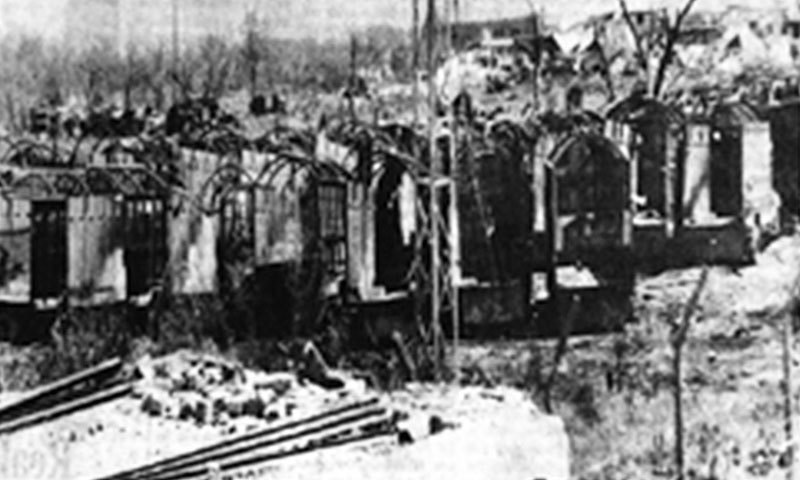
ISLAMABAD: Thirty-eight years after the Ojhri Camp disaster, the circumstances surrounding one of the deadliest incidents in the twin cities remain unresolved, with the findings of official inquiries still not fully made public.
The tragedy unfolded on April 10, 1988, at 9:50am, when daily life in Rawalpindi and Islamabad was continuing as usual. Public transport was operating, schools and colleges were open, and traders were beginning business when a series of massive explosions ripped through Ojhri Camp, a missile storage facility located in a military zone between the two cities.
The blasts sent rockets and missiles in multiple directions as fire spread through the ammunition depot. Projectiles fell across populated neighbourhoods, causing widespread destruction and panic. Residents rushed to find shelter as confusion gripped the area. Some people believed the explosions were the result of an Indian attack, while others suspected Israel.
Vehicles travelling on roads were hit, while missiles passed overhead before crashing into different locations. Telephone, electricity and gas systems went down. Chaklala International Airport was closed and flight operations were suspended. Rockets also landed near the Presidency and Parliament House. Government and private offices, as well as educational institutions, were shut immediately.
Nearby residential localities, including Gulshan Dadan Khan, were devastated. Hospitals were overwhelmed by the influx of injured people, many of them suffering from severe burns and loss of limbs. Military personnel sealed off the affected zone as rescue efforts gathered pace. Thick smoke and dust covered the sky, and the repeated explosions produced a deafening sound.
Women, children and elderly residents were seen fleeing in fear, many of them barefoot. The explosions continued for nearly two hours. Many school and college girls reportedly went missing that day.
Casualties and aftermath
Officially, 103 people were killed and around 1,500 were injured, although independent accounts placed the toll higher. Ambulances moved continuously through the cities, while funerals continued for several days. Unexploded missiles were discovered for weeks after the incident, and remnants are still occasionally found during excavation work along Nullah Lai.
Among those killed was former MNA Khawaja Khakan Abbasi, who died after being struck by a missile.
Inquiries and unanswered questions
At the time of the disaster, Prime Minister Muhammad Khan Junejo and President Zia-ul-Haq were abroad, but both returned immediately. An inquiry committee headed by Lt Gen Imranullah was set up, along with another committee comprising five ministers.
However, the conclusions of these investigations have never been fully disclosed. As a result, even after 38 years, the Ojhri Camp tragedy remains shrouded in mystery.
Comments
No comments yet. Be the first to join the discussion!