Israel pounds Lebanon as ceasefire dispute deepens
Israel launched its heaviest strikes of the war on Lebanon as Hezbollah said it had paused attacks under a US-Iran ceasefire. Reports differed on the death toll, while Beirut and Washington gave conflicting accounts on whether Lebanon was covered by the truce.

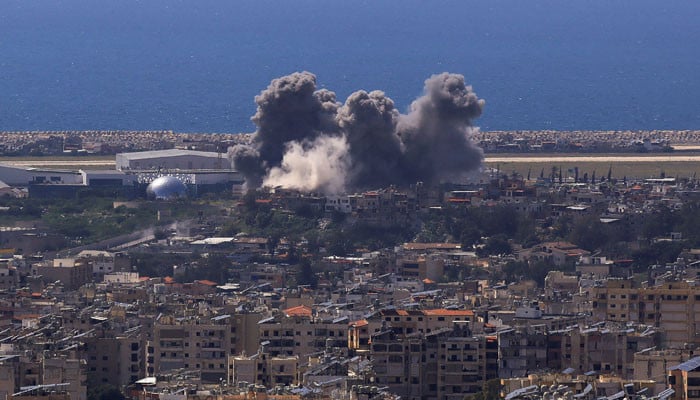
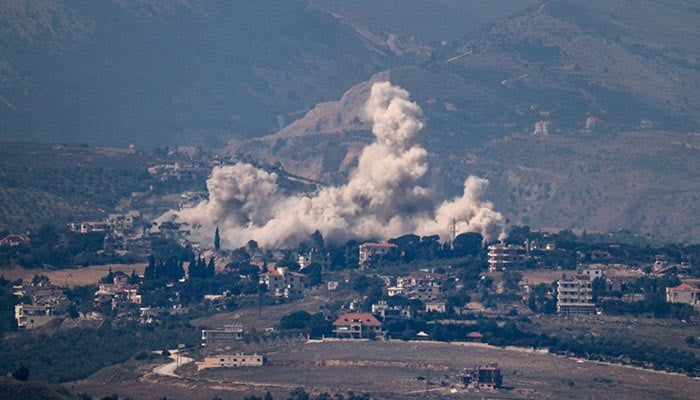
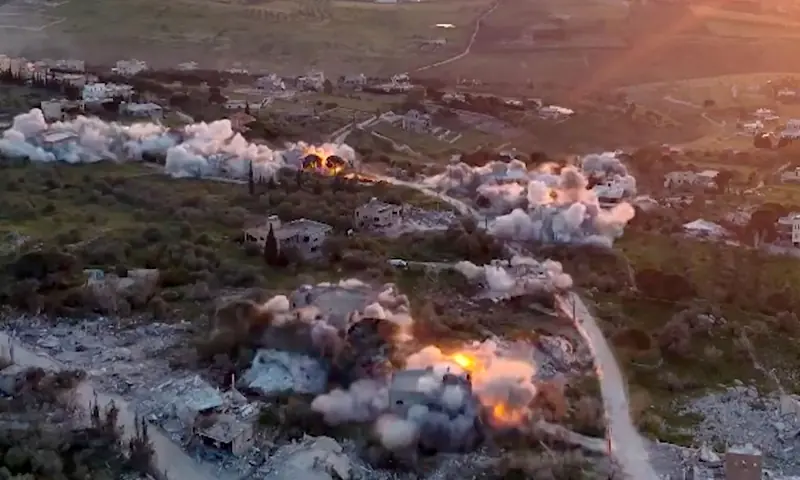
BEIRUT: Israel launched what it described as its largest coordinated assault of the war on Lebanon on Wednesday, carrying out heavy strikes across Beirut, the Bekaa Valley and southern Lebanon as Hezbollah halted attacks under what it said was a two-week US-Iran ceasefire.
According to the Israeli military, more than 100 Hezbollah command centres and military sites were targeted. Explosions rocked Beirut and smoke rose over the capital. Casualty figures differed: Lebanon’s health ministry spokesman speaking to Reuters said 89 people were killed, including 12 medics, and 700 were wounded, while Lebanon’s health ministry said 112 dead and 837 injured.
Reuters reporters in Beirut saw wounded people being taken to hospitals on motorcycles because ambulances were insufficient. Firefighters were also seen tackling flames in a car park where more than a dozen vehicles were damaged. Elias Chlela, head of Lebanon’s syndicate of doctors, appealed in a written statement for "all physicians from all specialities" to go to any hospital where they could help. One of Beirut’s largest hospitals said it needed blood donations of all types.
Conflicting positions on ceasefire
Israeli Prime Minister Benjamin Netanyahu said overnight that the ceasefire ending the six-week-old US-Israeli war on Iran did not extend to Lebanon, and the Israeli military said operations against Hezbollah would continue. That contradicted remarks by Prime Minister Shehbaz Sharif, who had said the truce would include Lebanon.
White House Press Secretary Karoline Leavitt also said during a briefing that Lebanon was "not part of the ceasefire" between the United States and Iran. She added: "As you know, Prime Minister Netanyahu put out a statement last night in support of the ceasefire, in support of the United States’ efforts and has also assured the president that they’ll continue to be a helpful partner throughout the course of the next two weeks". Asked whether Lebanon could be included later, she said discussions would continue but "at this point in time, they are not included".
Iranian Foreign Minister Abbas Araghchi said on X that the terms of the ceasefire were "clear and explicit" and added that the United States had to choose between a ceasefire and continued war with Israel. He wrote, "The world sees the massacres in Lebanon. The ball is in the US court, and the world is watching whether it will act on its commitments."
Hezbollah says it observed truce
Three Lebanese sources close to Hezbollah told Reuters the group stopped attacking Israeli targets early on Wednesday. Its last public statement on military activity was issued at 1am local time, saying it had targeted Israeli troops inside Lebanon on Tuesday evening.
Senior Hezbollah lawmaker Ibrahim al-Moussawi told Reuters: "Hezbollah was informed that it is part of the ceasefire so we abided by it, but Israel as usual, has violated it and committed massacres all across Lebanon". Another Hezbollah lawmaker, Hassan Fadlallah, said the strikes were "a grave violation of the ceasefire" and warned there would be "repercussions for the entire agreement" if they continued.
In a separate statement, Hezbollah denounced what it called Israel’s "barbaric aggression" and said the attacks reinforced its
natural and legal right to resist the occupation and respond to its aggression.
Lebanese President Joseph Aoun, while welcoming the US-Iran ceasefire, said Beirut would continue efforts to ensure Lebanon was included in any lasting regional peace arrangement.
Strikes hit several areas
Lebanon’s state news agency NNA reported continued Israeli attacks in southern Lebanon earlier in the day, including artillery fire and a dawn strike on a building near a hospital that killed four people. Lebanon’s health ministry said a strike on Sidon killed eight people and wounded 22. NNA also reported another strike on central Beirut in the early evening.
The Israeli military said most of Wednesday’s strikes were in civilian-populated areas. It had issued warnings in advance for some parts of southern Beirut and southern Lebanon, but no warning was given for central Beirut, which was also hit. The military also said it had struck a Hezbollah commander in Beirut, without providing further details.
After the attacks, Israeli military spokesperson Avichay Adraee said on X that Hezbollah had shifted from its southern Beirut stronghold in Dahiyeh into mixed areas of the city, including the north. Addressing the group, he said Israel’s military would "pursue you and act with great force against you wherever you are".
In a western Beirut neighbourhood hit by one of the strikes, 51-year-old Naim Chebbo told Reuters as he cleared shattered glass: "Tonight I’m not going to sleep because I’m going to be afraid that it’s happening again. I’m living a nightmare".
Displacement and mounting toll
More than 1,500 people have been killed in Israel’s air and ground campaign in Lebanon since March 2, including more than 130 children and more than 100 women, after Hezbollah began firing rockets at Israel in solidarity with Tehran.
Lebanese authorities say more than 1.2 million people have been displaced. Israel has issued evacuation orders covering about 15 per cent of Lebanese territory, mainly in the south and in suburbs south of Beirut, and has said it intends to occupy southern Lebanon up to the Litani River as part of what it calls a security zone for its northern residents.
Ahmed Harm, a 54-year-old displaced from Beirut’s southern suburbs, said: "Hopefully, a ceasefire will be reached". He added, "Lebanon can’t take it anymore. The country is collapsing economically, and everything is collapsing."
In Sidon, families sheltering at a school loaded pillows and blankets into cars in the hope they might soon return home. Samar al-Saibany said: "We’re just waiting for the official decision from the top, so we can go back". Local mayor Mustafa al-Zein said more than 28,000 people were sheltering in the area as of Tuesday night, and cautioned against returning before an official signal. He said: "In the south, give someone a signal to return, and he’ll return".
Comments
No comments yet. Be the first to join the discussion!