

Rooftop solar remains in demand despite net metering uncertainty
Rooftop solar demand remains strong as households seek relief from high electricity bills despite uncertainty over new net billing rules. Many buyers are now opting for smaller systems focused on essential daytime use.

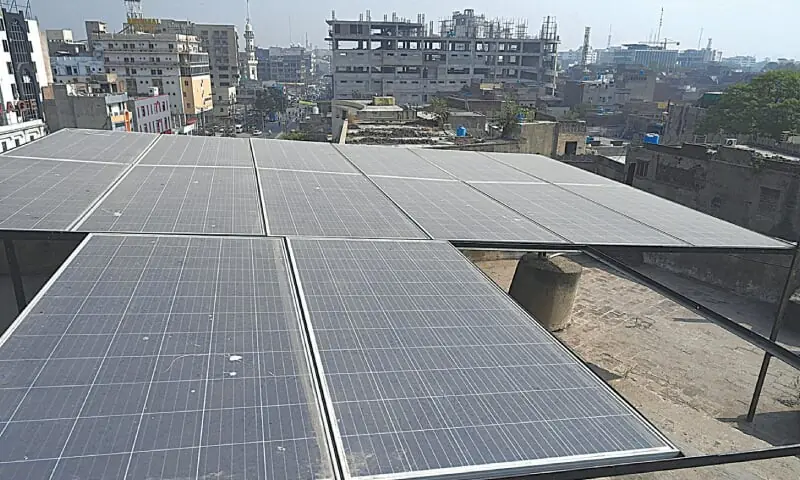
KARACHI: Demand for rooftop solar systems in Karachi remains strong despite growing uncertainty over regulatory changes and rising equipment costs, according to market participants and consumers.
Households and small businesses continue to install solar systems to reduce electricity expenses and limit reliance on the national grid. However, recent changes to net metering policies have raised concerns about the financial viability of new installations.
Under the revised framework, commonly referred to as net billing, excess electricity exported to the grid is compensated at a lower fixed rate of around Rs10 to Rs11 per unit. In contrast, electricity drawn from the grid is billed at standard retail tariffs. Previously, net metering allowed consumers to offset their bills more effectively by selling surplus power at higher rates.
Industry stakeholders say the policy shift has reduced the financial returns for new solar users, particularly those installing larger systems aimed at generating excess electricity. Existing consumers with net metering agreements will continue under previous terms until their contracts expire.
Despite this, demand remains steady across Karachi, including areas such as Orangi Town, Korangi, and Naya Nazimabad. Vendors report that while customer interest has not declined, buyers are now more cautious and are seeking clarity on costs, payback periods, and future policy direction.
Solar panel prices, which had declined over the past two years, are also showing an upward trend. Market estimates suggest imported panels are currently priced between Rs33 and Rs40 per watt, depending on brand and capacity, with increases attributed to regional tensions and higher import-related expenses.
Installation costs vary based on system size and requirements, typically ranging from Rs200,000 to over Rs500,000. Many consumers are now opting for smaller systems designed to power essential appliances rather than full-home solutions.
Consumers cite multiple reasons for adopting solar, including rising electricity tariffs, unreliable supply, and voltage fluctuations. While some initially viewed solar as an investment opportunity, many now consider it primarily a cost-saving measure.
Business owners are also exploring solar solutions to maintain operational continuity during peak hours, though uncertainty around surplus power compensation has made some cautious about system scale.
Analysts note that policy uncertainty remains a key factor affecting decision-making in the sector. While rooftop solar continues to offer long-term savings and partial energy independence, reduced returns under the new framework have altered the investment outlook.
Comments
No comments yet. Be the first to join the discussion!


