Bangladeshi farmers turn to solar irrigation as fuel prices rise
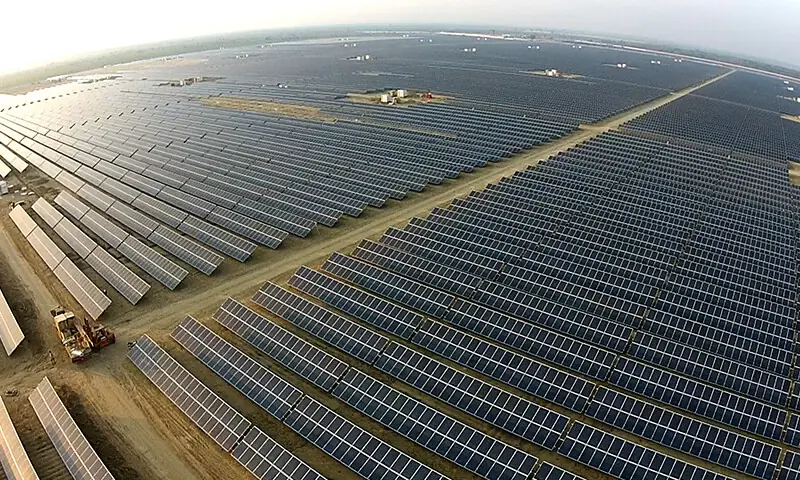
Bangladesh’s farmers are testing solar irrigation as diesel costs rise and fuel supplies tighten. Experts say wider grid access could improve returns, though concerns remain over groundwater use in water-stressed areas.

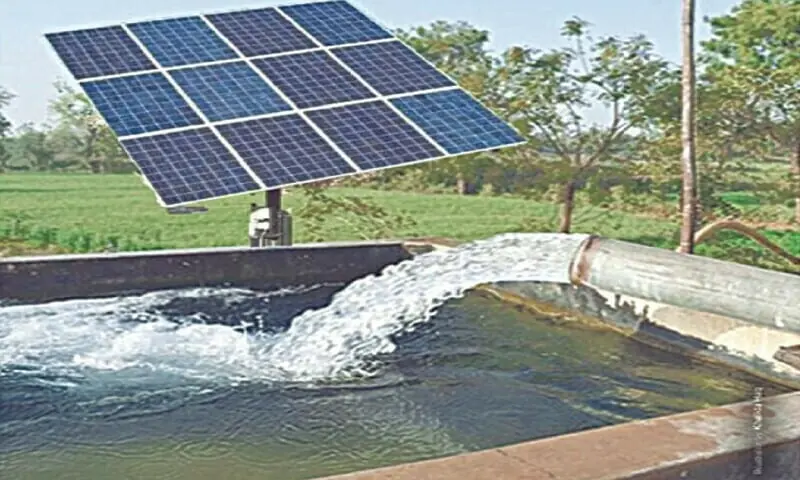
CHUADANGA: Farmers in Bangladesh are increasingly testing solar-powered irrigation as higher fuel costs and supply pressures make diesel-based systems more expensive and less reliable.
Experts say solar panels installed in or alongside crop fields to run groundwater irrigation pumps can offer a more viable option than conventional generators that depend on increasingly costly fuel. The systems can also create an additional source of income when pumps are not in use, as farmers may sell excess electricity to the national grid.
Even so, adoption remains limited. According to the latest irrigation survey by the Bangladesh Agricultural Development Corporation, around 71 per cent of power-operated irrigation equipment in the country runs on diesel, while 29 per cent is electric. The survey identified only 4,058 solar-powered irrigation units across Bangladesh.
That picture may begin to shift as energy costs climb following the Iran war. Bangladesh has begun rationing fuel while seeking to ensure enough diesel supplies for farmers and industrial users.
Under its latest climate plan submitted under the Paris Agreement, Bangladesh has set a target of installing 45,000 solar irrigation pumps by 2035. However, progress has been slow because of high initial investment, licensing obstacles and uncertainty over how operators can sell surplus electricity to the grid to improve returns.
For Mohammad Anisur Rahman, a 50-year-old farmer in Jhenaidah district in southwestern Bangladesh, moving to solar irrigation has lowered both costs and dependence on diesel. Last year, he installed solar panels over part of his maize fields and connected them to a submersible solar irrigation pump.
“The diesel crunch and power outages have already hit farmers and who knows if the problem may get worse,” Rahman said.
He said solar irrigation is less expensive. In southwestern Bangladesh, farmers and pump operators shared field estimates showing irrigation using solar energy costs between $87 and $99 an acre, compared with $125 to $150 an acre for diesel-powered pumps.
Researchers and developers say the business case for solar irrigation could improve if more pumps are connected to the grid, allowing operators to sell unused electricity outside the main irrigation season. Wave Foundation, an NGO working on solar irrigation in western Bangladesh, said it has already linked three solar pumps to the grid and plans to establish 39 more.
However, while operators may be able to export surplus electricity, they still face restrictions or uncertainty when trying to draw electricity from the grid for irrigation if solar generation is insufficient.
“This barrier to get power from the grid weakens the economics of solar irrigation,” said Ketab Ali, a risk management expert at the Wave Foundation.
Shafiqul Alam, lead analyst for Bangladesh energy at the Institute for Energy Economics and Financial Analysis, said broader grid connectivity for solar irrigation could also help the country cut fossil fuel-based power generation during periods when irrigation demand is low.
Groundwater concerns remain
Some researchers and water specialists have cautioned that cheaper solar irrigation could add pressure on groundwater resources in areas where water tables are already falling. In northwestern Bangladesh, groundwater depletion has long been a concern because of intensive dry-season farming and heavy reliance on groundwater irrigation.
But Mohammad Faiz Alam, a senior regional researcher at the International Water Management Institute, said available research indicates that farmers using solar systems do not necessarily extract more water than those using diesel pumps. He said many solar systems are overseen by NGOs or local organisations, with farmers paying irrigation fees, which can create some discipline in water delivery and charging.
Still, he said expanding solar irrigation in water-stressed regions would likely require stronger regulation of groundwater use, greater efforts to recharge water reserves, increased use of surface water where possible, and planning tailored to local conditions rather than a single nationwide approach.
Comments
No comments yet. Be the first to join the discussion!