US weighs 'final blow' on Iran as war options escalate, talks hang in balance
The Pentagon is considering military options for a 'final blow' in the Iran conflict, including ground forces and bombings, as negotiations stall. President Trump weighs potential actions amidst rising tensions.

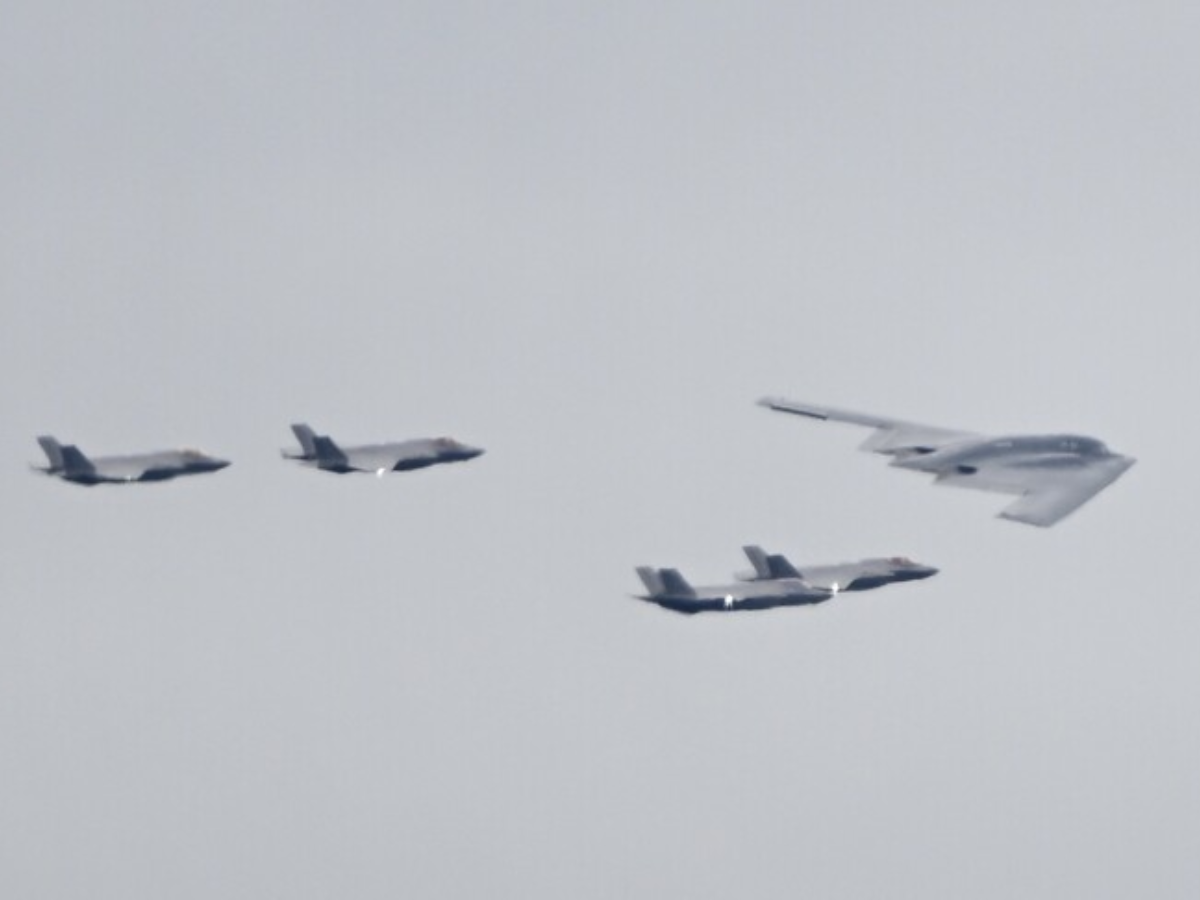
WASHINGTON: The Pentagon prepared military options for a "final blow" in the Iran war, involving the use of ground forces and massive bombing, according to a report by Axios, citing two US officials and two sources with knowledge of the matter.
According to the report, a "dramatic military escalation" had been expected if there was no progress in talks between Tehran and Washington.
The sources said that options such as invading the strategically important islands of Kharg, Larak, Abu Musa, and others, along with a blockade of ships carrying Iranian oil east of the Strait of Hormuz, were on the table.
The report stated that some US officials believed that a "show of overwhelming force" to end the conflicts would give the US greater leverage in negotiations.
A source familiar with the negotiation efforts had noted that Türkiye, Pakistan, and Egypt were continuing their attempts to organise talks between the parties.
The source added that Iran had rejected the US's initial demands but had not completely withdrawn from the negotiations.
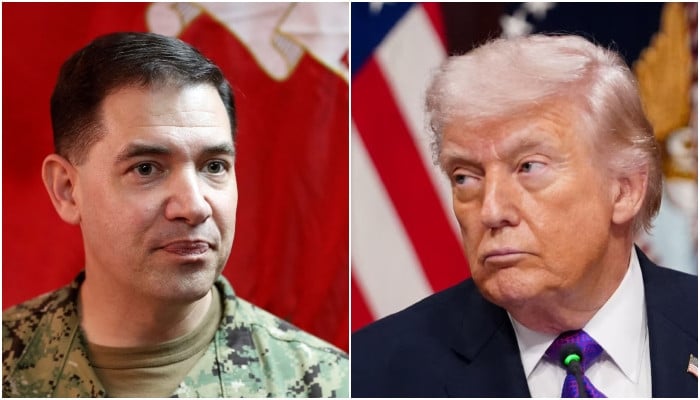
Despite the sources' statement, US President Donald Trump had reportedly not reached a decision yet on any of these scenarios.
Any potential ground operations were seen as "hypothetical" by White House officials.
Trump says NATO has done ‘absolutely nothing’ on Iran
The US’ NATO allies had done “absolutely nothing” to help with the “lunatic nation, now militarily decimated,” of Iran, said US President Donald Trump.
“The USA needs nothing from NATO, but ‘never forget’ this very important point in time,” Trump said in a post on his social media platform Truth Social.
In recent days, Trump urged both allies and rivals, including China, to help secure the Strait of Hormuz, a vital trade route, as disruptions there had driven up global oil prices.
A number of European countries declined, saying the Iran conflict was a war started by Trump without consulting with US allies.
Trump previously reiterated that the US did not need NATO, calling the alliance’s stance a “very foolish mistake.” He said he was not currently planning to withdraw from the alliance but suggested it was an option worth considering.
Trump has long denigrated NATO, and during his first term - according to multiple White House accounts -- he openly considered withdrawing from the postwar Western alliance.
Iran officials spared on Pakistan's request
Israel took Iranian Foreign Minister Abbas Araqchi and parliamentary speaker Mohammad Baqer Qalibaf off its hit-list after Pakistan requested Washington not to target them, a Pakistani official told Reuters on Thursday.
"The Israelis had their ... coordinates and wanted to take them out, we told the US if they are also eliminated then there is no one else to talk to, hence the US asked the Israelis to back off," the official said.
Two killed in Abu Dhabi
Two people were killed in Abu Dhabi after debris from an intercepted missile fell on Sweihan Road, the emirate's media office said on Thursday, adding that three others were injured and several vehicles were damaged.
Israel targets IRGC navy commander in airstrike: NYT
Alireza Tangsiri, commander of Iran’s Islamic Revolutionary Guard Corps (IRGC) navy, was reportedly targeted in an Israeli airstrike this morning in southern Iran, according to the New York Times, citing three Israeli officials.
The Israeli military targeted Tangsiri while he was in an apartment hideout alongside other IRGC officers, the officials told the newspaper, claiming that the Iranian navy chief has played a key role in shutting down the strait of Hormuz to most international shipping.
Some Israeli media outlets have reported that Tangsiri was killed in a strike in the southern Iranian city of Bandar Abbas, which sits on the coast of the strait of Hormuz and houses the headquarters of the Iranian navy. There has been no official comment from Iran or Israel.
Earlier, Iranian Foreign Minister Abbas Araqchi said there had been no direct negotiations with the United States, though messages had been exchanged through intermediaries.
“Messages being conveyed through our friendly countries and us responding by stating our positions or issuing the necessary warnings is not called negotiation or dialogue,” Araqchi said in an interview with state television on Wednesday. “It is simply an exchange of messages through our friends.”
Meanwhile, US President Donald Trump said Iran was eager to reach an agreement to end nearly four weeks of fighting, a claim that contradicted Tehran’s position. Iranian officials have said they are reviewing a US proposal but have no intention of entering formal talks to wind down the conflict.
On the other hand, Iran has launched wave 82 of "Operation True Promise 4".
Iran has targeted Zionist-linked facilities, satellite stations, Al-Azraq airbase, and US bases (Sheikh Isa, Ali al-Salem, Arifjan) using missiles and drones.
Trump, speaking later on Wednesday at an event in Washington, said Iranian leaders "are negotiating, by the way, and they want to make a deal so badly, but they're afraid to say it because they will be killed by their own people. They're also afraid they'll be killed by us".
"We do not intend to negotiate," Araghchi told state TV. "We seek an end to the war on our own terms."
In Pakistan, officials said Islamabad had conveyed to Tehran a 15-point American plan to stop the fighting that began on February 28.
Iran's state-controlled Press TV cited an unidentified official as saying Tehran had "responded negatively" to the plan and the war would end only on Tehran's terms, which include guarantees against future attacks.
A senior Israeli defence official said Israel was sceptical Iran would agree to the terms, and that Israel was concerned US negotiators might make concessions. Israel also wants any agreement to preserve its option to conduct pre-emptive strikes, a second source said.
Additionally, Iran has told intermediaries that Lebanon must be included in any ceasefire agreement with the US. and Israel, six regional sources familiar with Iran's position said.
Trump has not identified who the US is negotiating with in Iran, with many high-ranking officials among the thousands of people killed across the Middle East since the US and Israel attacked Iran on February 28 and Iran launched strikes against Israel, US bases and Gulf states.
Iran's supreme commander, Ayatollah Ali Khamenei, was killed on the first day of the conflict by an Israeli strike and was replaced by his son Mojtaba, who has been wounded in strikes and has not been seen in any photograph or video clip since his appointment.
"If Iran fails to accept the reality of the current moment... Trump will ensure they are hit harder than they have ever been hit before," Leavitt said. "President Trump does not bluff, and he is prepared to unleash hell."
With thousands more US troops reportedly headed to the Middle East, Iran also threatened to open a new front by targeting Red Sea shipping should the United States launch a ground invasion.
Iran's military said cruise missiles fired at the USS Abraham Lincoln carrier group had "forced it to change its position" and warned of "powerful strikes" when the fleet comes into range.
Admiral Brad Cooper, head of US Central Command, said the United States had hit two-thirds of Iran's production facilities for missiles and drones, and drone and missile launch rates were down by 90 percent.
In a video on X, Cooper also estimated that 92 percent of the Iranian navy's largest vessels had been damaged or destroyed.
"They've now lost the ability to meaningfully project naval power and influence around the region and around the world," he said.
UN Secretary-General Antonio Guterres said the war was "out of control" and had "gone too far."
He said that the "world is staring down the barrel of a wider war" in the region.
"It is time to stop climbing the escalation ladder – and start climbing the diplomatic ladder," Guterres said at the UN headquarters in New York.
The fallout from the conflict, which has caused the worst energy shock in history, has spread far beyond the region.
With the Strait of Hormuz, a conduit for a fifth of the world's oil and liquefied natural gas, effectively closed, fuel shortages are occurring around the globe, and businesses from airlines to supermarkets and used car dealers are grappling with challenges including rising costs, weakening demand and disrupted supply chains. Some governments are weighing support measures last used during the COVID pandemic.
Farmers are struggling to source diesel for their tractors and tens of millions more people will face acute hunger if the war continues into June, the World Food Programme estimates.
Hopes of a resolution to the conflict that had boosted global stock markets the previous session faded on Thursday, with oil prices resuming their surge.
"Optimism regarding a ceasefire has faded," said Tsuyoshi Ueno, senior economist at NLI Research Institute.
Meanwhile, missiles and drones kept striking targets across the Gulf.
Early on Thursday, the Israeli military said it had completed a wide-scale wave of strikes targeting infrastructure in several areas across Iran, after another wave of attacks on Wednesday.
The Pentagon is meanwhile planning to send thousands of airborne troops to the Gulf to give Trump more options to order a ground assault, sources have told Reuters, adding to two contingents of Marines already on their way. The first Marine unit, aboard a huge amphibious assault ship, could arrive around the end of the month.
Comments
No comments yet. Be the first to join the discussion!