

March 23, 2026
Russia pushes unencrypted super-app Max on citizens amid WhatsApp, Telegram blocks
Russia is pushing its unencrypted Max messenger app on citizens while blocking WhatsApp and Telegram, raising surveillance concerns among critics and digital rights groups.

March 23, 2026
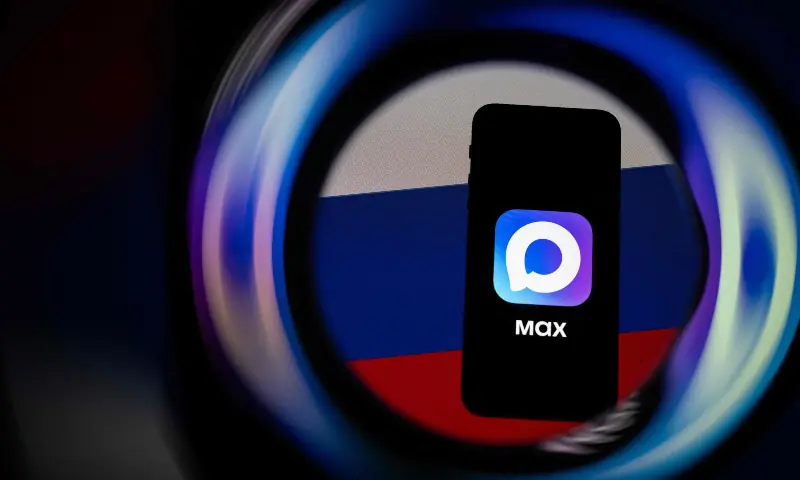
MOSCOW: Russia is aggressively promoting its Max messenger — a social media platform that lacks encryption — to its citizens through a large-scale promotional campaign while simultaneously blocking WhatsApp and Telegram, the country's two most widely used messaging applications.
The rollout has sparked concerns among critics and digital rights organisations that Moscow intends to use Max as a tool to surveil its population and further sever digital connections with the West.
What is Max?
Launched in 2025 by Russian social media giant VK, Max has been likened to China's WeChat. The platform combines social media and messaging features with access to government services, a digital ID card system, banking and payment functionalities. The app essentially aims to serve as an all-in-one digital platform for Russian citizens.
Surveillance concerns
Cybersecurity researcher Baptiste Robert, CEO of the French company Predicta Lab, raised alarm about the platform's lack of encryption.
"Any data that passes through this application can be considered to be in the hands of its owner, and in this case, the hands of the Russian state," Robert told AFP.
The absence of encryption means that communications on the platform could potentially be accessed by the app's operators, and by extension, Russian authorities.
Not mandatory, but increasingly unavoidable
While Max is not officially mandatory, Russian authorities are making it evident that life without the app will become progressively difficult for citizens. The blocking of popular alternatives like WhatsApp and Telegram, coupled with the integration of essential government services into the Max platform, effectively pushes citizens towards adopting it.
The strategy mirrors approaches seen in other countries where governments have sought to centralise digital services and communications within domestically controlled platforms. The comparison to China's WeChat is particularly notable, as that app has become virtually indispensable for daily life in China, serving as a combined messaging, social media, payment and government services tool.
The development represents a significant shift in Russia's digital landscape, where WhatsApp and Telegram had previously enjoyed widespread popularity among the population. By channelling users towards an unencrypted, state-linked platform, Moscow appears to be tightening its grip on digital communications within the country while reducing citizens' reliance on Western-developed technology platforms.
Digital rights groups continue to monitor the situation as the Russian government expands its efforts to make Max the dominant communications platform in the country.
0 Comments
No comments yet. Be the first to join the discussion!


