When clinics turn deadly
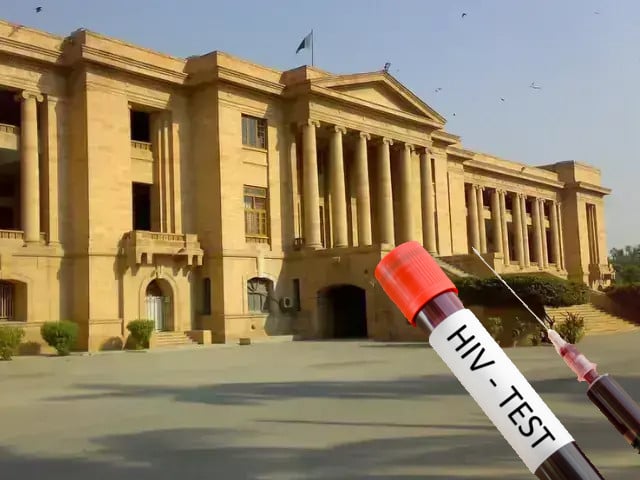
A surge in pediatric HIV cases in Sindh highlights systemic medical negligence. With nearly 4,000 affected, urgent reform is needed to protect vulnerable children.

Where can children go for treatment?
Medical negligence in Pakistan is often discussed in the abstract as a systemic problem, a lack of resources, or an unfortunate by-product of poverty. But when nearly 4000 children in Sindh are living with HIV, many infected not at birth or through personal behaviour but in healthcare facilities meant to heal them, negligence ceases to be abstract. It becomes a crime unfolding in plain sight.
The Pakistan Medical Association has recently issued a high-level alert on the alarming rise in paediatric HIV cases, which should jolt authorities out of their habitual inertia. The numbers alone are damning. There are 3995 registered HIV-positive children in Sindh and over 100 new cases reported in Karachi in 2025. These figures point to a collapse of basic infection control and regulatory oversight, not a mystery.
This is not Pakistan’s first warning. In 2019, an unprecedented outbreak in Ratodero infected hundreds of children after exposure to unsafe medical practices. By mid-2019, nearly 900 people had tested positive for HIV in that outbreak, with children accounting for the overwhelming majority.
That tragedy should have been a turning point. Yet six years later, the PMA finds itself reiterating what ought to be incontrovertible. Preventable medical practices such as unsafe injections, reused syringes, unregulated blood transfusions, and clinics run without oversight, continue to expose Pakistani children to one of the world’s deadliest viruses.
Globally, health systems monitor and regulate basic practices such as single-use injection protocols, sterilization standards, and blood safety because breaches can be catastrophic. Research shows that HIV transmission through contaminated medical procedures is not theoretical but demonstrable, with risk rising dramatically where equipment is reused without proper sterilization.
In Pakistan, basic safeguards go unenforced. More than 600,000 unqualified practitioners operate in Sindh alone, with a large proportion concentrated in Karachi, where three to four new paediatric HIV cases are reported weekly. Unsafe injections, unscreened blood, contaminated dental tools, and unregulated clinics are rampant. This is not merely a health crisis but a failure of governance. Decades of investment in health infrastructure, domestic funds, and donor support have done little to stop children from being exposed to HIV through the very systems designed to protect them. Health authorities and regulatory bodies have been called to account, yet oversight remains weak and enforcement is sporadic.
The consequences extend far beyond immediate infection. Families affected by paediatric HIV face lifelong treatment costs, repeated hospital visits, and the erosion of income and social standing. Stigma and discrimination add a secondary burden, with reports of children being denied school admissions and families ostracized by their communities. Pakistan’s situation stands in stark contrast to the global response to similar challenges. In sub-Saharan Africa, where HIV prevalence has been high, public health programmes focus on maintaining stringent injection safety standards, regulating blood banks, and expanding preventive and treatment access even under resource constraints.
Sympathy, however genuine, cannot substitute for accountability, and rhetoric cannot replace results. If reform is to mean anything, it must begin with the recognition that protecting children from avoidable harm is not a matter of resources or expertise, but of political will and governance. The children of Sindh and of Pakistan deserve a health system that treats their lives as non-negotiable
Countries such as Eswatini (formerly Swaziland), despite limited resources and structural challenges, have introduced advanced preventive interventions, particularly in the area of mother-to-child transmission (MTCT) prevention. Through early antenatal screening, near-universal access to antiretroviral therapy for pregnant women, and immediate prophylactic treatment for newborns, Eswatini has reduced new HIV infections among infants to historically low levels.
Rwanda offers a similar illustration. Operating in a post-conflict, low-income setting, it has built an integrated community-based health system that ensures early detection, continuous treatment for mothers, and close follow-up of exposed infants. As a result, preventable transmission has been sharply curtailed. Together these experiences demonstrate that effective prevention is achievable even in constrained and high-risk environments, provided there is political will, coherent policy design, and sustained investment in primary healthcare delivery.
The crisis reflects a deeper failure of health governance. Regulation exists largely on paper and not in practice. Clinics that violate basic hygiene standards operate with impunity, while unqualified practitioners treat vulnerable populations without fear of sanction. Official responses remain reactive rather than preventive, and children continue to bear the consequences.
Addressing this emergency requires decisive action as strict and uniform enforcement of infection-control protocols, the closure of quack clinics, full regulation of blood banks, criminal accountability for healthcare professionals whose negligence contributes to HIV transmission, and independent, transparent monitoring of infection patterns that triggers immediate corrective action.
Investments in healthcare mean little when they are not accompanied by enforcement. What Pakistan requires is not another policy announcement or donor-funded programme, but a system in which prevention is routine, oversight is continuous, and the protection of patient lives especially those of children, is treated as a basic obligation of the state.
Preventable infections are too often explained away as administrative failure or bad luck, when they are in fact the foreseeable result of weak regulation, poor monitoring, and the absence of consequences. The unnecessary infection of children with HIV is not an abstract public-health challenge, it is evidence of institutional negligence that has been allowed to persist.
Sympathy, however genuine, cannot substitute for accountability, and rhetoric cannot replace results. If reform is to mean anything, it must begin with the recognition that protecting children from avoidable harm is not a matter of resources or expertise, but of political will and governance. The children of Sindh and of Pakistan deserve a health system that treats their lives as non-negotiable.
The writer has a PhD in Political Science, and is a visiting faculty member at QAU Islamabad. He can be reached at [email protected] and tweets @zafarkhansafdar
View all articles →1 Comment
No comments yet. Be the first to join the discussion!