No mass evacuation needed, NA panel told amid Middle East crisis
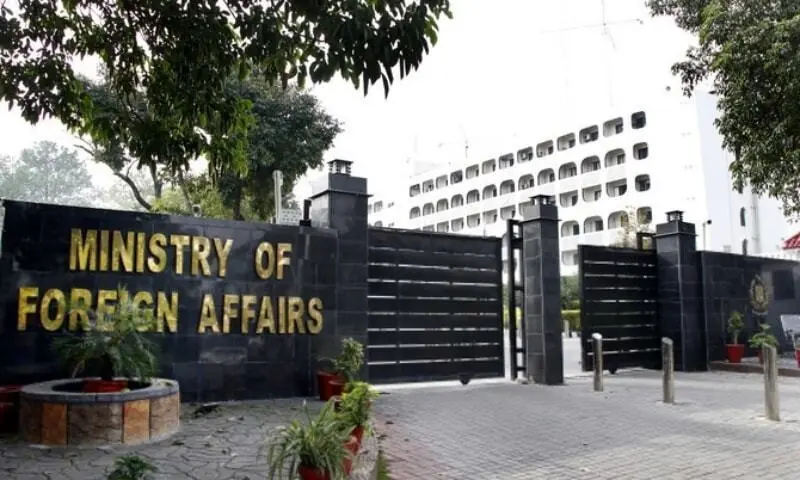
Officials from Pakistan's Ministry of Foreign Affairs reported to the National Assembly that a mass evacuation of nationals from the Middle East is unnecessary despite ongoing tensions.

ISLAMABAD: Senior officials of the Ministry of Foreign Affairs of Pakistan on Tuesday told the National Assembly Standing Committee on Overseas Pakistanis that the situation in the Middle East did not currently require a large-scale evacuation of Pakistani nationals.
The head of the ministry’s Crisis Management Cell briefed the committee on the status of Pakistanis stranded across several regional countries amid the conflict involving Iran, the United States and Israel.
The meeting, chaired by Syed Agha Rafiullah, was informed that although some Pakistanis were facing difficulties due to flight disruptions, fuel shortages and transport problems, the overall situation remained manageable.
Committee members, however, expressed serious concern over the sharp rise in airline fares, particularly by Pakistan International Airlines (PIA), which has affected stranded Pakistanis seeking to return home.
Officials said that many Pakistani nationals were encountering logistical challenges, including limited public transport services, which had made travel to airports and transit points difficult.
According to a statement issued by the NA Secretariat, Pakistan’s diplomatic missions in Gulf countries reported large numbers of registered Pakistanis but relatively manageable numbers of evacuees.
In Qatar, the Pakistani mission recorded over 10,000 registrations, with 215 individuals classified as actively stranded, most of whom were already receiving assistance.
Similarly, the mission in the United Arab Emirates reported more than 8,500 registrations, including 4,543 Pakistani passengers in transit. Of these, around 4,400 have already departed the UAE on 40 commercial flights, officials told the committee.
The briefing also noted that the number of Pakistanis in Azerbaijan was relatively small. Authorities had facilitated 113 Pakistanis, while 58 had already returned to Pakistan.
During the meeting, PPP lawmaker Mahreen Razzaq Bhutto questioned the officials’ position, asking why evacuation discussions were being held if the situation was normal.
“If everything is normal, why is evacuation being discussed? At least take a clear position on whether the situation is fine,” she remarked.
Responding to the concern, an official from Pakistan’s diplomatic mission in Abu Dhabi clarified that assistance was mainly being provided to passengers stranded at airports and that no large-scale evacuation operation was underway.
At one point during the discussion, Bhutto suggested that an aircraft reportedly purchased by Maryam Nawaz should be used to bring stranded Pakistanis back home.
Chairman Rafiullah responded humorously, asking whether that meant “only 12 people would be brought back in it,” drawing light laughter in the meeting.
Muhammad Ilyas Chaudhry of the Pakistan Muslim League (Q) also supported the suggestion to use additional aircraft for repatriation if needed.
Situation across Middle East countries
Officials told the committee that around 2.5 million Pakistanis live in Saudi Arabia, where the situation remained tense but stable. Both air and land borders were open and flights operated by PIA and Pakistani private airlines were continuing normally.
Authorities said 163 stranded Pakistanis had been assisted, while 91 had already returned to Pakistan from Riyadh. The remaining individuals were being provided accommodation and other facilities.
In Qatar, where roughly 350,000 Pakistanis reside, the situation was described as stable despite lingering concerns. Of the 215 stranded individuals, 97 had already returned, while the remaining were expected to depart shortly.
Officials noted that Qatar’s airspace had been partially reopened, allowing limited commercial and relief flights, while land borders remained accessible.
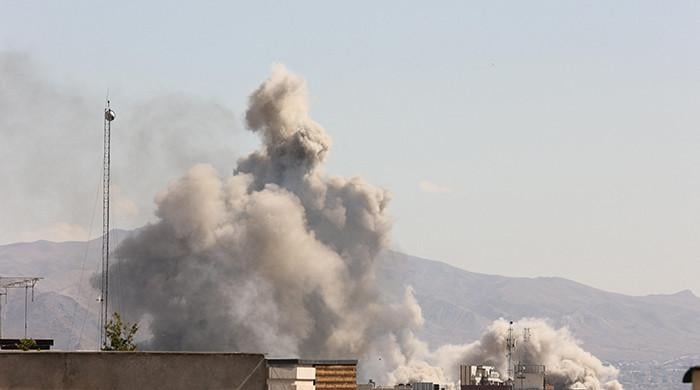
In Iraq, however, the security situation was described as tense due to Iranian drone and missile strikes on US military facilities near Baghdad International Airport.
Around 40,000 Pakistanis live in Iraq, and arrangements were underway for the return of 1,277 individuals, including about 450 pilgrims visiting religious sites in Karbala and Najaf. As Iraqi airspace remains closed, authorities are arranging their return through land routes via Saudi Arabia and Turkiye.
Officials also reported that in Kuwait—home to more than 100,000 Pakistanis—the situation was tense but under control. Although the country’s airspace remained closed, no Pakistani had been reported stranded.
Meanwhile, in Oman, where about 382,000 Pakistanis reside, the situation was stable with airspace open and regular flights operating through airlines including PIA, AirSial, SalamAir and Oman Air.
From Muscat, 68 Pakistanis were assisted in returning home, while 38 were helped in obtaining transit visas, including travelers arriving from the UAE and Saudi Arabia.
In Bahrain, about 134,000 Pakistanis reside, with 1,940 registering with the Pakistani mission for updates and assistance. Officials said 81 Pakistanis living near the US naval base had been relocated to safer shelters.
The situation in Lebanon was described as rapidly deteriorating, with intensified Israeli airstrikes and ground operations reported in southern and eastern regions of the country, including strikes near Beirut.
Meanwhile, officials said around 16,000 to 18,000 Pakistanis live in Jordan, where the situation remained stable and no Pakistani had been reported stranded.
Operational challenges
The committee was also briefed on several operational challenges being faced during the repatriation process.
Officials said airspace closures and the suspension of commercial flights in conflict zones had significantly disrupted travel routes, forcing many Pakistanis to rely on longer and more complex land routes for evacuation.
Limited flights and surging demand have also drastically increased ticket prices, making travel difficult for many stranded nationals.
The ministry further noted that the rapidly changing security environment required constant monitoring, real-time planning and emergency preparedness, while uncertainty over the duration of the conflict meant authorities must remain ready for evolving scenarios.

The writer is Head of News at Pakistan Today. He has a special focus on current affairs, regional and global connectivity, and counterterrorism. He tweets as @mian_abrar and also can be reached at [email protected]
View all articles →Comments
No comments yet. Be the first to join the discussion!