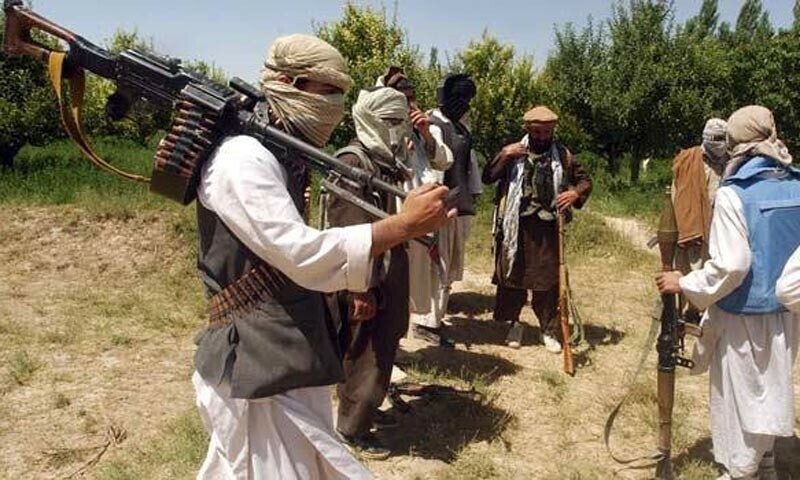
Global Reports vindicate Pakistan’s stance on Afghanistan’s terror sanctuary
Recent global reports substantiate Pakistan's claims regarding the security threats stemming from Afghanistan. The findings highlight the operational environment for terrorist groups and the urgent need for regional security cooperation.

Pakistan is just defending its citizens
Pakistan’s principled and consistent position regarding the security spillover from Afghanistan is no longer a solitary diplomatic assertion; it is increasingly validated by international monitoring mechanisms, independent security analyses, and empirical developments on the ground. The evolving threat matrix since 2021 has demonstrated that the resurgence of cross-border terrorism is neither conjectural nor politically manufactured. It is documented, quantifiable, and internationally acknowledged.
The latest report of the United Nations Security Council 1267 Sanctions Committee, issued under the United Nations Security Council 1267 Committee monitoring framework, substantively reinforces Pakistan’s long-articulated concerns regarding the post-2021 security fallout from Afghanistan. The assessment underscores that the Afghan Interim Government has provided a permissive operational environment for multiple terrorist entities, notably Tehreek Taliban Pakistan (TTP), enabling it to sustain cross-border attacks against Pakistan.
It further highlights the entrenched presence of Al-Qaeda, including Al-Qaeda in the Indian Subcontinent, functioning as a force multiplier by offering training, ideological indoctrination, and logistical facilitation to affiliated groups. The report also notes that ISIL-Khorasan Province (ISKP) retains operational capability while pointing to emerging linkages among TTP, ISKP, and BLA/Fitnah Al Hind, including shared resources, coordinated operations, and training infrastructure. Collectively, these findings validate Pakistan’s position that Afghanistan’s altered power dynamics have facilitated a consolidated, networked militant architecture, with Pakistan remaining the principal target of cross-border terrorism.
Pakistan remains committed to defending its citizens, safeguarding its territorial integrity, and contributing to a stable and secure South and Central Asia. The international community’s growing recognition of the facts marks not merely a diplomatic vindication, but a pivotal opportunity to restore accountability and recalibrate regional security cooperation on the basis of truth, transparency, and collective responsibility
These conclusions are not abstract assessments; they correspond directly with tragic realities within Pakistan. The suicide bombing at Islamabad’s district court on 11 November 2025, which resulted in the martyrdom of more than a dozen individuals, and the 6 February 2026 attack on an imambargah that claimed 40 lives, were both claimed by terrorist organisations operating from Afghan soil. Meanwhile, in Khyber Pakhtunkhwa, a lieutenant colonel and another soldier were martyred during a counterterrorism operation that eliminated five militants in a suicide blast— an illustration of the high-intensity conflict being waged along Pakistan’s western frontier. These incidents underscore a sustained campaign of asymmetric warfare directed at destabilizing the state through urban terrorism, sectarian violence, and targeted assaults on security forces.
International corroboration extends beyond the United Nations. The Ministry of Foreign Affairs of the Russian Federation has publicly estimated that between 20,000 and 23,000 militants, more than half of them foreign nationals, are currently operating in Afghanistan. Its assessment identifies ISIS-K, TTP, and Al-Qaeda as principal actors, alongside Central Asian militant formations, while acknowledging that TTP continues to direct attacks into Pakistan. Such evaluations from a major global power reinforce Islamabad’s longstanding warning that Afghanistan has re-emerged as a sanctuary for transnational militancy with direct regional repercussions.
Simultaneously, external analyses have highlighted the transformation of subnational militant actors within Pakistan itself. In his assessment, Joe Buccino— a former communications director for US Central Command— argues that the Baloch Liberation Army (BLA) has evolved from a nominal separatist insurgency into a modern terrorist network employing suicide bombings, train hijackings, and coordinated high-impact attacks. He contends that the organization’s methods align more closely with transnational terror syndicates than with traditional ethnonationalist movements, particularly given its attacks on civilians and strategic infrastructure. This evolution further substantiates Pakistan’s assertion that disparate militant entities are increasingly interlinked within a broader ecosystem of hybrid warfare.
Pakistan’s response has been measured yet resolute. Intelligence-based precision strikes targeting seven terrorist camps and hideouts inside Afghanistan were conducted following a consistent pattern of non-compliance with the Doha Agreement and the continued use of Afghan territory against Pakistan. These actions were not acts of adventurism but calibrated exercises of the inherent right to self-defence under international law, aimed at neutralizing imminent threats. Islamabad has repeatedly emphasized that its objective is not escalation but deterrence, and not confrontation but accountability.
Moreover, Pakistan has consistently maintained that certain terrorist outfits— designated domestically as Fitna-tul-Khawarij and Fitna-al-Hindustan— are externally sponsored with the intent of destabilizing not only Pakistan but the broader region. Documentary evidence and intelligence dossiers have been shared with international stakeholders to substantiate these claims. The convergence of transnational militant financing, cross-border sanctuaries, and hybrid information warfare suggests a sophisticated architecture of destabilization rather than isolated insurgent activity.
At its core, Pakistan’s stance is anchored in the principles of sovereignty, non-interference, and regional stability. It has advocated constructive engagement with Kabul, adherence to counterterrorism commitments, and implementation of internationally recognized agreements. Yet sovereignty cannot be unidirectional. The right to peaceful coexistence presupposes that no state’s territory is allowed to be weaponized against its neighbours.
The cumulative weight of evidence— from UN monitoring mechanisms to independent global assessments and on-ground operational realities— demonstrates that Pakistan’s warnings were prescient rather than rhetorical. The challenge now lies in translating international acknowledgment into coordinated action. Sustainable regional peace will require verifiable counterterrorism commitments, dismantling of cross-border sanctuaries, and a unified global resolve against the instrumentalization of militancy for geopolitical ends.
Pakistan remains committed to defending its citizens, safeguarding its territorial integrity, and contributing to a stable and secure South and Central Asia. The international community’s growing recognition of the facts marks not merely a diplomatic vindication, but a pivotal opportunity to restore accountability and recalibrate regional security cooperation on the basis of truth, transparency, and collective responsibility.
Comments
No comments yet. Be the first to join the discussion!