India’s Transnational Repression Exposed Again
The guilty plea of Indian national Nikhil Gupta in a US court exposes India's involvement in transnational repression, raising serious concerns about international norms and governance.

Canada and Pakistan have also suffered
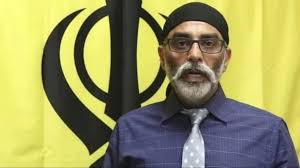
The recent guilty plea of Indian national Nikhil Gupta before a United States federal court marks a watershed moment in the global scrutiny of India’s extraterritorial conduct. In open court, Gupta admitted that in 2023 he transferred $15,000 to arrange the assassination of Gurpatwant Singh Pannun, a US-based Sikh political activist associated with Sikhs for Justice. American prosecutors stated that the conspiracy was directed by an Indian government employee and overseen by individuals connected to India’s external intelligence service, the Research and Analysis Wing.
This was not conjecture aired in partisan debate; it was a matter placed on judicial record. Senior FBI officials described the target as a victim of transnational repression for exercising constitutionally protected speech. The case, unfolding in a US courtroom under evidentiary standards far removed from diplomatic rhetoric, establishes a factual matrix: an Indian national acknowledged participation in a murder-for-hire plot, and US authorities formally linked the conspiracy to an Indian government employee.
The implications reverberate beyond the USA. In Canada, the killing of Sikh activist Hardeep Singh Nijjar in 2023 triggered a national security investigation by the Royal Canadian Mounted Police. Canadian officials publicly identified the Lawrence Bishnoi Gang as a transnational criminal organization implicated in targeted violence. The gang, led by incarcerated Indian gangster Lawrence Bishnoi, was formally designated a terrorist entity by Canada on September 22.
In the final analysis, the issue is not merely India’s bilateral relations with Pakistan, Canada, or the USA. It is the integrity of international norms themselves. A state that tolerates or directs extraterritorial coercion undermines the foundational principle that political dissent must be contested through dialogue, not silenced through violence. The unfolding record suggests that the world is witnessing not isolated aberrations but the exposure of a broader doctrine— one that projects repression beyond borders and recalibrates the calculus of sovereignty
Former Prime Minister Justin Trudeau stated before Parliament that Indian diplomats collected intelligence on Canadian citizens critical of the Modi government, and that such intelligence reached criminal organizations like the Bishnoi network, resulting in violence on Canadian soil. These declarations were not speculative commentary but official statements delivered in the sovereign legislature of a G7 state.
The pattern that emerges is neither episodic nor isolated. The US court proceedings, the Canadian terrorist designation, and the RCMP’s investigative disclosures, collectively outline a documented architecture of transnational coercion. When democratic governments publicly acknowledge that intelligence gathered by foreign diplomats was funneled to criminal syndicates to facilitate violence, the issue transcends bilateral friction; it enters the domain of systemic statecraft.
For Pakistan, these developments vindicate a position articulated consistently for years. The arrest of Kulbhushan Jadhav in 2016 was presented by Islamabad as incontrovertible proof of Indian intelligence operations aimed at destabilizing Pakistan. Islamabad has long maintained that New Delhi supports militant outfits such as the Balochistan Liberation Army and the Balochistan Liberation Front, as well as networks linked to Fitnat-ul-Hindustan. While India has denied these charges, the judicially recorded facts emerging in North America lend renewed credibility to Pakistan’s contention that India employs covert proxies beyond its borders.
Internally, India’s trajectory reveals an equally troubling consolidation of coercive governance. Across Kashmir, Punjab, Assam, Uttar Pradesh, and Ladakh, minority communities and dissenting voices have confronted an increasingly securitized state apparatus. International human rights organizations have documented constraints on civil liberties, curbs on press freedom, and legal measures perceived as disproportionately targeting marginalized groups. The domestic contraction of civic space mirrors the external projection of covert force: repression at home, intimidation abroad.
The designation of the Lawrence Bishnoi gang as a terrorist entity by Canada crystallizes a stark reality. A criminal syndicate headquartered in India has been formally recognized by a Western democracy as a vehicle of political violence. When intelligence sharing and organized crime intersect across borders, the distinction between statecraft and criminality erodes. The rule-based international order depends upon the inviolability of sovereignty; yet here, sovereignty has been breached not by rogue actors alone but through structured networks acknowledged by law enforcement and prosecutorial authorities.
This moment constitutes more than diplomatic embarrassment for New Delhi. It signals a paradigm shift in how India’s security doctrine is perceived globally. For decades, India cultivated an image of democratic exceptionalism— a bulwark of pluralism in a volatile region. The documented cases in the USA and Canada complicate that narrative, revealing a willingness to extend coercive reach into the heart of Western democracies.
For Pakistan, the strategic implications are profound. Islamabad has consistently framed itself as aligned with international law, advocating dialogue and multilateralism while decrying covert destabilization. The convergence of judicial admissions, terrorist designations, and parliamentary declarations in North America affirms Pakistan’s longstanding assertion that regional instability cannot be divorced from India’s clandestine interventions.
History will likely judge this period as an inflection point. When sovereign courts record admissions of assassination plots tied to foreign officials, and when allied democracies designate criminal networks linked to that foreign power as terrorist entities, the veneer of plausible deniability fractures. What remains is a documented chain of actions that redefines global perceptions.
In the final analysis, the issue is not merely India’s bilateral relations with Pakistan, Canada, or the USA. It is the integrity of international norms themselves. A state that tolerates or directs extraterritorial coercion undermines the foundational principle that political dissent must be contested through dialogue, not silenced through violence. The unfolding record suggests that the world is witnessing not isolated aberrations but the exposure of a broader doctrine— one that projects repression beyond borders and recalibrates the calculus of sovereignty.
Comments
No comments yet. Be the first to join the discussion!