July 14, 2025
The crushing cost of compassion: How Pakistan's private medical colleges are betraying a generation
A
Areeba Fahad
1 views
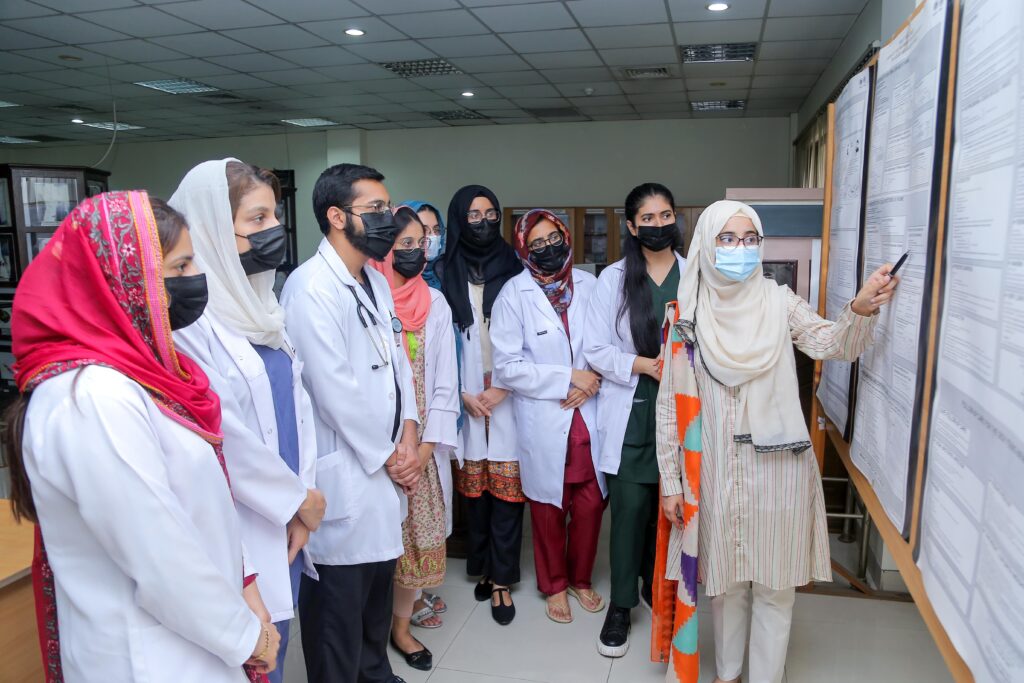
The flickering fluorescent lights of the private medical college admissions office illuminated not just brochures promising "world-class doctors," but the deep lines of despair etched onto Muhammad Riaz’s face. His daughter, Ayesha, held an acceptance letter, her dream of becoming a physician realized. Yet, the paper felt like lead. The tuition: Rs. 225,000 per month. For five years. Totaling over Rs. 13.5 million, excluding hostel fees, books, and exorbitant examination charges. Riaz, a schoolteacher earning Rs. 80,000 monthly, knew the math was impossible. His daughter’s brilliance, nurtured through public school triumphs, had collided with the brutal economics of Pakistan's privatized medical education, a system extracting fortunes from the very families who need compassion most. This isn't an isolated tragedy; it's the systematic commodification of healthcare hope, leaving a generation of aspiring healers drowning in debt or locked out entirely.
Walk through the corridors of Pakistan's elite private medical colleges, and the opulence is jarring: air-conditioned lecture halls, gleaming simulation labs, cafeterias serving cappuccinos. But this façade masks a profound moral bankruptcy. Institutions like Ziauddin Medical University (Karachi) charge upwards of Rs. 200,000 per month. CMH Lahore Medical College demands fees exceeding Rs. 1.8 million per year (approx. Rs. 150,000/month). Dow University of Health Sciences (Karachi - Private Programs) and Shifa College of Medicine (Islamabad) operate in similar, devastating ranges. Aga Khan University (Karachi), while globally renowned, sets a stratospheric benchmark with total costs nearing Rs. 20-25 million for the MBBS program. Even newer entrants in smaller cities command Rs. 100,000-150,000 monthly. Contrast this with the nominal fees of public colleges (Rs. 30,000-100,000 per year), which are impossibly competitive, accepting only a tiny fraction of qualified applicants. The private sector, theoretically offering an alternative path, has instead become an exclusive gated community for the affluent, transforming the MBBS degree into a luxury good.
This predatory pricing becomes even more grotesque when viewed internationally. Pakistan's private MBBS costs are wildly out of sync with global averages, especially considering the country's GDP per capita:
- CHINA: Prestigious universities like Peking Union Medical College or Fudan University offer MBBS programs taught in English for international students for $3,000 - $6,000 USD per year (approx. Rs. 840,000 - Rs. 1.68 million annually). Total cost: ~$15,000 - $30,000 USD (Rs. 4.2M - Rs. 8.4M). Significantly cheaper than Pakistan's private sector.
- UNITED KINGDOM: Among the world's most expensive. Annual tuition for international students at universities like Imperial College London or University College London ranges from £35,000 - £45,000+ (approx. Rs. 12.25M - Rs. 15.712.2per year). Total cost: £175,000 - £225,000+ (Rs. 61M - Rs. 79M+). While astronomically high, these are globally elite institutions with vastly superior resources, infrastructure, research output, and graduate earning potential globally. Pakistani private colleges offer none of this comparative advantage.
- UNITED STATES: Similar to the UK, top-tier private universities like Johns Hopkins or Harvard charge $60,000 - $80,000+ USD per year (Rs. 16.8M - Rs. 22.4M+ per year).
- CIS STATES (RUSSIA, UKRAINE, KYRGYZSTAN, KAZAKHSTAN): Historically popular with Pakistani students due to affordability. Reputable universities like RUDN University (Moscow), Crimea Federal University (Simferopol), or Kyrgyz State Medical Academy (Bishkek) charge $3,000 - $7,000 USD per year (approx. Rs. 840,000 - Rs. 1.96M annually). Total cost: ~$15,000 - $35,000 USD (Rs. 4.2M - Rs. 9.8M). Often cheaper than Pakistani private colleges, despite the added costs of travel and living abroad.
Share:
A
Areeba Fahad
The writer is a science gold medal list, educationist, environmentalist and a freelance columnist