

Bangladesh President Shahabuddin resigns after citing health concerns
Bangladesh President Mohammed Shahabuddin has resigned after citing serious health problems, his office said. The move comes amid continuing political upheaval following Sheikh Hasina’s ouster and exile.

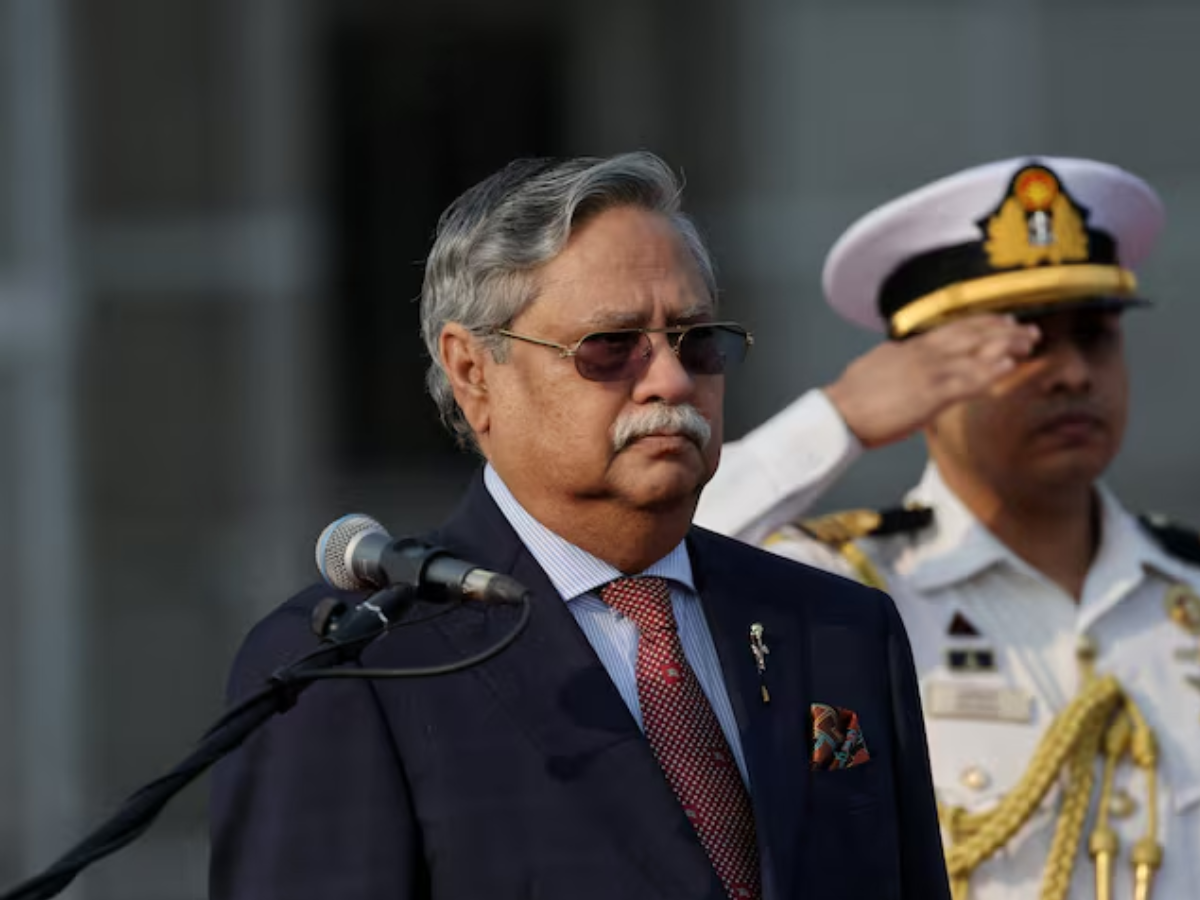
DHAKA: Bangladesh President Mohammed Shahabuddin has resigned after citing serious health problems, according to a statement issued by his office on Friday.
Shahabuddin, 76, has served in the largely ceremonial presidency since April 2023. His tenure covered a turbulent period in Bangladeshi politics, including the aftermath of former prime minister Sheikh Hasina’s departure to India following a student-led uprising against her rule in 2024.
In the statement released by his press secretary, Shahabuddin said recent tests had identified Autonomic Neuropathy as the cause of his condition.
Recent medical examinations have diagnosed me with a condition known as Autonomic Neuropathy. Due to this condition, I occasionally experience momentary loss of consciousness.
The president’s office said the speaker of the Jatiya Sangsad, Bangladesh’s national parliament, will discharge the president’s duties until a successor is elected.
Political backdrop
Shahabuddin had been elected unopposed in 2023 for a five-year term as the nominee of Hasina’s Awami League. The party has since been banned, while many of its leaders and activists have either been jailed or gone into hiding after the 2024 uprising that brought down her government.
His resignation means Hasina no longer has any allies in high office, five months before her planned return. News of her expected return from India has added to pressure on Prime Minister Rahman’s government to remove the remaining figures linked to her administration from senior state positions.
Last November, Bangladesh’s war crimes court sentenced Hasina to death in absentia over ordering a crackdown on the uprising. A United Nations report said nearly 1,400 people were killed in that violence. From exile, Hasina has denied the charges against her.
Role and succession
Under Bangladesh’s system, the president is the head of state and commander-in-chief of the armed forces, although executive authority rests with the prime minister and cabinet in the Muslim-majority country of 173 million people.
The office became more significant after the uprising in August 2024 forced Hasina to flee to New Delhi, creating a political vacuum in which no other elected official remained in power. Reuters had reported on Thursday that Shahabuddin, a former ally of Hasina, would step down on Friday.
Shahabuddin had informed Prime Minister Rahman of his decision to resign. Reuters previously reported in December that he had planned to resign after the February election, after being sidelined by the earlier interim administration that replaced Hasina’s government. Hasina had also told Reuters that she and senior members of her party were planning to return from exile around December and surrender. Before it was banned, the Awami League was Bangladesh’s largest political party and still retains pockets of support.
Comments
No comments yet. Be the first to join the discussion!


