Aurangzeb reviews IMF reform programme, reiterates commitment to economic changes
Finance Minister Muhammad Aurangzeb held meetings with senior IMF officials to review Pakistan’s macroeconomic position and reform progress. The finance ministry said the talks covered the IMF programme, structural reforms and longer-term economic priorities.

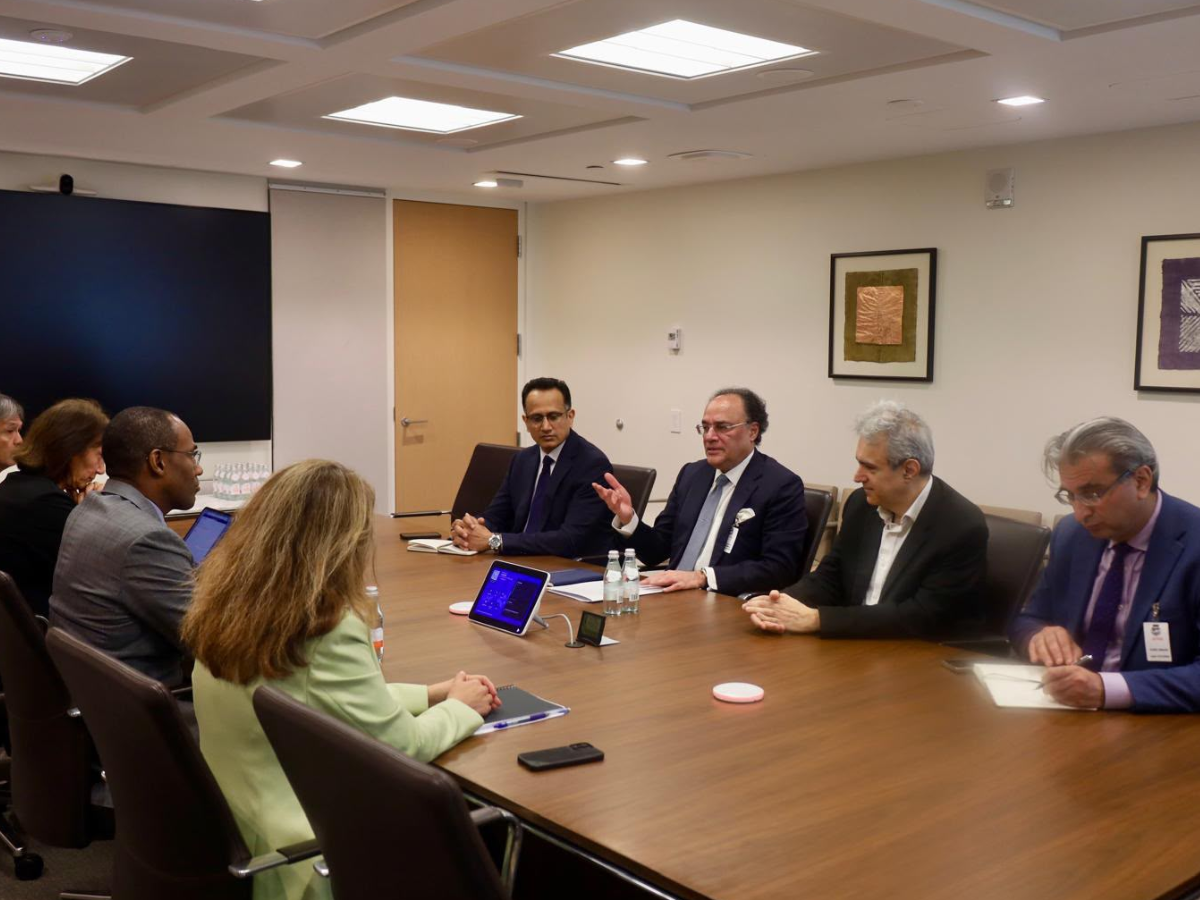
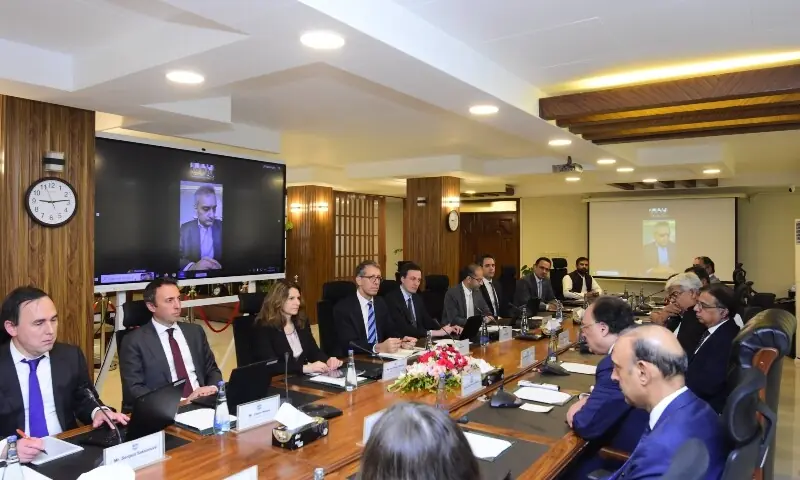
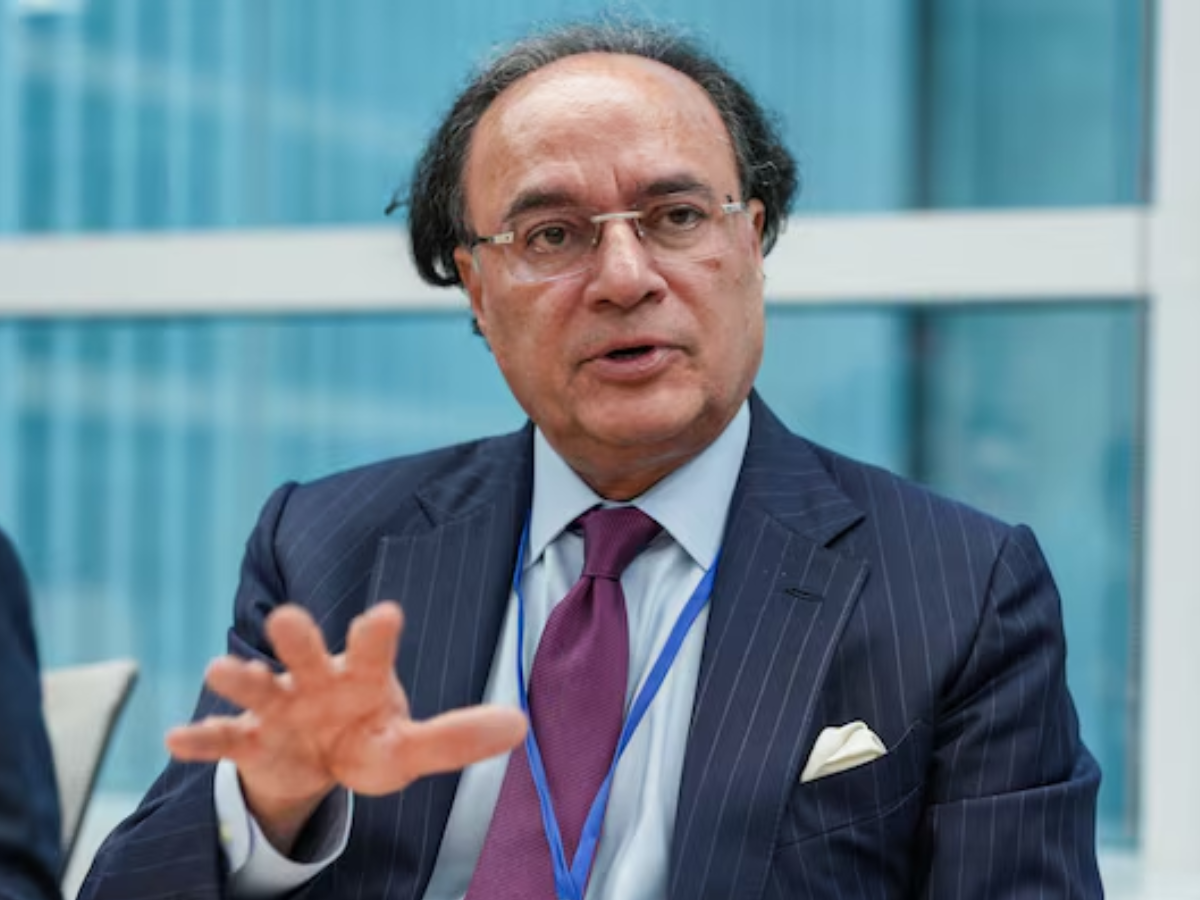
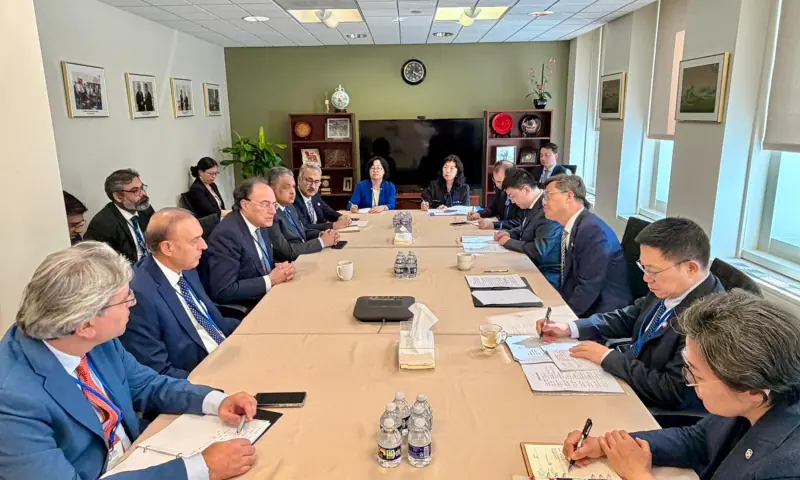
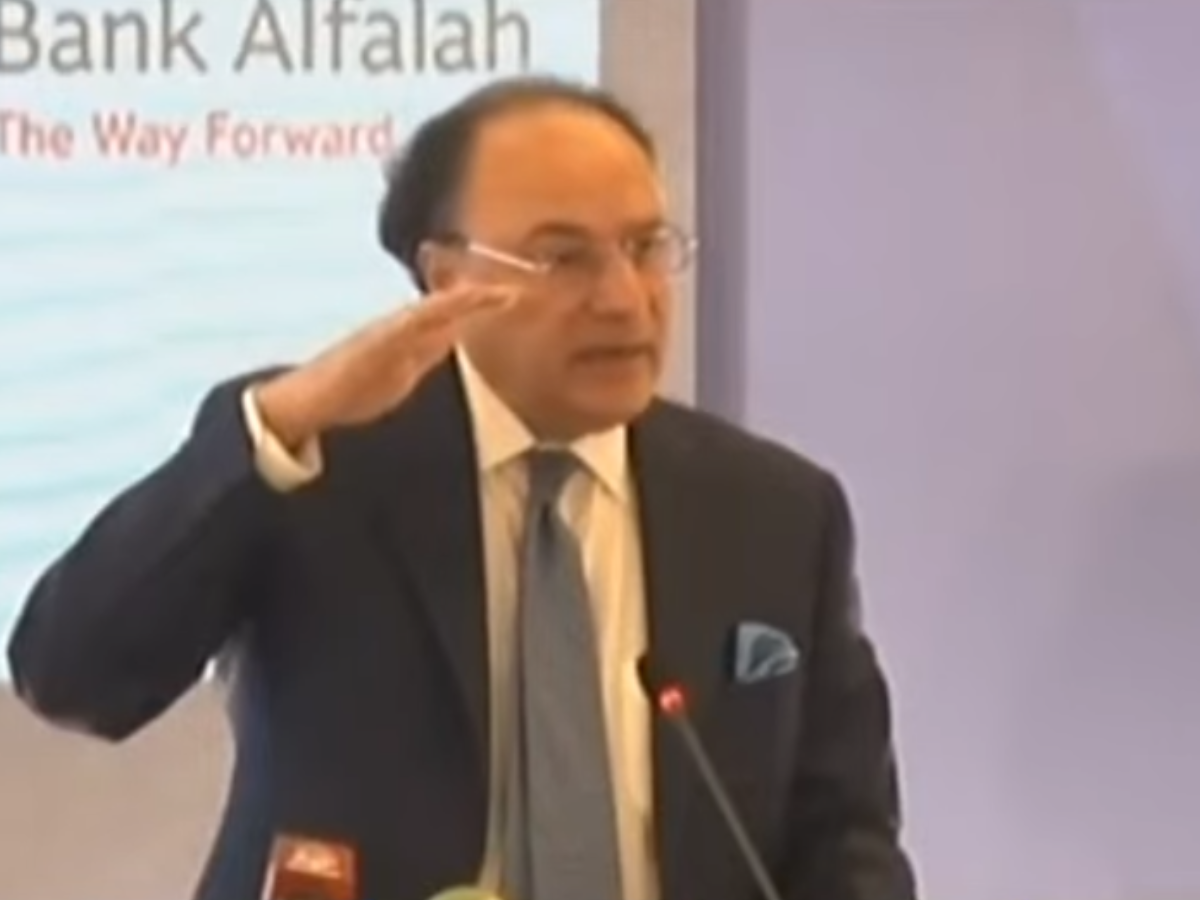
ISLAMABAD: Finance Minister Muhammad Aurangzeb held a series of meetings with senior International Monetary Fund officials and reviewed Pakistan’s macroeconomic performance, progress under the Fund-supported programme and the government’s ongoing reform agenda, the finance ministry said on Thursday.
According to the ministry, Aurangzeb met IMF First Deputy Managing Director Dan Katz, Deputy Managing Director Nigel Clarke, Middle East and Central Asia Department Director Jihad Azour, and IMF Mission Chief for Pakistan Iva Petrova. The discussions covered Pakistan’s progress under the Extended Fund Facility and the Resilience and Sustainability Facility, as well as the broader IMF-backed reform programme.
The minister highlighted what the ministry described as improved fiscal and external balances, achievement of revenue targets, stronger foreign exchange reserves, record remittance inflows and an improved current account position. The ministry said the talks also focused on tax and energy sector reforms, privatisation, tariff rationalisation, debt management, diversification of financing sources and Pakistan’s return to international capital markets.
Both sides also discussed longer-term economic priorities, according to the ministry, including human capital development, greater participation of women in the economy, demographic pressures, technology-led growth and private sector-led, export-oriented development.
At the conclusion of the meetings, the ministry said, Aurangzeb thanked the IMF for recognising Pakistan’s progress under the programme and renewed the government’s commitment to fiscal discipline, policy credibility, structural reforms and long-term economic transformation.
"recognising Pakistan's strong programme ownership and reform progress""fiscal discipline, policy credibility, structural reforms and long-term economic transformation"IMF programme and external financing
Pakistan is currently under a $7 billion IMF programme that has involved tax increases, spending restraint and reforms that have been politically difficult. The country narrowly averted default in 2023 after securing a $3 billion IMF standby arrangement and later obtained the $7 billion Extended Fund Facility.
Pakistan’s reserves still rely on official financing, rollovers and deposits from China and Saudi Arabia, leaving the country vulnerable to changes in bilateral support and delays in IMF disbursements. That exposure was highlighted in April when Pakistan repaid about $3.5 billion to the United Arab Emirates, equal to around one-fifth of its reserves, while Saudi Arabia extended fresh support of $3 billion.
Pakistan’s central bank said in January that reserves could rise to nearly their 2021 peak, reaching $20 billion by the end of 2026.
US contact and reported facility request
The finance minister also met US Treasury Secretary Scott Bessent on Tuesday. According to Reuters, Pakistan has requested a $10 billion exchange stabilisation facility from the United States. Reuters reported, citing a source briefed on the matter, that the proposed arrangement would be a Bilateral Exchange Stabilization Support Facility between the US and the Pakistani government with a maturity of up to five years.
According to Reuters, if approved, the facility could strengthen Pakistan’s reserves, reduce pressure on the rupee and lower dependence on multilateral financing while the country continues tighter fiscal and monetary policies under its IMF programme. The request followed Pakistan’s role in facilitating talks related to the Iran war, which it said had raised Islamabad’s diplomatic profile.
The report explained that exchange stabilisation facilities are uncommon US Treasury backstops, generally channelled through the Exchange Stabilisation Fund, and can provide dollars, swaps or guarantees to support reserves and help steady currencies. These differ from the standing dollar swap lines maintained by the US Federal Reserve with some major central banks.
Reuters also said Fitch stated in April that Pakistan’s adherence to the IMF programme had supported its funding capacity, while rebuilt foreign exchange buffers offered some protection against shocks linked to the Middle East conflict. However, Fitch also cautioned that higher energy costs and potential supply disruptions could significantly weaken reserves.
Foreign investment in Pakistan has remained limited because of repeated external crises, policy uncertainty, security concerns, past restrictions on profit repatriation, a narrow export base and a deep speculative-grade credit rating that keeps borrowing costs high and market access constrained.
According to Reuters, Pakistan has also sought to use its relationship with the Trump administration to address some of these constraints through economic cooperation spanning crypto, real estate and mining. Pakistan signed a stablecoin agreement for cross-border payments with an affiliate of World Liberty Financial, pursued a memorandum of understanding to redevelop the closed PIA-owned Roosevelt Hotel in New York with the US government, and sought US mining investment including in Reko Diq, where the US Export-Import Bank has announced $1.2 billion in financing.
Comments
No comments yet. Be the first to join the discussion!