US and Mexico resume USMCA talks as new US tariffs strain Canada ties
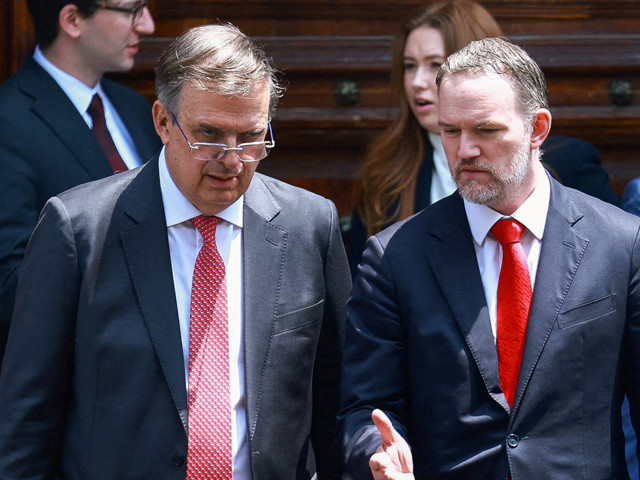
US and Mexican officials have opened a new round of USMCA talks in Mexico City as Washington pushes for changes to auto rules and regional trade terms. The discussions come after fresh US tariffs on Canadian goods deepened tensions with Ottawa.

WASHINGTON: US and Mexican trade officials began a third round of bilateral talks on Tuesday aimed at advancing changes to the US-Mexico-Canada Agreement, while the Trump administration moved ahead with fresh tariffs on Canadian goods.
The three-day meeting in Mexico City is the first formal set of discussions on revising the regional trade pact since Washington declined on July 1 to extend the six-year-old agreement. That decision started a countdown under which USMCA would wind down within 10 years unless the three countries agree on changes. Canada is not part of the current round of talks.
Business groups have urged President Donald Trump to preserve the agreement’s trilateral framework and the mostly tariff-free access that supports nearly $1.6 trillion in annual trade across North America. US Trade Representative Jamieson Greer, who was due to join the discussions on Wednesday, said Trump’s main objective for the pact is to reduce US trade deficits with both neighbours and bring more manufacturing back to the United States.
According to US Census Bureau data under the Commerce Department, the US goods trade deficit with Mexico widened by $28 billion, or 17%, last year to $197 billion. The US trade deficit with Canada, meanwhile, narrowed by $12.9 billion, or 21%, to $48.3 billion.
Speaking to CNBC, Greer said the administration wanted practical results from the negotiations and pointed to auto investment in the United States, including Toyota’s decision to expand a Texas factory to produce trucks now assembled in Mexico.
"We want the outcomes to make sense. We want to have more auto manufacturing here, and we're seeing it,"
Greer added:
"So that's the outcome that he wants. I think also if we can have an arrangement with Mexico, with Canada, that we are trying to emphasize Canadian, Mexican, US content in goods traded in North America, that's a good outcome because that helps get supply chains back here in North America."
Auto rules and year-end target
During bilateral talks with Mexico in May, the Office of the US Trade Representative proposed a new requirement that 50% of the value of vehicles built in North America must come from the United States. The proposal would mark a major shift from existing rules and poses a significant challenge for automakers whose supply chains are closely integrated across the region.
Mexico’s new ambassador to the United States, Roberto Lazzeri, said on Friday that his country expected a new agreement to be reached by the end of the year and that he believed both the United States and Canada were working toward the same timeline.
"Every moment that we're losing, I think we are losing competitiveness, market share and investment, so it's in the best interest of all three of us to get to a position of resolution soon,"
Lazzeri also said Mexico shares the Trump administration’s objective of expanding manufacturing in North America, including in the United States. Another priority for Mexico is to obtain relief from US national security tariffs of 25% on Mexican autos and 50% on its steel and aluminium exports. The same duties also apply to Canada.
Fresh tariffs deepen split with Canada
The talks opened a day after the Trump administration announced new tariffs on almost $20 billion in Canadian goods, citing Ottawa’s retaliatory duties on US autos, steel, aluminium and liquor, as well as Canada’s high dairy tariffs. The move adds to tensions that have left Canada largely on the margins of the USMCA negotiations, with Greer saying there has been little progress toward concessions from Ottawa.
Canadian Prime Minister Mark Carney said in a statement that his government had put forward comprehensive proposals to settle trade disputes with Washington. He also said Trump’s earlier tariffs breached the North American trade agreement.
Greer has praised Mexico for not retaliating against US tariffs and for what he described as a pragmatic negotiating approach. He said that approach has included efforts to align Mexican export controls with those of the United States, protect intellectual property rights and curb exports of avocados grown on illegally deforested land.
Focus on economic security
According to Greer’s office, the Mexico City talks will cover technical issues in autos, steel, aluminium, agriculture and labour. They will also address what the US trade office calls economic security, a term it uses for stronger regional trade protections aimed at stopping China and other Asian countries from using Mexico and Canada as entry points to the US market under preferential terms.
China’s growing presence in Mexico’s auto market could complicate the discussions. Reuters reported on Monday that new distribution data showed Chinese vehicle sales in Mexico rose 30% in the first half of 2026 despite 50% tariffs imposed in January, lifting the market share of Chinese brands to 17% from 14% a year earlier.
People familiar with the talks have said the United States wants its North American partners to adopt comparable barriers on goods from outside the region, including vehicles, auto parts, steel, aluminium and other components.
Comments
No comments yet. Be the first to join the discussion!