JI to blockade highways nationwide on Aug 7 against petroleum levy, inflation
JI Emir Hafiz Naeemur Rehman vows nationwide highway blockades and sit-ins on Aug 7, demanding abolition of the petroleum levy, cancellation of costly IPP deals, and relief from inflation and load-shedding.

Hafiz Naeem demands abolition of petroleum levy, scrapping of costly IPP contracts and relief from inflation
Vows party will stage countrywide sit-ins, saying only ambulances will be allowed through blockades
Says 20,000 corner meetings will be held nationwide ahead of Aug 7 to mobilise public support
Warns govt against using force, says crackdown could turn protest into anti-government movement
LAHORE: Jamaat-i-Islami (JI) Pakistan Emir Hafiz Naeemur Rehman on Tuesday announced a nationwide highway blockade and sit-ins on Aug 7, escalating the party’s anti-petroleum levy and anti-inflation campaign into its second phase with demands for the immediate abolition of the petroleum levy, cancellation of costly agreements with independent power producers (IPPs), and urgent measures to tackle soaring inflation and prolonged electricity load-shedding.
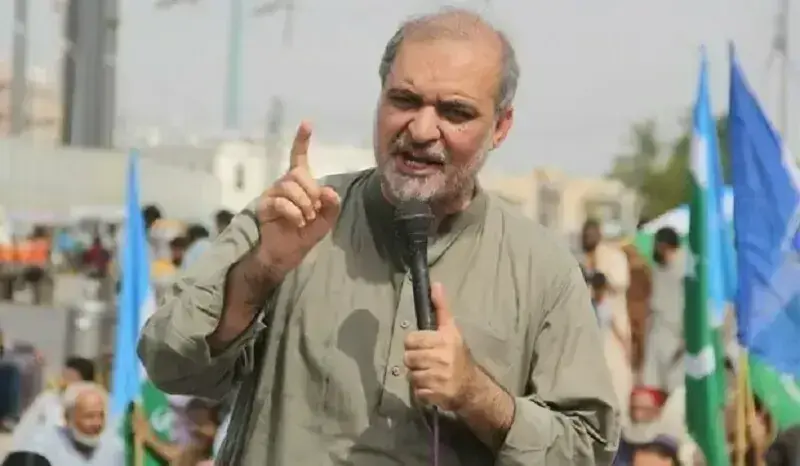
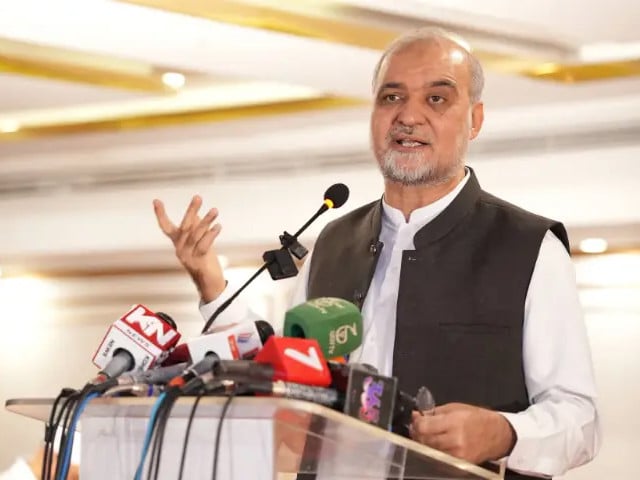
Addressing a press conference at Mansoorah, Hafiz Naeem said JI workers and supporters would stage sit-ins on roads linking all districts across the country, adding that only ambulances would be allowed to pass through the blockades during the protest.
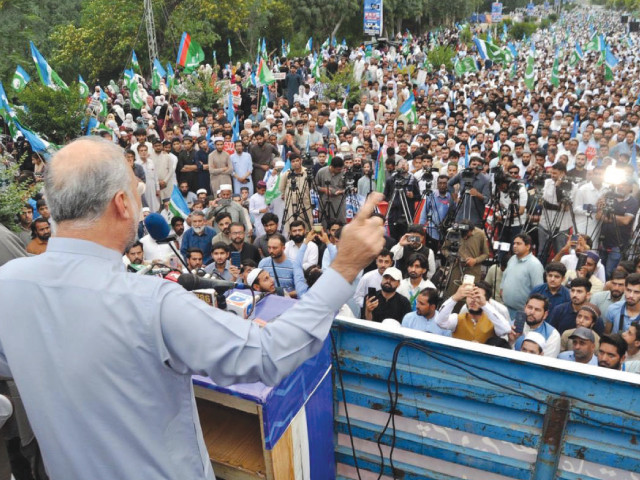
To galvanise public participation ahead of the nationwide demonstrations, he announced that the party would organise 20,000 corner meetings across the country before Aug 7 to mobilise support for the campaign.
The government had announced the petroleum and carbon levy on June 14, 2025, under an iron-clad commitment with the International Monetary Fund (IMF).
Warning the government against attempting to suppress the protest movement through what he described as undemocratic tactics, the JI chief said any such action would transform the anti-inflation campaign into a movement aimed at bringing down the government.
JI deputy secretaries Nazir Janjua, Waqas Jafri and Azhar Iqbal Hassan, Lahore Emir Ziauddin Ansari, and party Information Secretary Shakil Ahmed Turabi were also present at the press conference.
Reiterating the party’s demands, Hafiz Naeem urged the government to immediately abolish the petroleum levy, scrap expensive IPP contracts and take effective measures to eliminate electricity load-shedding. He also called on provincial governments to restore food prices to the levels prevailing before the Iran-US conflict.
Criticising the government’s decision to allow the Oil and Gas Regulatory Authority (Ogra) to adjust petroleum prices on a daily basis, he described the move as deceptive and questioned what authority Ogra had over the petroleum levy and other taxes imposed on every litre of fuel.
He alleged that the government was exploiting the public through the petroleum levy, claiming that if the levy and other taxes were abolished, the retail price of petrol would fall below Rs200 per litre. Instead of placing additional financial burdens on citizens, he said, the rulers should reduce “their own privileges and extravagant expenditures.”
Calling for maximum public participation in the Aug 7 demonstrations, the JI emir urged young people to bring their motorcycles onto the roads to strengthen the nationwide blockade.
Turning to broader governance issues, Hafiz Naeem criticised the performance of provincial governments, claiming that poverty in Punjab had increased by 41 per cent over the past six years. He further alleged that Punjab Chief Minister Maryam Nawaz had “sold 11,000 schools” and purchased an aircraft worth Rs11 billion for herself. He also criticised lawmakers in Khyber Pakhtunkhwa, claiming they had passed legislation granting themselves unlimited benefits.
The JI chief also targeted the Pakistan People’s Party (PPP), describing it as the establishment’s “A-plus team.” He asked PPP Chairman Bilawal Bhutto-Zardari to tell the people who was governing Azad Jammu and Kashmir (AJK) before making public statements that, according to him, misled the public.
Expressing concern over the deteriorating security situation in Khyber Pakhtunkhwa, particularly its southern districts, as well as in Balochistan, Hafiz Naeem urged the government to pursue dialogue to address the challenges. He said the JI was engaging various stakeholders on the Balochistan issue and expressed hope that a grand jirga would soon be convened.
He also welcomed reports of negotiations between state institutions and the Joint Action Committee in Azad Kashmir, saying the JI had consistently advocated dialogue as the best way to resolve the crisis and had itself made efforts to facilitate talks. However, he regretted that the government had not responded to the party’s initiatives.
Hafiz Naeem said the second phase of the JI’s protest campaign had been launched following internal consultations and would continue until the party’s demands were met. He added that the JI would engage religious scholars, traders, lawyers, students, civil society organisations and other segments of society to broaden support for the movement.
Earlier this month, JI activists staged demonstrations across Khyber Pakhtunkhwa against rising petroleum prices and inflation. The protests followed rallies held across the province last month against increases in electricity, gas and petroleum prices, as well as heavy taxation introduced in the budget.
In May, Hafiz Naeem approached the Federal Constitutional Court (FCC) against the petroleum levy, arguing that the government had effectively granted itself unrestricted authority to impose taxes on citizens through executive notifications without parliamentary oversight.
Comments
No comments yet. Be the first to join the discussion!