Spain return to Madrid for World Cup celebrations after beating Argentina
Spain’s World Cup-winning team returned to Madrid on Monday for official receptions and a victory parade expected to draw about one million fans. The celebrations across Spain were also detected by seismic sensors, scientists said.

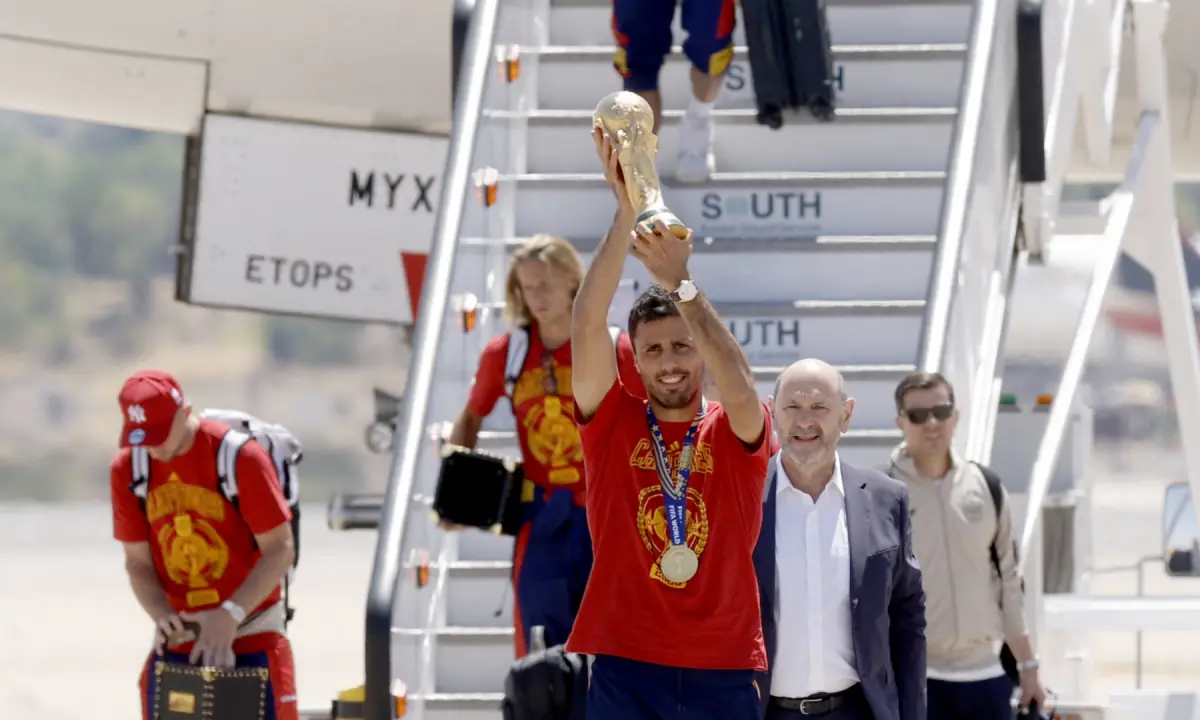
MADRID: Spain’s men’s national football team arrived back in Madrid on Monday after winning the FIFA World Cup, with authorities preparing for a large-scale celebration expected to draw around one million people along the parade route.
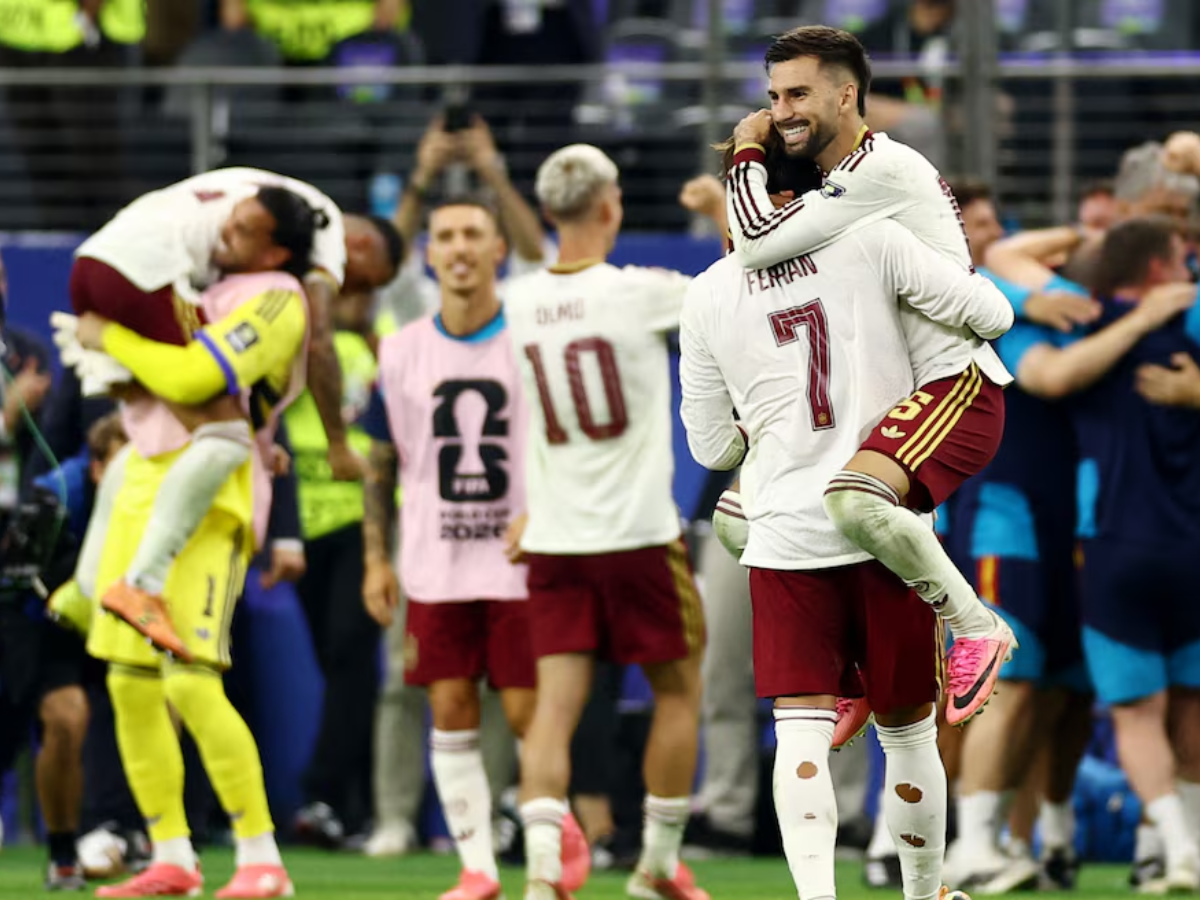
Captain Rodri held the World Cup trophy aloft as he came down the steps of the Iberia aircraft that brought the squad home from the United States, where Spain beat Argentina 1-0 in New Jersey on Sunday. Ferran Torres scored the winner in extra time as Spain secured its second World Cup title, adding to the country’s first triumph in 2010.
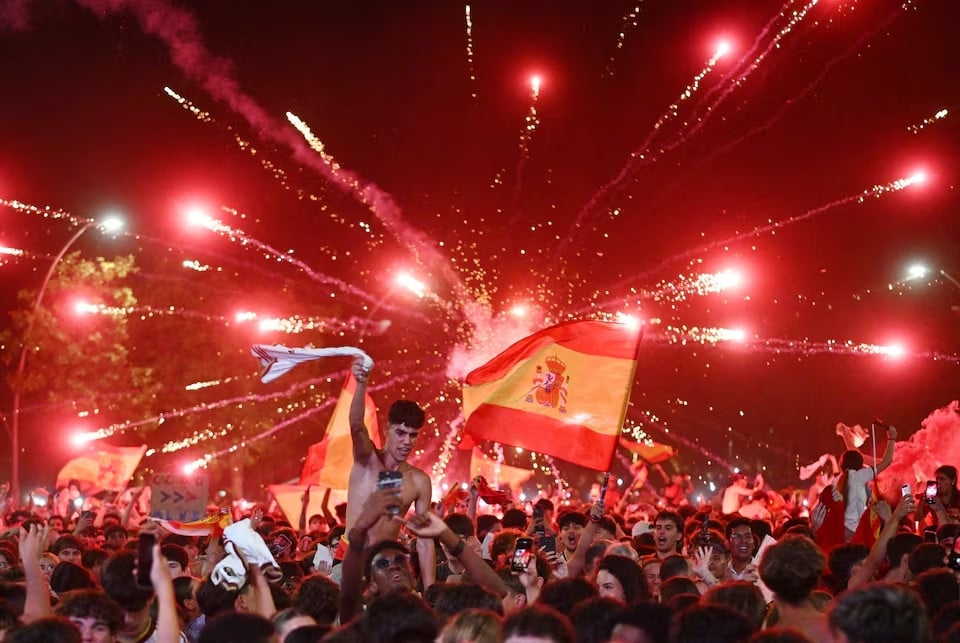
The victory prompted celebrations across Spain overnight. In Madrid, the city’s main boulevard, the Castellana, was left strewn with rubbish, beer cans and broken glass by Monday morning, while some supporters were still making their way home and cleaning crews worked to ready the route for the evening festivities.
Madrid mayor Jose Luis Martinez-Almeida said the tense nature of the final and the celebrations had kept many awake. He told RNE radio:
"I didn’t sleep much, because… (of) the celebration and then the tension of the match — I think it was a little more difficult for all of us to fall asleep,"Official receptions and parade plans
According to the mayor, the squad is due to be received by King Felipe VI at Zarzuela Palace on the outskirts of the capital before heading to La Moncloa for a meeting with Prime Minister Pedro Sanchez.
Francisco Martin, the central government’s representative in Madrid, told Spanish public television that the open-top bus parade would begin at Moncloa and continue to Cibeles square, the traditional focal point for celebrations involving the national team and its supporters. A ceremony with the players is also scheduled to take place there.
Martin said about one million people were expected to line the route and that additional transport and security arrangements had been put in place to cope with the crowds. Some fans were already planning to continue celebrating on Monday, including 32-year-old financier Bruno Gonzalez del Yerro, who said:
"We’ll have to celebrate it one way or another, given that it only happens every four years and that Spain hadn’t won it for about [16] years now — it definitely deserves a party,"Spain now hold both the men’s and women’s World Cup titles after the women’s team won its tournament in 2023. The country is also set to defend the men’s title on home soil in 2030 as one of the World Cup hosts alongside Portugal and Morocco.
Celebrations detected by seismic sensors
Scientists said the scale of Sunday’s celebrations was such that they were recorded underground. Researchers from the Geosciences Barcelona centre analysed data from the National Geographic Institute and the Catalan Geological and Cartographic Institute and said seismometers in places including Algeciras, Barcelona, Cadiz and Granada registered unusual activity linked to fan celebrations.
In a statement, the researchers said the sensors captured three distinct spikes during the final: after Torres scored, after a later goal that was disallowed by VAR, and after the final whistle, which produced the strongest reading. They described the movement as an example of induced seismicity caused by human activity, with large numbers of supporters jumping and shouting at the same time. Similar vibrations were also detected during Spain’s Euro 2024 final win over England, when goals by Nico Williams and Mikel Oyarzabal triggered measurable ground movement in Madrid and Barcelona.
Press praise and tragedy amid celebrations
Spanish newspapers hailed the team after it beat France in the semi-finals and then overcame Argentina in the final. Marca described the side as “The kings of all-time!” and celebrated the second star that will now be added to the national team shirt.
One fatal incident was also reported during the celebrations. A 13-year-old boy died around midnight in Ciudad Rodrigo in western Spain after a fountain collapsed under the weight of supporters who had climbed onto it.
In Argentina, the defeat ended hopes of a fourth World Cup title. The 2022 champions, despite having Lionel Messi, were unable to create clear opportunities against a disciplined Spain side. Enzo Fernandez was sent off, and Torres eventually scored after being set up by fellow substitute Nico Williams. After the match, Spain’s scorer said:
"It’s not my goal, it’s the goal of 47 million people,"Comments
No comments yet. Be the first to join the discussion!