

Sheikh Hasina says she plans to return to Bangladesh in December to surrender
Former Bangladeshi premier Sheikh Hasina says she plans to return from exile in India around December and surrender in court. She said senior Awami League colleagues also intend to go back despite legal cases and security fears.

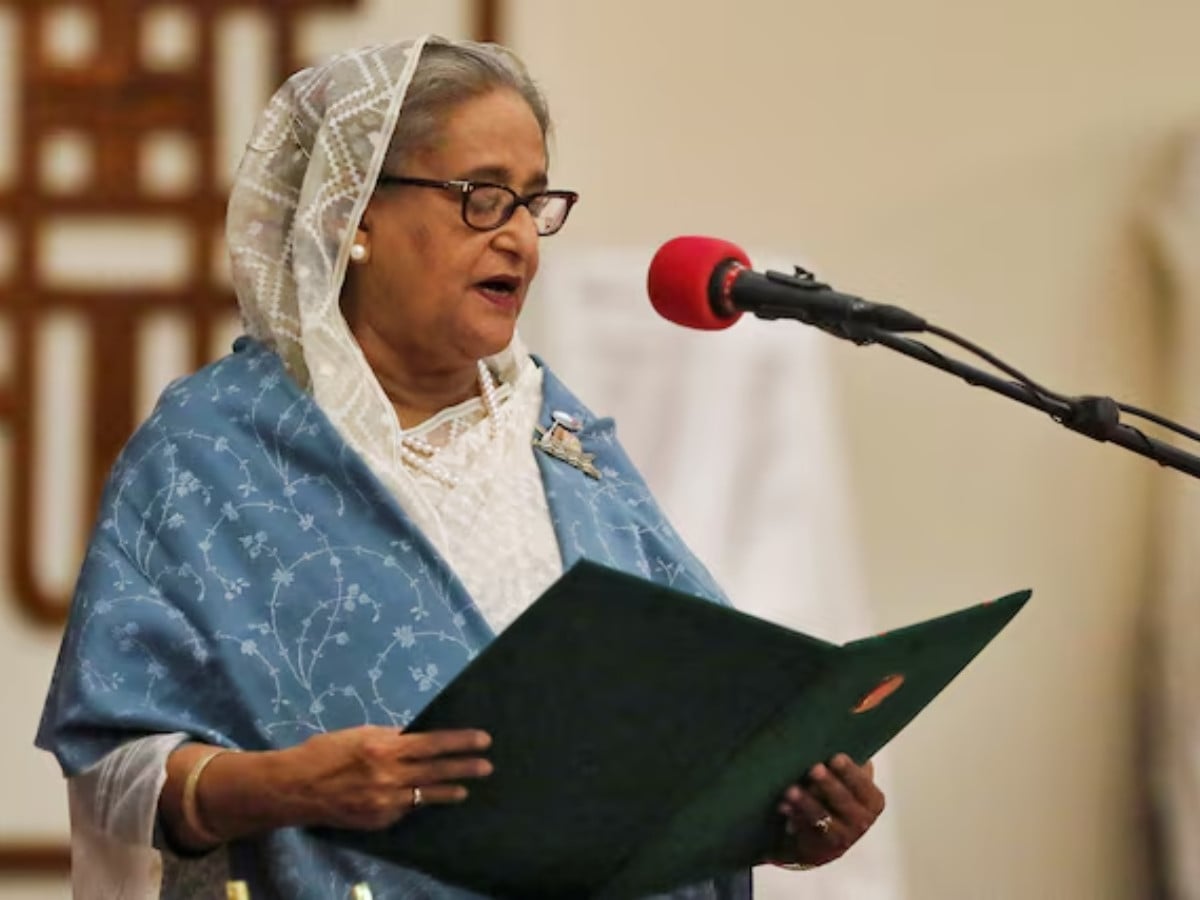
DHAKA: Former Bangladeshi prime minister Sheikh Hasina has said she intends to go back to Bangladesh around December with senior Awami League figures and submit to the courts, according to an interview she gave to Reuters from exile in India.
Hasina, who left Bangladesh in 2024 after protests ended her long stint in power, said she would return voluntarily despite the risks she believes await her. She told Reuters that Dhaka has repeatedly sought her return from India, but added that she would go back on her own rather than wait for extradition proceedings.
In the interview, Hasina said she had not discussed the timing of any return with a foreign government. Reuters reported that this was the first time during her exile that she had publicly given a timeframe, said she intended to surrender, or indicated that other exiled Awami League leaders would do the same. Former home minister Asaduzzaman Khan Kamal is among those also facing a death sentence.
Hasina said her party workers and leaders were under severe pressure inside Bangladesh and that many cases had been lodged against them. She also said many members of the Awami League were in hiding.
Speaking about the risks she says surround any return, Hasina told Reuters:
"They may arrest me on my return, they may even kill me."She added:
"Still, I have to go."Explaining why she wanted to return despite those fears, Hasina said:
My party leaders and workers are being subjected to tremendous repression. If death comes, I want it to come on my own soil, where my parents are buried and where their blood was shed.
Death sentence and political fallout
Reuters reported that Bangladesh's war-crimes court sentenced Hasina to death in absentia in November over her alleged role in a deadly crackdown on a student-led uprising. She has denied the charges while living in exile.
Her return could deepen existing political tensions in Bangladesh as authorities try to steady the country after two years of turmoil. At the same time, it could also affect relations with India, which have been strained since New Delhi granted her refuge and Bangladesh repeatedly called for her extradition.
Spokespeople for the Bangladesh government did not respond to Reuters requests for comment on her remarks. India's foreign ministry also did not respond to a request for comment. Reuters noted that in April, the Indian ministry said it was reviewing Bangladesh's extradition request and wanted to engage constructively with the new government while strengthening bilateral ties.
Court plans and party organisation
Hasina said she did not want backchannel engagement with authorities in Dhaka over her plans. She told Reuters that political rights, democracy, voting rights and justice were not matters for secret negotiations.
She said she was not concerned about imprisonment, noting that she had been arrested several times in the past. Reuters reported that after returning from exile in 1981 following the assassination of her father and much of her family in a military coup, she was repeatedly detained during campaigns against military rule. She was jailed again in 2007 by a military-backed caretaker administration on corruption charges before being released and later winning the 2008 election.
Hasina said she had held online meetings in 125 of Bangladesh's 300 parliamentary constituencies as part of efforts to rebuild the Awami League's organisation. She also questioned the suspension of the party, saying electoral judgment should rest with voters.
On the legal proceedings she expects to face, Hasina said:
I believe in justice and I feel that once proceedings start, it will be clear to the people how farcical the court is — and that I want to prove it.
Reflecting on her years in office, she also told Reuters:
When a government works for a long time, mistakes can happen — no government is above error.
She continued:
But the right to judge the good and bad, the right and wrong of a government belongs to the people. I leave that judgment to the people.
Hasina also said:
They may have convicted me, and I may not be able to contest elections.
And added:
But why should they suspend the Awami League? If we have done badly, let the people decide.
Reuters said the crackdown that preceded her fall from power killed as many as 1,400 people, citing a United Nations report. During her decades in politics, Hasina emerged as one of Bangladesh's most influential leaders, praised by supporters for economic gains but accused by critics of suppressing dissent and weakening democratic institutions, allegations she denies.
Comments
No comments yet. Be the first to join the discussion!


