June 27, 2026
Marcelo Bielsa’s influence endures despite Uruguay’s disappointing World Cup exit
Marcelo Bielsa’s World Cup campaign with Uruguay ended in a group-stage exit, but his standing as one of football’s most influential coaches remains intact. His tactical ideas helped shape the modern game and inspired a generation of managers.

June 27, 2026

ISLAMABAD: Marcelo Bielsa’s time with Uruguay has ended in disappointment at the World Cup, but the Argentine coach’s wider influence on modern football remains undiminished after a career that reshaped tactical thinking even if it did not always deliver sustained success.
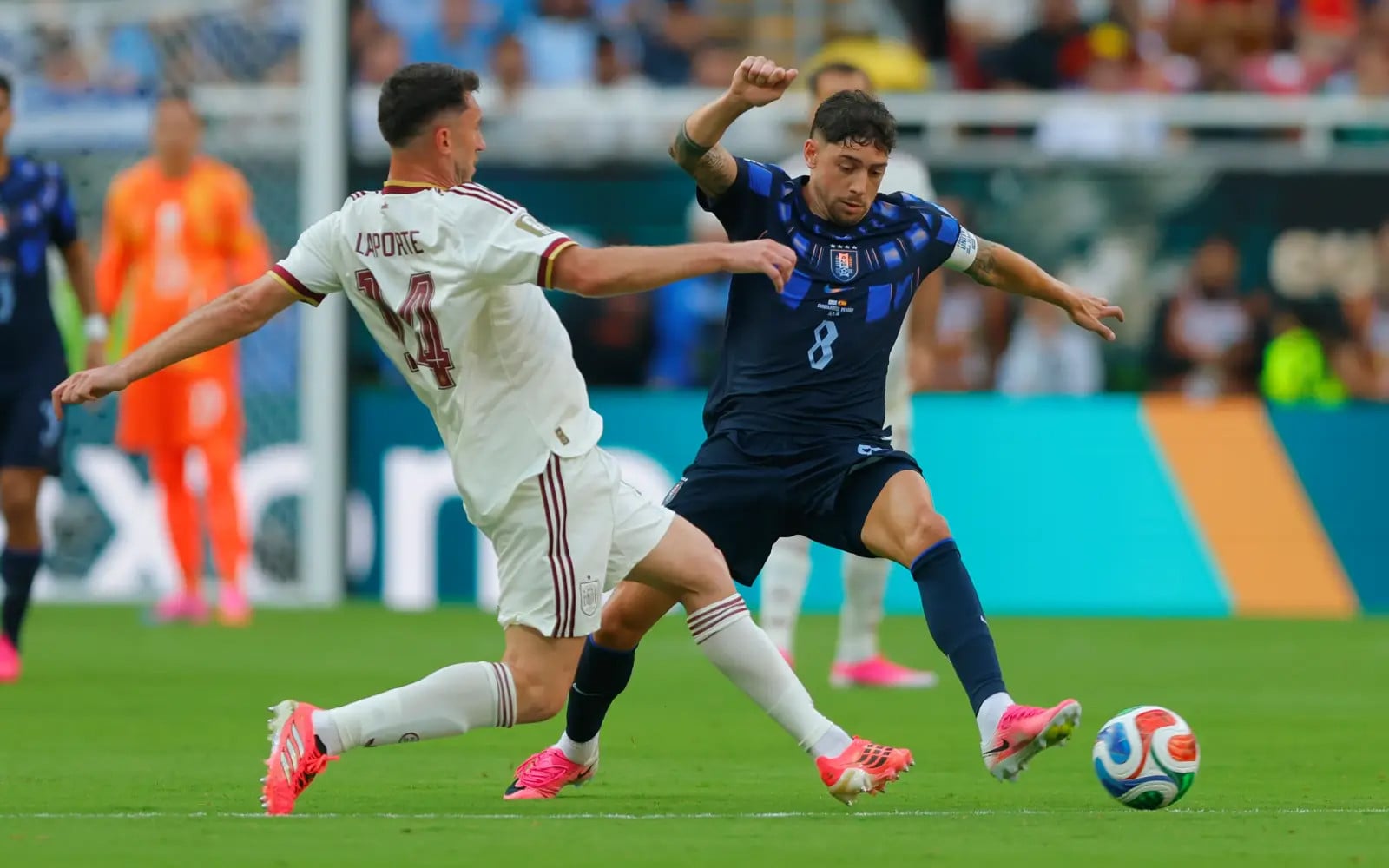
Uruguay were eliminated after a 1-0 defeat to Spain, a result that followed draws against Saudi Arabia and tournament debutants Cape Verde and sealed a second successive group-stage exit for the two-time world champions. In his assessment after the campaign, Bielsa said:
“I have not left anything to Uruguayan football,” he admitted.
The 70-year-old has long been known for disregarding convention. Earlier this month, when FIFA assembled coaches for an official Club World Cup photoshoot, Uruguay’s manager stood with his hands in his pockets and looked downward instead of facing the camera. Asked later why he had not posed in the expected manner, Bielsa replied:
“I’m not a model,” he said. “I don’t have to give any explanation. The picture was taken the way it was taken.”
A coaching career built on innovation
Born in Rosario in 1955, Bielsa did not become prominent as a player, but established himself as one of the game’s most original coaches after taking charge of Newell’s Old Boys in 1990. His methods were exacting, with detailed training schedules, extensive use of video analysis and a heavy emphasis on pressing, physical intensity and collective structure. His sides attacked directly, defended assertively and relied on coordinated movement rather than individual star power, ideas that earned admiration as well as the nickname El Loco.
His standing grew further during spells with Argentina and Chile. Although Argentina’s highly regarded squad suffered a surprise first-round exit at the 2002 World Cup, Bielsa later led the country to Olympic gold in Athens. In Chile, he turned the national team into one of South America’s most dynamic sides and helped lay the groundwork for the success the country would enjoy later in the decade.
Influence beyond trophies
Bielsa’s impact has extended far beyond his own results. Pep Guardiola has repeatedly cited him as a major influence and once called Bielsa “the best coach in the world”. Mauricio Pochettino, Diego Simeone, Marcelo Gallardo, Jorge Sampaoli and Andoni Iraola have also acknowledged his effect on their development.
Many tactical features now common at elite level, including organised pressing, aggressive man-marking and fluid positional structures, were developed and refined by Bielsa well before they became mainstream. Former players have also said he transformed the way they understood the game, with many later moving into coaching and carrying parts of his philosophy into clubs and national teams across Europe and South America.
Successes and recurring limits
Even so, Bielsa’s own managerial record has often reflected a tension between influence and outcomes. At Athletic Bilbao, Marseille and later Leeds United, his teams won praise for their intensity and attacking style. Leeds’ promotion to the Premier League in 2020, ending a 16-year absence from the top division, made him a hugely popular figure with the club’s supporters.
But his teams also repeatedly followed a familiar pattern: strong starts marked by energy and tactical clarity, followed by difficulties in maintaining those levels over time. The physical burden of his style often became a factor, while opponents increasingly found ways to bypass the press.
That contrast was evident during his spell with Uruguay as well. Reports of dressing-room friction emerged during his tenure, while former striker Luis Suárez publicly questioned Bielsa’s approach. After the World Cup exit, players were visibly dejected as they left the field, closing an underwhelming campaign.
A legacy that outlasts results
Football has changed considerably since Bielsa first challenged accepted ideas in the 1990s. Pressing is now widespread among top teams, sports science has encouraged more rotation and closer workload control, and tactical adaptability has become increasingly important. Many of those shifts were rooted in principles Bielsa helped popularise.
Yet while the sport evolved around him, Bielsa remained largely faithful to the same beliefs. That consistency has been seen both as his defining quality and as a reason his teams sometimes fell short of lasting success. If Uruguay proves to be his final post, it will still leave intact his place as one of football’s most influential thinkers, admired by generations of coaches and players for showing that the game could be approached differently.
0 Comments
No comments yet. Be the first to join the discussion!