June 18, 2026
The emperor has no clothes
The USA and Iran reach a 60-day extension of their April 8 ceasefire tied to Iran’s nuclear talks. The US agrees to $24 billion, while missile and regional support issues stay off the agenda.

June 18, 2026

The USA has ended up with egg on its face
AT PENPOINT
Now that the inevitable has happened, and Iran and the USA have reached an agreement on a permanent ceasefire, the bottom line is not good for the USA. Iran has not done what it wanted. The USA has actually bought off Iran by agreeing to the release of $24 billion during the 60-day negotiation period which has been set for the Iranian nuclear programme.
The ceasefire which started on April 8 has been extended for 60 days after signing, and is intended to allow time for the reason for the conflict, the Iranian nuclear programme. To be discussed. Off the table are two issues the USA wanted on the agenda, the Iranian missile programme and Iran’s support for regional allies. As Iran didn’t want to talk about them, their omission must be counted as a victory for Iran.
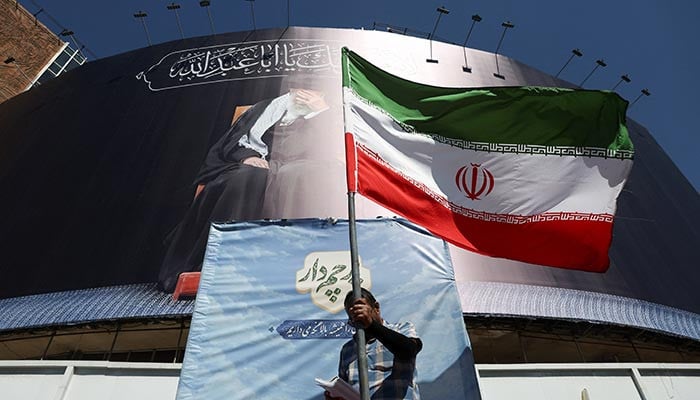
Has Iran won? If it has, it has been at a terrible cost. No less than the Supreme Leader was killed on the very first day, but the system survived. However, that system, and the new leaders it has thrown up, are the ones with whom the USA will now have to negotiate. The assumption that Iran would cave in if only Ayatollah Khamenei was removed from the scene had proved disastrously wrong, making one wonder what other assumptions about the world might be wrong. Could it be possible that the Gulf monarchies are not reliable partners?
First is the assumption that the monarchs are safe on their thrones. Second is the one that these monarchs are going to remain within the US orbit. Then there is the example of Israel, which has constantly disobeyed the USA despite being a client-state. While that had been demonstrated before, now it was displayed much more blatantly. Though the Gulf monarchies know that their relationship with the USA is not nearly as close, they would be tempted to trade on this.
This might be reflected in the conclusions that will result from the kind of recalculation, even recalibration, that the war has made inevitable. The war made it clear how far the USA could be trusted to provide security, while the world was worried about the oil, fertilizer, aluminium and other key substances leaving the Gulf, the monarchies were worried about their revenues being cut.
The failure of the USA to bend Israel to its will is not in isolation. Since the catastrophic withdrawal in Vietnam, its use of armed force has been patchy. One problem has been its use of forces meant to fight a European war against a similar enemy, to project power in the Third World. This is something like the problem Britain faced between World Wars I and II, when an Army designed to produce an Expeditionary Force for France was used in various colonial conflicts. The World War I problem was the reverse: a military designed for colonial policing also had to provide an Expeditionary Force.
In as far as World War II was the result of World War I, the present conflict can be seen as a first installment, but not the final one. While Iran has staved off the USA, it has not broken it in the field. And just as the USA has not achieved its objectives, Iran has not. The likelihood is that there will be conflict again. It could be that the USA will exit the region on its own, but it is likely that it will have to be forced out.
The USA has come out badly from this episode, Iran having dome what no one else has done before. The two previous major US failures, in Vietnam and Afghanistan, resulted from domestic opinion not accepting the deaths of US servicemen. Iran did not impose a high number of casualties, but merely threatened to do so (in the ground invasion which did not go in). More importantly, it defied US air superiority, showing that it could be neutralized without having much of an air force oneself.
The ceasefire is not really a failure of US resolve, but of US ability. The USA held back on the ground invasion not because of any concern for US lives, but because of the likelihood that Iran would defeat it too. That would have been a greater loss than the defeat in Vietnam.
The USA’s guarantee of peace in the region was based on overwhelming air power. If that xould not be exerted, the guarantee was no longer valid. Unlike Iraq in both wars, the Iranian air defence was not suppressed to allow the USA command of the air. Drones were so employed in swarms, that it began to be possible to speculate about the sinking of the US aircraft carriers, which have underwritten US ability to project power over virtually any country’s capital, certainly over its main ports.
Though the Hormuz Strait is perhaps the most important single chokepoint in the world, the inability of the USA to keep it open will not affect it alone, but also render any other US guarantees doubtful. First comes its guarantees in the Far East, especially to Taiwan, but also South Korea and Japan. Indeed, the whole of ASEAN, which includes such island states as Indonesia and the Phillipines, becomes doubtful. The developing QUAD and AUKUS alliances begin to rest on shakier foundations than originally thought.
Even in Latin America, where the USA has had the bulk of its post-Vietnam successes (the latest being the kidnapping of Venezuelan President Nicolás Maduro), there must be rethinking going on. The problem for the USA is that drones do not leave a large footprint. In 1962, during the Cuban Missile Crisis, the USA could track the huge Soviet missiles from space. Now, 64 years later, despite huge advances in detection and surveillance technology, the USA could not find the Iranian drones.
If the USA has been struck a blow, has Israel? It has seen that its objectives could not be achieved by the USA, while it has continued to press ahead in the Lebanese enterprise. It seeks not just to expand its role, but also its territory. This is despite the fact that it is facing problems from the Hezbollah because of the technological help which it has been receiving from Iran.
Israel is preparing to fill the gap left by the USA, to provide the guarantee of stability for the free flow og oil. Is the USA preparing to hand over to the Israel, just as the UK, guarantor after World War I, handed over to it after World War II? That is a process in which it would like to allow Turkey, Pakistan and Saudi Arabia to take part.
Pakistani participation may also be one of methods by which China would be given a greater place in the region. China’s stake in the Hormuz Strait is the same as that it has in Iran: oil. It is because of that that some oil trading has seen the Gulf states start accepting payments in yuan, whereas previously they accepted only dollars. The end of the US dollar’s position as the world’s reserve currency, again paralleled by the post-WWII transition from the sterling to the dollar, is not complete, and it will not free the Third World, which will merely see the US boot replaced by the Chinese.
The ceasefire is not really a failure of US resolve, but of US ability. The USA held back on the ground invasion not because of any concern for US lives, but because of the likelihood that Iran would defeat it too. That would have been a greater loss than the defeat in Vietnam.
For Pakistan, the reliance on US goodwill may not be a guarantee of anything. That should prove to those who wish to fall into the lap of China that that too will also be temporary. Can Pakistan stand without outside help? The Iranian example shows that this can be done.
0 Comments
No comments yet. Be the first to join the discussion!