AJK braces for strike, long march after deadly Rawalakot clashes
AJK prepared for a strike and planned long march after Rawalakot clashes left seven civilians and four law enforcement personnel dead. Officials said a crackdown had weakened mobilisation and vowed to block any march.

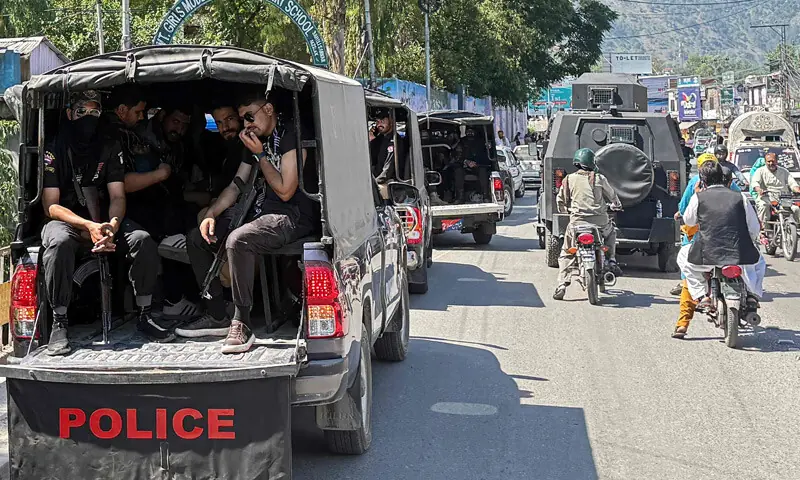
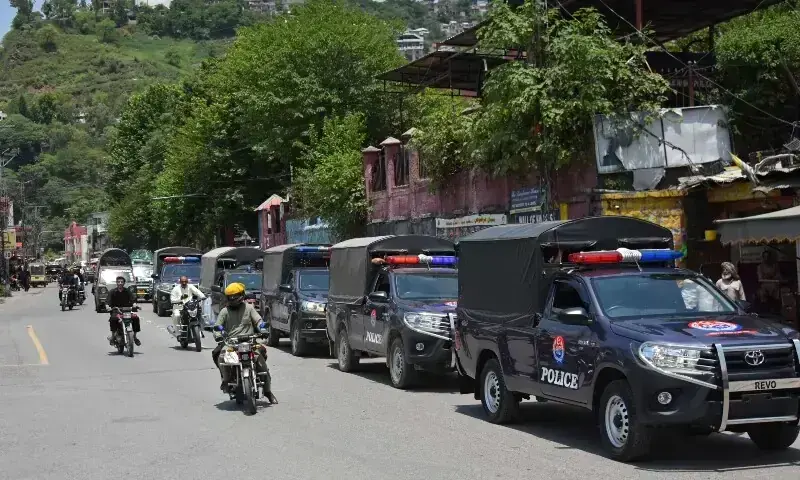
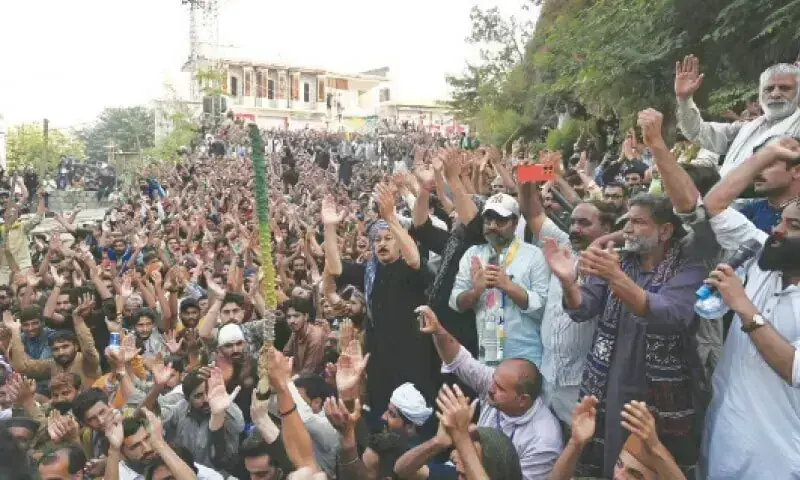
MUZAFFARABAD: Azad Jammu and Kashmir (AJK) was preparing for a shutter-down and wheel-jam strike on Tuesday after the proscribed Joint Awami Action Committee (JAAC) announced protest action in the wake of violent clashes in Rawalakot that left seven civilians and four law enforcement personnel dead.
Under the initial plan announced by the JAAC, protesters were to begin a long march from Bhimber, move through Mirpur, Kotli and Poonch, and reach Muzaffarabad on June 10 for a sit-in outside the Legislative Assembly.
Officials, however, said they expected a limited response to the call following the recent crackdown. More than 200 people had been detained across the region in action against the JAAC, while others had gone into hiding.
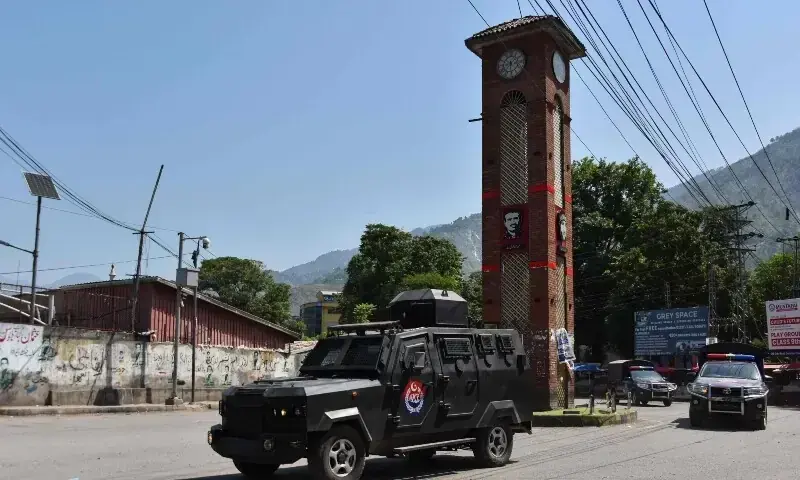
One official said the situation remained uncertain and that the JAAC leadership and those capable of mobilising crowds were in hiding, adding that while large gatherings had not yet emerged, small protests at several locations remained possible. Another official said the administration had decided that protesters would not be permitted to gather anywhere or carry out a march across the territory.
Officials also said the administration would neither compel traders to keep businesses open nor allow anyone to force closures. One of them said peaceful activity would be tolerated, but any attempt to create disorder would be dealt with firmly.
Mixed response expected
Some analysts believed the strike call was unlikely to draw overwhelming participation, even if shops remained shut and transport stayed off the roads in some areas. A retired government servant, speaking anonymously, said the movement had initially centred on public rights but was later driven into a deadlock by what he described as the rigid approach of some committee leaders. He also said the issue of abolishing 12 seats resonated with many people in AJK, but should not have been turned into an all-or-nothing confrontation.
On Monday, daily life was reported as normal in most parts of AJK, with Rawalakot the main exception. There, markets stayed closed for a second straight day and public transport remained suspended. A partial strike was also reported in Dadyal, a town in Mirpur district.
Official account of Rawalakot violence
In Rawalakot, where the clashes were centred, the administration and law enforcement agencies dispersed protesters shortly after midnight on Sunday. Divisional Commissioner Sardar Waheed Khan said protesters had blocked access to the Combined Military Hospital and had effectively taken control of the facility, causing doctors and paramedics to flee. He said this obstructed treatment for injured law enforcement personnel and led to further injuries to some of them. He also alleged that the body of a martyred police constable had been disrespected.
The commissioner alleged that protesters were armed with long-range weapons, petrol bombs and other ammunition. He said the attack on law enforcers had come from side streets and was carried out in a planned manner.
According to him, of around 30 hospitalised activists, three critically injured individuals were airlifted to Islamabad along with four law enforcement personnel. He added that six activists remained under treatment at the hospital as detainees, while others had been moved to a police station.
Victims identified, funerals held
Funeral prayers for three AJK policemen — SHO Hajira Muhammad Inayat and constables Muhammad Faisal and Faheem Anwar — were offered with full honours at Rawalakot Police Lines at 5pm. Chief Secretary Khushal Khan, Inspector General of Police Liaqat Ali Malik and General Officer Commanding Murree Maj Gen Zarrar Mahmood were among those present.
The seven civilians who died were identified as Usman Sabir of Koiyan village, Fahad Barkat of Rehara village, ex-serviceman Wasaid Siddique of Parrat village, Naqash Zardad of Matyalmera Danna village, Jamshed Ashraf of Hussainkot village, Muhammad Rasheed of Choti Nakkar Pakhar village, and Tariq Resham of Dothan village. The divisional commissioner said the ex-serviceman was caught in crossfire.
The funeral and burial of three activists, including Shazeb Habib, whose body had remained in the CMH mortuary since Saturday, were carried out by the administration and police. The remaining victims were buried by their families without agitation.
In a statement posted on Facebook, a spokesperson for IGP Malik said legal proceedings were continuing against members of the proscribed committee allegedly involved in armed violence. The spokesperson also warned of strict legal action against those accused of attacking law enforcement personnel and government property.
Comments
No comments yet. Be the first to join the discussion!